

Heat pump grant economics
Evaluating the Boiler Upgrade Scheme grant for your home
Assess the financial impact of the Boiler Upgrade Scheme grant when planning your transition to a heat pump system.
 Alex BlairChief Technology Officer
4 min readUpdated
What matters here
- The Boiler Upgrade Scheme grant offers up to 7,500 pounds for heat pump installation.
- Eligibility is reserved for homeowners and small business owners with fossil fuel systems.
- Government policy now extends the support mechanism through to at least 2030.
The current financial landscape for heat pumps
Replacing a gas or oil boiler is a significant capital decision for any homeowner. The transition to a heat pump system represents a change in how a house manages thermal energy. It requires a shift from high-temperature combustion to lower-temperature distribution. The Boiler Upgrade Scheme serves as a financial intervention designed to lower these upfront barriers to entry.
As of July 2026, the scheme provides up to 7,500 pounds to eligible applicants. This funding is administered by Ofgem on behalf of the Department for Energy Security and Net Zero. The programme has grown in use, with over 100,000 applications recorded since its inception in May 2022. Understanding the specific mechanics of this support is the first step in assessing whether a heat pump is the right choice for a domestic heating profile.
For those navigating these transitions, our schemes offer additional context on how domestic energy upgrades function within the wider market. Understanding the broader How home heat pumps operate and the current market outlook is vital to ensure that the capital invested today aligns with long-term household energy strategies.
Eligibility and property requirements
The grant is not open to all properties. Access to the funding is restricted to homeowners and small business owners who currently rely on fossil fuel heating systems. This criteria targets the displacement of high-carbon assets. It is essential to ensure that a property meets the baseline standards before pursuing an application.
A critical condition for accessing the grant is the requirement for an MCS-certified installer to carry out the work. This certification ensures that the installation meets the necessary technical standards and performance requirements. Using an certified professional is not merely a formality but a safeguard for the operational reliability of the heating system itself.
Applicants must ensure their property has a valid Energy Performance Certificate (EPC) issued within the last 10 years. Properties often require an insulation check; while cavity wall and loft insulation are recommended, the scheme does not mandate specific upgrades as a prerequisite for the grant itself. However, thermal efficiency remains a primary factor in the ongoing operational cost of the unit.
Policy stability through 2030
Government policy regarding domestic heating has reached a new stage of clarity. The Boiler Upgrade Scheme is now confirmed to run until at least 2030 as a pillar of the broader Warm Homes Plan. This timeframe provides a predictable environment for financial planning. It removes the uncertainty that often accompanies short-term grant cycles.
The steady increase in application volume, with over 3,500 applications submitted in February 2026, indicates a rising level of engagement with the technology. This trend suggests that more households are finding the technical and financial conditions suitable for a transition. Planning for a home upgrade now has the benefit of an established regulatory framework.
Market participants often assess these trends via Deciding on public investment in UK net zero infrastructure to gauge how policy impacts long-term asset value. The 2030 horizon offers a clear window for homeowners to phase out older boiler systems in favour of modern alternatives.
Interpreting the grant value
When weighing the investment, it is helpful to treat the grant as a reduction in the total cost of ownership. The 7,500 pound grant is applied directly to the installation cost by the installer. This structure simplifies the process for the homeowner, as the funding is managed at the point of delivery.
However, the grant should be viewed alongside the efficiency gains of a heat pump. A well-designed system can offer a different, often more consistent, thermal performance than a traditional boiler. Evaluating the total cost involves looking at these efficiencies over the expected life of the equipment. The grant effectively shortens the payback period for the initial capital outlay.
While the upfront grant is fixed, the total economic benefit is also influenced by Understanding the October energy price cap rise and the shift away from volatile fossil fuel markets. Homeowners should evaluate the grant alongside potential integration with other technologies found in The Net Zero Home Scheme.
Taking a structured approach to selection
Deciding on a heat pump requires an audit of your existing heat distribution system. You must determine if your current radiators or underfloor heating are compatible with the lower operating temperatures of a heat pump. In some cases, upgrades to the heat distribution system may be necessary to ensure maximum efficiency.
Engage with an MCS-certified installer early in the process. They can provide a site-specific assessment of how a heat pump will integrate with your home. They will also be able to confirm your eligibility for the grant and manage the application process. This technical assessment is the most reliable way to understand the net cost of the transition.
Furthermore, stakeholders should be aware of Trends in domestic energy installation workforce capacity to manage project timelines effectively. Ensuring an installer is booked in advance is crucial, especially as demand for qualified technicians continues to scale in alignment with national deployment targets.
Managing installation logistics and potential risks
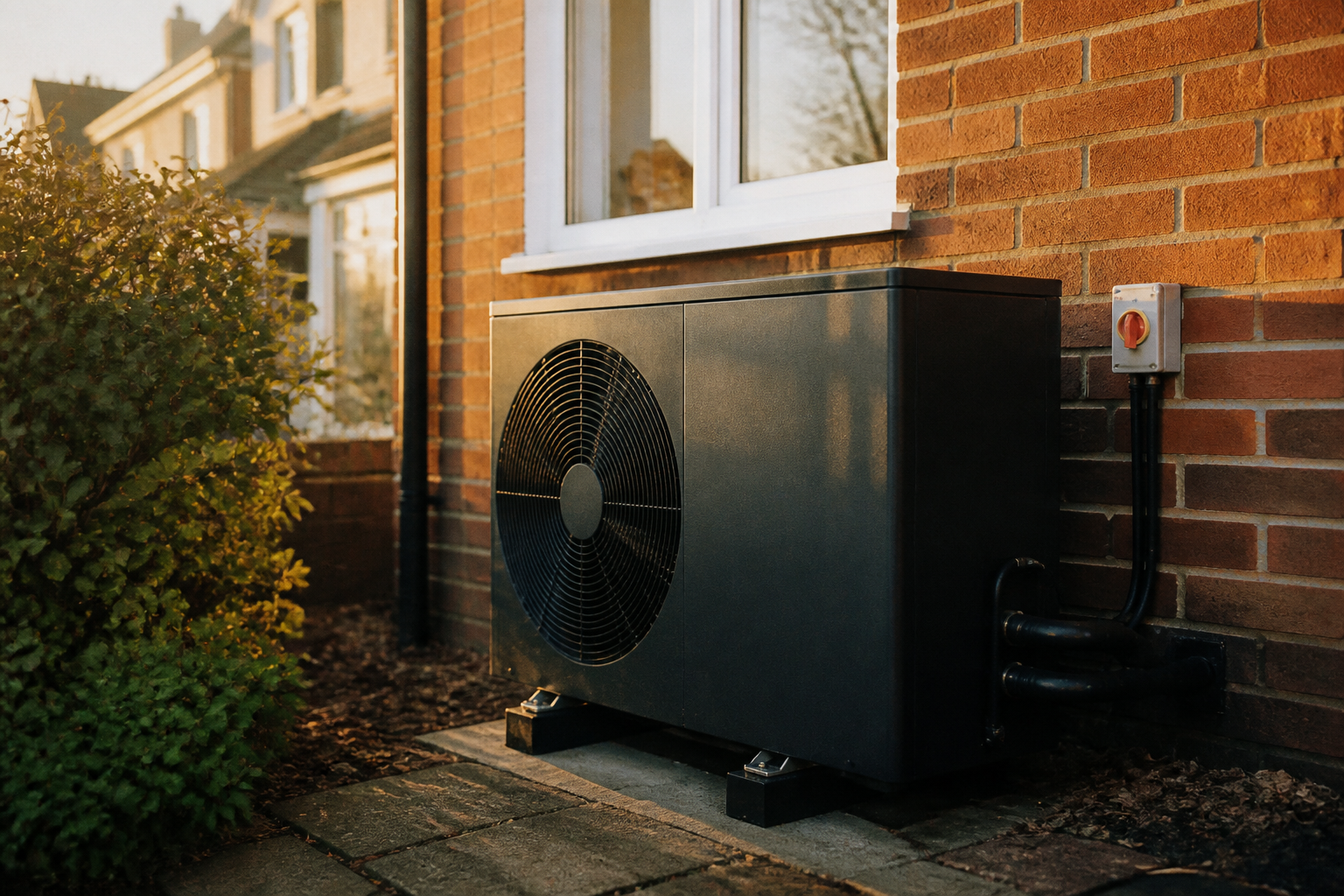
The transition process requires careful management of physical assets. A heat pump requires an external unit, which must be positioned to allow for adequate airflow while complying with local planning regulations. In many instances, heat pumps are permitted developments, but installers will verify this during the site survey.
Another risk factor is the noise profile of the equipment. Modern units are designed to be quiet, but placement relative to windows or neighbouring properties should be considered. Professional installers carry out acoustic assessments to ensure compliance with relevant standards. Any deviation from these standards can create complications during the commissioning phase.
Finally, ensure that the contract with your installer clearly details the grant deduction. The installer is responsible for applying for the grant, so the invoice should show the price inclusive of the 7,500 pound reduction. Transparency in these financial agreements is essential for auditing the cost of your system against initial quotes.
Questions people ask
- Can I apply for the Boiler Upgrade Scheme grant myself?
- No, you cannot apply for the grant yourself. The process is managed by your chosen MCS-certified installer. Once you have agreed on a quote for your heat pump, the installer makes the application to Ofgem on your behalf. The grant value is then deducted from the final invoice they provide to you.
- Does the heat pump grant cover the cost of new radiators?
- The Boiler Upgrade Scheme grant is specifically for the installation of the heat pump system itself. It does not explicitly cover the costs of upgrading radiators or underfloor heating to match lower operating temperatures. You should budget for these necessary distribution system upgrades separately when calculating your total project investment cost.
- What happens if my property already has a biomass boiler?
- The scheme allows for the replacement of fossil fuel heating systems, which includes biomass boilers. To be eligible, your property must currently rely on these systems for space and water heating. You must satisfy the standard MCS certification requirements to qualify for the funding, ensuring the replacement system meets modern efficiency benchmarks.
- Is the grant amount of 7,500 pounds guaranteed for all heat pumps?
- The 7,500 pound grant is the standard value provided for eligible air source heat pump installations. Provided your property meets the eligibility criteria and you engage an MCS-certified installer, this set amount is applied to your project. It is not dependent on the specific make or model of the heat pump unit.
Keep reading

UK energy price regulation
Understanding the October 2026 energy price cap

Employee financial wellbeing metrics
Supporting employee financial stability with data

Home solar energy generation
Trends in domestic rooftop solar adoption for 2026

Home heating technology update
Deciding on domestic heat pump installation

employee reward strategy analysis
Optimising personal reward strategy with salary sacrifice

UK electricity grid infrastructure
UK electricity generation and the clean power shift

electric vehicle charging guidance
Practical steps for managing your electric vehicle charging

Business travel expense strategy
Deciding between business mileage claims and salary sacrifice

electric vehicle market trends