


Home heating technology update
Deciding on domestic heat pump installation
A practical look at the trade-offs and grants involved in switching from oil or gas heating to a heat pump for UK homeowners.
 Tom EilonCOO and Co-Founder
6 min readUpdated
What matters here
- Government support through the Boiler Upgrade Scheme now reaches £9,000 for specific fuel switches.
- Installation requires careful assessment of property heat loss and existing radiator capacity.
- Decisions must balance immediate capital expenditure against long-term operational efficiency gains.
In short
Transitioning to a heat pump involves weighing the immediate installation costs against potential long-term energy efficiency improvements. With grants now up to £9,000 for qualifying oil-to-heat-pump switches, the financial case has shifted. Homeowners must conduct a heat loss assessment to ensure the property is suited for this technology, focusing on insulation and radiator sizing to maintain thermal comfort.
For many households, the primary challenge lies in the disparity between traditional high-temperature boiler systems and the steady, low-temperature output characteristic of heat pumps. While these systems are highly efficient, their performance is inherently linked to the fabric of the building. Engaging with the heat pump scheme allows individuals to map their transition against wider residential goals, ensuring that heating strategy forms part of a holistic approach to energy management rather than a reactive replacement of a failed boiler.
Evaluating the transition from legacy heating
Replacing a functional gas or oil boiler is a significant capital decision for any homeowner. As policies like the Future Homes Standard progress, the long term trend is moving towards low carbon alternatives. Currently, natural gas remains a primary source for heating, and boiler replacements continue to occur at a high volume. However, the path toward decarbonising heat is becoming a standard consideration for residential property upgrades.
When assessing this change, a finance director or a homeowner must consider the age of their current system. If a system is near the end of its operational life, the cost of a like-for-like boiler replacement is often lower in the short term. The challenge is that this locks a household into a carbon-intensive heating source for another decade or more. Choosing a heat pump now involves higher upfront costs but aligns the property with emerging energy standards.
The decision often hinges on the distinction between capital expenditure and ongoing operational costs. A gas boiler is historically simpler to repair, but heat pumps offer a path to energy price decoupling. By reviewing our schemes, households can evaluate how to mitigate the higher entry price through structured financial planning, effectively bridging the gap between current legacy infrastructure and a low-carbon future.
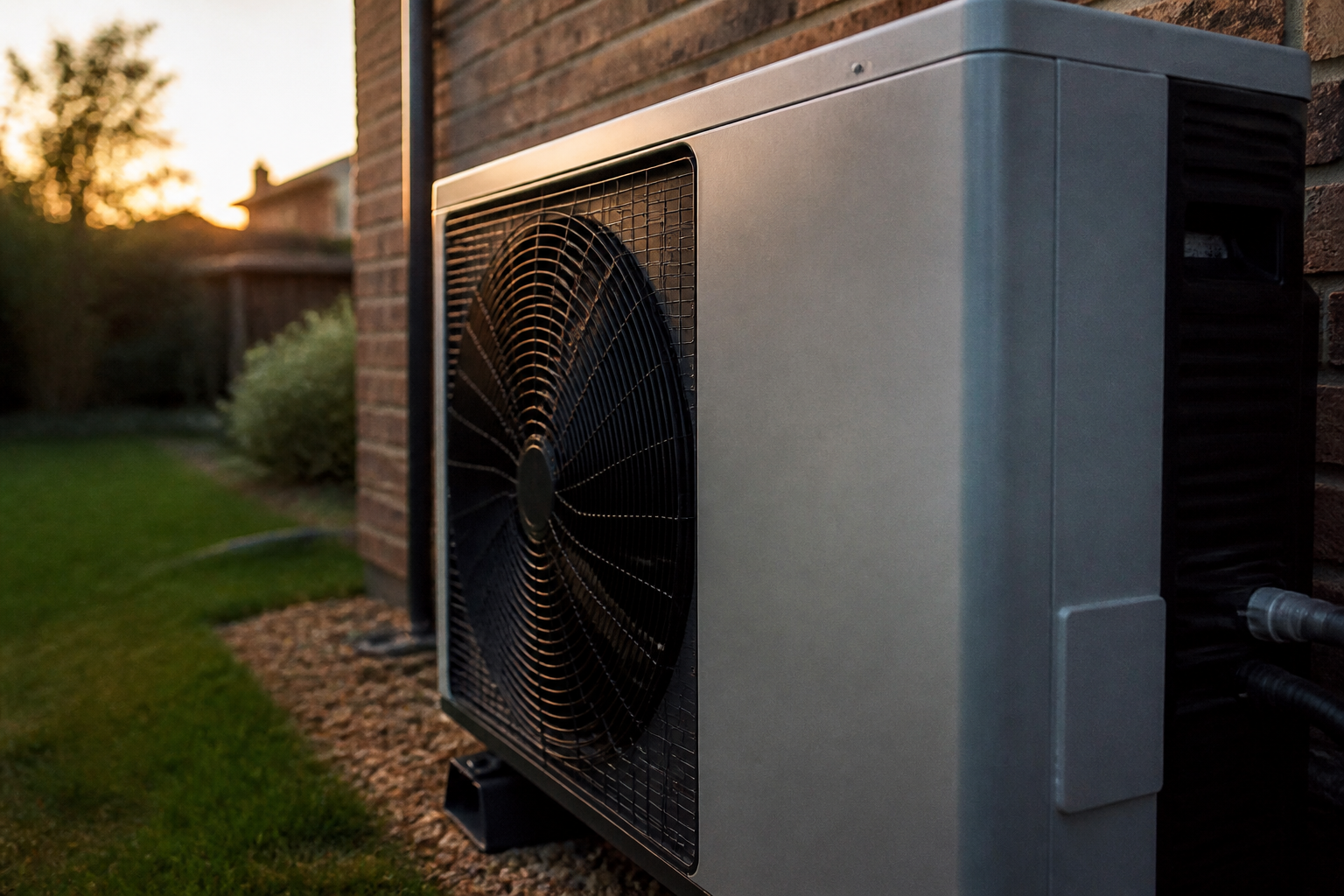
Understanding the Boiler Upgrade Scheme
The UK government has adjusted the Boiler Upgrade Scheme to provide stronger financial incentives, with grants reaching £9,000 for households transitioning from oil to heat pumps. This funding is designed to reduce the barrier to entry for the technology, making the capital expenditure more manageable. It is important to note that eligibility is specific and requires confirmation before proceeding with any installation contract.
For a household, the application process requires working with certified installers who manage the grant submission on behalf of the client. This professional validation ensures that the system installed is appropriate for the property's specific heat demand. Relying on accredited contractors is a critical step in ensuring the long term reliability of the system and the successful draw down of government funding.
Beyond the grant itself, homeowners should be aware that the funding is limited by volume, and as demand grows, the administrative requirements for proof of property energy efficiency may become more stringent. Working with experienced contractors ensures that the necessary energy performance certificate (EPC) updates are managed concurrently with the grant claim, preventing delays in processing.
| Factor | Gas Boiler | Heat Pump |
|---|---|---|
| Installation Cost | Lower upfront | Higher upfront |
| Government Grant | None available | Up to £9,000 |
| Energy Efficiency | Standard | High |
| Carbon Impact | High | Low |
Figures are illustrative based on current UK policy and market trends.
Assessing property suitability
Not every home is immediately ready for a heat pump. The technology operates most efficiently at lower flow temperatures compared to traditional gas boilers. This means a house needs to retain heat effectively. Insulation levels, window quality, and existing radiator surface area are the primary variables that dictate whether a heat pump will provide adequate warmth throughout the winter months.
A qualified installer must perform a room-by-room heat loss calculation. This is a technical requirement that should never be bypassed. If this calculation suggests a system will underperform due to poor insulation, the homeowner should focus on energy efficiency measures first. Investing in fabric improvements can make the subsequent installation of a heat pump more effective and affordable in the long run.
This assessment process is a vital gatekeeping measure. In many cases, adding loft insulation or upgrading double glazing is more cost-effective than installing a larger heat pump unit to compensate for heat leakage. By documenting these upgrades through the net zero home scheme, homeowners ensure their property reaches a standard that supports the long-term viability of low-temperature heating systems.
The role of existing heating infrastructure
In the current market, gas remains a dominant component of the UK energy mix, providing a significant share of power for both electricity generation and direct heating. The transition for many homes is therefore a gradual process rather than an overnight switch. For those using the heat pump scheme as part of their personal planning, understanding how their heating interacts with the wider grid is essential.
While heat pump deployment is accelerating, gas systems continue to provide reliable service for the majority of the existing housing stock. The policy direction aims to phase out high-carbon heating, but the reality for most remains a balanced approach. Many households choose to integrate the solar scheme alongside their heat pump to offset electricity consumption during the daytime, turning a heat upgrade into a broader energy efficiency strategy.
This integration creates a symbiotic relationship between generation and consumption. Heat pumps are essentially heat transfer devices that convert electricity into warmth. By coupling these with on-site solar generation, homeowners can reduce the peak-load demand on the grid, providing a tangible buffer against future electricity price volatility as documented in our insight.
The UK remains heavily dependent on natural gas to heat properties and provide hot water.
Financial and operational trade-offs
Choosing between a gas boiler and a heat pump is ultimately a decision about risk and long-term utility. A gas boiler is a well-understood, low-cost asset with a shorter lifespan. A heat pump is a capital-intensive asset that requires integration with a building's thermal performance. When our schemes are used to manage these transitions, the goal is to provide a framework that makes the technology accessible.
Considerations for a finance director include the potential for future energy price volatility. Heat pumps, being electric, offer the ability to leverage future developments in grid pricing and potentially sync with home energy storage. This is a different risk profile compared to reliance on the gas market, which is susceptible to international supply chain pressures.
It is also worth noting that maintenance cycles differ. While gas boilers require annual safety checks for combustion integrity, heat pumps require checks on refrigerant circuits and fan mechanics. Integrating these service requirements into long-term property maintenance budgets is essential to maintain the high Coefficient of Performance (CoP) that makes these systems financially attractive over a fifteen-year horizon.

Long-term maintenance and system health
Like any complex piece of mechanical engineering, heat pumps require periodic maintenance to ensure they operate at their design efficiency. This involves checking fluid pressures, cleaning filters, and ensuring the outdoor unit remains free from debris. Compared to a gas boiler, the service requirements are different but equally important for maintaining performance over a ten to fifteen year horizon.
Homeowners should discuss the long-term maintenance costs with their installer at the outset. Establishing a service schedule early protects the efficiency gains that justify the initial investment. As more households transition, the market for specialised maintenance is also growing, ensuring that support infrastructure for these systems is becoming more robust and accessible across the UK.
Regular monitoring of system logs—often available through manufacturer apps—allows homeowners to track daily energy consumption. Detecting anomalies early, such as frequent cycling or unexpected compressor noise, can prevent minor issues from becoming major repairs, ensuring that the property remains warm during the coldest months of the year.
Questions people ask
- How do I determine if my property is suitable for a heat pump?
- You require a room-by-room heat loss calculation performed by a qualified installer. This checks your insulation levels and heat retention. If your property cannot hold heat efficiently at low flow temperatures, you may need to prioritise fabric improvements or radiator upgrades before proceeding with an installation.
- Does the £9,000 grant apply to all heat pump installations?
- No, the grant is specific to certain qualifying scenarios, such as transitioning from fossil fuel systems like oil heating. Eligibility is tied to government policy criteria, and it is essential to have an accredited installer confirm your status and manage the application process on your behalf to ensure validity.
- Can I combine a heat pump with other energy efficiency upgrades?
- Yes. Integrating technologies like solar panels through the solar scheme can significantly reduce the electricity costs associated with running a heat pump. A holistic approach, often managed through the net zero home scheme, ensures that your property's total energy demand is minimised, which is critical for system effectiveness.
- How does the maintenance of a heat pump compare to a gas boiler?
- Heat pumps require specialised maintenance, including refrigerant checks and filter cleaning, rather than the combustion-safety checks required by gas boilers. While the service requirements are different, they are equally important to ensure the system reaches its 10 to 15-year operational lifespan without suffering from performance degradation.
Keep reading

Employee financial wellbeing metrics
Supporting employee financial stability with data
UK energy price regulation
Understanding the October 2026 energy price cap

UK electricity grid infrastructure
UK electricity generation and the clean power shift

UK climate fiscal policy
Understanding the seventh carbon budget for payroll planning

electric vehicle charging guidance
Practical steps for managing your electric vehicle charging

Business travel expense strategy
Deciding between business mileage claims and salary sacrifice

Home solar energy generation
Trends in domestic rooftop solar adoption for 2026

employee reward strategy analysis
Optimising personal reward strategy with salary sacrifice

electric vehicle market trends