

electric vehicle charging guidance
Practical steps for managing your electric vehicle charging
Follow this practical guide to choosing the right home, workplace, and public charging solutions for your electric vehicle needs.
 Alison DavidsonHead of Finance
5 min readUpdated
What matters here
- Assess whether home charging or public network access fits your daily routine.
- Check eligibility for government grants to offset installation costs at home or work.
- Use subscription passes or fixed-allowance models to stabilise your monthly public charging spend.
In short
Managing your electric vehicle charging starts with evaluating your access to home and workplace power. If off-street parking is available, installing a dedicated unit is usually most efficient. For regular public charging, consider emerging subscription models to predict costs. Always review local grant availability through schemes like the Workplace Charging Scheme before committing to infrastructure investments.
Assessing your primary charging requirements
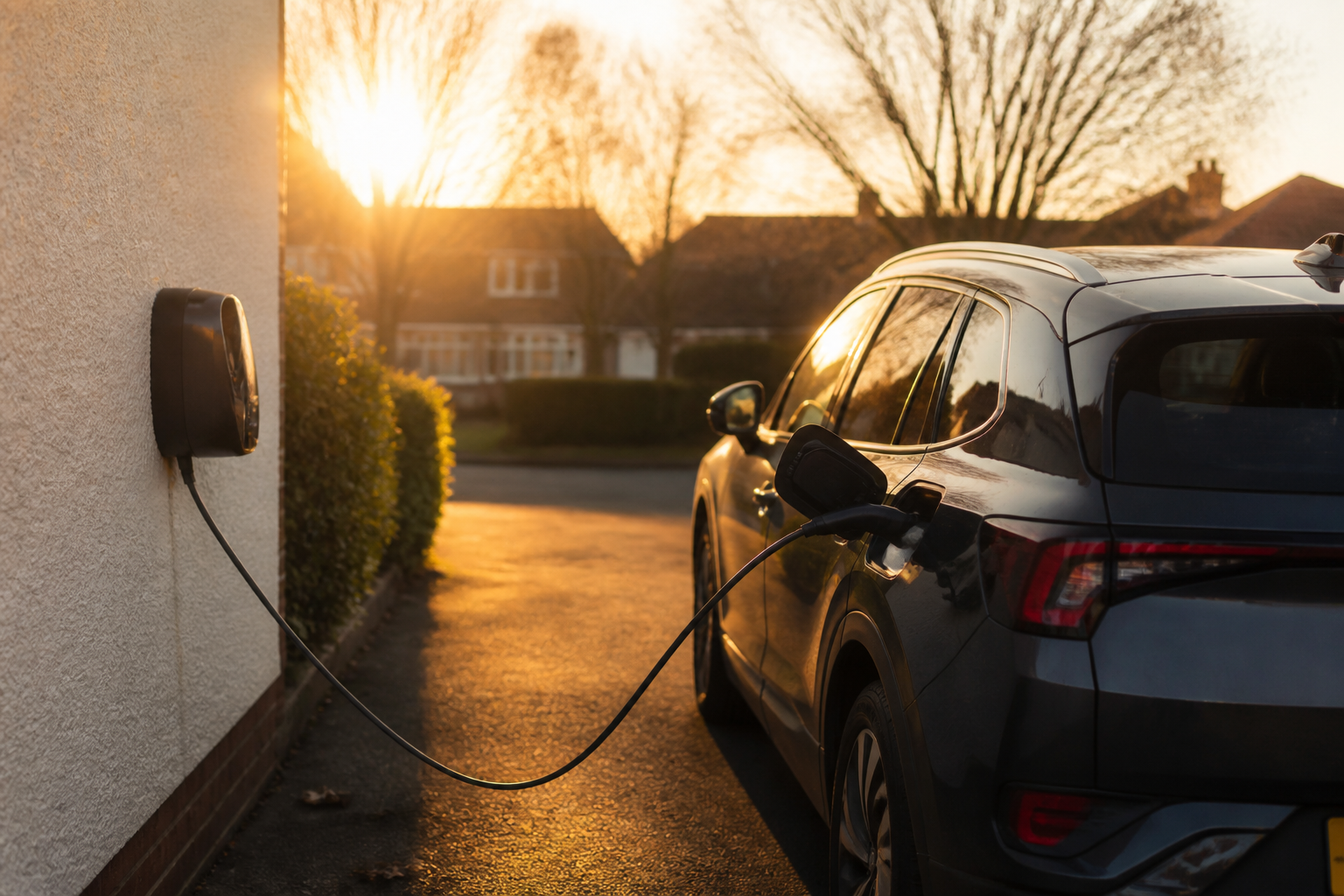
Your first step is to identify where you will perform the majority of your charging. For most, the lowest cost and highest convenience comes from charging at home. This allows you to utilise off-peak energy rates, which can significantly lower the cost per mile. You must have access to a driveway or designated off-street parking to install a standard home charger.
If home charging is not an option, you should look at your workplace facilities. Many organisations are now installing charging points to assist staff with the transition to electric transport. Before you commit to a vehicle, ask your facilities team if such infrastructure is available or planned. You can learn more about how we support this through our schemes.
Assessing your requirements requires calculating your average daily commute and checking if your vehicle has smart charging capabilities. Older home chargers might lack the connectivity to manage energy loads during peak times. If you have limited off-street space, consult a certified installer to discuss compact wallbox options. Failure to verify electrical capacity beforehand can lead to costly circuit upgrades. Always check your household fuse rating before installation, as adding a heavy-duty charger might require a DNO upgrade to the property supply.
Understanding the public charging landscape
Public charging is a vital part of the network, particularly for longer journeys or city drivers who lack home access. You should familiarise yourself with the different speeds available. A 200kWh ultra-rapid charger is ideal for quick motorway top-ups, but it is not necessary for every situation. You often pay a premium for speed, so match the charger to your required dwell time.
Some drivers mistakenly believe that faster is always better. However, as highlighted by recent industry analysis in September 2026, different vehicles have varying charging capabilities. Choosing the right speed for your specific journey and vehicle will save you time and money. For a deeper dive into the technical side, refer to our guide to domestic and public electric vehicle charging.
Public charger reliability remains a focus area. Use network-specific apps to check real-time availability and charger health status before arriving. When choosing a network, compare pricing models: some charge by the minute, while others charge by the kilowatt-hour. For those regularly using motorways, note that rapid chargers frequently throttle speeds as your battery reaches 80 percent capacity, making the final 20 percent significantly slower and more expensive relative to the energy gained.
Predicting costs with subscription models
Public charging costs can be volatile, varying by peak and off-peak times. A new development in September 2026 is the introduction of the charging pass. This model, launched by Be.EV, offers a fixed monthly allowance for a set fee. This removes the need to track per-kWh rates during your commute or longer trips.
This subscription approach is common in more mature European markets and provides a predictable expense for your monthly budget. It is particularly useful if you rely on the public network to supplement or replace home charging. If you are balancing this against other financial commitments, supporting employee financial stability is a helpful reference.
Subscription models operate on a flat-fee basis which can insulate the driver from surges in public energy prices. However, evaluate your monthly usage against the fixed cost. If your mileage is low or you primarily charge at home, a pass might result in under-utilised value. Carefully review the contract terms regarding rollover credits and notice periods, as some subscriptions commit users to annual terms regardless of monthly vehicle activity levels.
Matching charging strategy to your vehicle
The second-hand electric vehicle market is growing, meaning many drivers own cars with different range and charging profiles. If you have an older vehicle or a smaller battery, you may need to plan more frequent, shorter stops rather than relying solely on ultra-rapid chargers. Always use apps to map out your route based on charger availability and speed.
Do not over-specify your requirements. If you primarily commute, a standard home wallbox is sufficient. You can explore how these assets fit into your wider personal reward strategy to ensure you are managing your capital effectively.
For vehicle-to-grid (V2G) capable cars, charging strategy shifts toward managing energy discharge back into the home. If your car and wallbox support this, you may offset the October 2026 energy price cap by using the battery as a storage medium. Research the specific hardware compatibility of your vehicle before investing in bi-directional charging equipment, as this remains an emerging sector.
Planning for future charging needs
Infrastructure is evolving rapidly. Whether you are choosing a home charger or signing up for a public charging pass, keep your long-term usage in mind. If you expect to move or change your commute, opt for flexible solutions. Remember that government policy is consistently supportive of grid and infrastructure improvements.
Keep up to date with newsroom developments to understand how grid connectivity and installation capacity change over time. Being proactive about your charging infrastructure choices today will lead to a more seamless experience as more vehicles transition to electric power.
As the market matures, consider the resale value of the home charging unit you install. Smart-enabled units that integrate with home energy management systems are increasingly viewed as home improvements that enhance property appeal. Ensure that any installer selected adheres to the latest electrical safety standards to prevent future compliance issues during property transactions.
Questions people ask
- Can I claim government grants if I am a private homeowner?
- Current government grants, such as the Workplace Charging Scheme, focus on businesses and organisations. Private homeowners generally do not have access to the same installation subsidies. However, you should check our schemes for potential personal incentives or local authority support that may be available to reduce the net cost of residential charger installation.
- Why is my charging speed lower than the charger's rating?
- Charging speed is limited by the lowest-rated component in the system, which is typically your vehicle's onboard charger or the current battery state of charge. As batteries approach capacity, the charge rate slows significantly to protect cell health. Always check your vehicle specifications before selecting a high-speed unit at public stations.
- Are subscription charging passes cost-effective for low-mileage drivers?
- Subscription passes are most cost-effective for high-mileage drivers who rely on public infrastructure. For low-mileage users, a subscription may lead to higher costs compared to pay-as-you-go rates. Calculate your average monthly kilowatt-hour consumption and compare it against the flat-fee structure of the pass to determine if the fixed cost justifies your typical driving frequency.
- How do I ensure my workplace charger is OZEV-compliant?
- You must confirm that your chosen installer is OZEV-authorised before any work begins. Failure to use an authorised professional renders your business ineligible for government grants. Verify the installer's credentials against the government register and ensure they provide all necessary documentation for your grant application to remain compliant with safety and funding regulations.
Keep reading

employee reward strategy analysis
Optimising personal reward strategy with salary sacrifice

electric vehicle market trends
Electric vehicle adoption and the ZEV mandate

Business travel expense strategy
Deciding between business mileage claims and salary sacrifice

Employee financial wellbeing metrics
Supporting employee financial stability with data
UK electricity grid infrastructure
UK electricity generation and the clean power shift

UK climate fiscal policy
Understanding the seventh carbon budget for payroll planning

Home solar energy generation
Trends in domestic rooftop solar adoption for 2026

UK energy price regulation
Understanding the October 2026 energy price cap

Home heating technology update