
UK net zero spending
Deciding on public investment in UK net zero infrastructure
We examine the trade-offs in UK government spending between grid modernisation and direct subsidies for household low-carbon technology upgrades.
 Ryan AmosEV Sales Director
5 min readUpdated
What matters here
- Public spending balances national infrastructure against household support.
- Grid upgrades provide the backbone for all low-carbon energy adoption.
- Direct subsidies allow individuals to reduce personal carbon emissions faster.
In short
The government faces a strategic choice between investing in large scale grid capacity to handle future electricity demand and providing direct grants to help households install clean technology. Balancing these two approaches is essential to ensure that individual upgrades like solar panels or heat pumps can actually connect to a resilient and stable national network.
This strategic tension between national infrastructure and individual adoption requires careful scrutiny. It influences everything from the timing of local grid reinforcements to the specific financial incentives available for property owners. Understanding these mechanisms is vital for both private citizens and organisations exploring our schemes to facilitate the transition to net zero.
The logic of central infrastructure
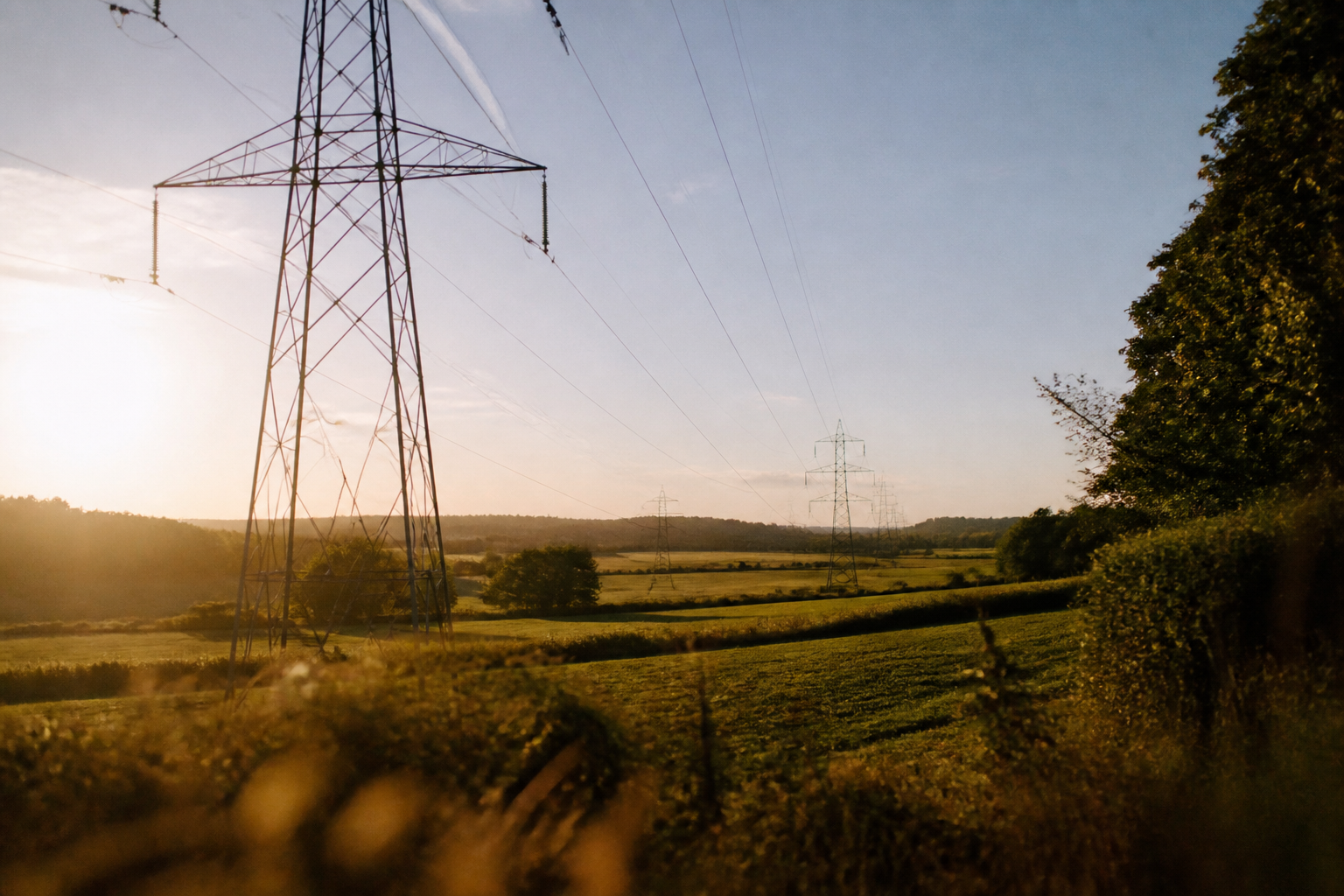
The UK government allocates significant public funds to overhaul the national grid. This investment focuses on upgrading transmission lines and substations to manage the anticipated surge in electricity demand. A robust grid is the foundation for a net zero economy, as it must distribute power from offshore wind farms and nuclear sites to homes across the country.
The primary benefit of this approach is system resilience. A modernised grid reduces the risk of bottlenecks where renewable energy is produced but cannot reach consumers. However, this strategy requires decades of planning and substantial upfront capital. It does not provide an immediate reduction in the carbon footprint for an individual household, but it prepares the infrastructure for mass adoption of clean technologies.
Grid upgrades often involve high voltage transmission reinforcement and smart distribution automation. These projects are capital intensive and technically complex, often requiring significant regulatory approval and planning consent. For further context on the technical realities, see myths and facts about the UK electricity grid which outlines why these systemic upgrades are non-negotiable for future energy security.
Direct subsidies for household change
In contrast, direct spending on household schemes prioritises immediate action. By providing grants for technologies like heat pumps or solar arrays, the government enables individuals to take active control of their energy consumption and carbon emissions today. This approach creates a market for local installers and encourages private sector innovation.
The trade-off here is scalability and cost efficiency per unit. While direct subsidies help thousands of families transition, they can be more expensive to administer than broad infrastructure projects. There is also the challenge of grid constraints. If too many households adopt high-load technologies in a specific area without accompanying grid upgrades, the local network may experience stress or capacity limits.
Practical barriers often include a shortage of qualified installers. As noted in trends in domestic energy installation workforce capacity, the speed of household adoption is often bottlenecked by the availability of skilled labour rather than technology availability itself. This creates a reliance on government-funded training initiatives to bridge the skills gap.
| Focus area | Main benefit | Key risk |
|---|---|---|
| Grid investment | System wide capacity | Long delivery timeline |
| Direct subsidies | Immediate local impact | Local network strain |
| Hybrid strategy | Balanced transition | Higher funding complexity |
Figures represent policy objectives rather than financial data points.
Evaluating the public spending balance
Policymakers must constantly calibrate the balance between these two strategies. If spending tilts too far toward central infrastructure, the public may feel disconnected from the net zero goal. Conversely, if all money goes to individual incentives, the physical energy system might become overwhelmed.
For an individual, this means the environment for adopting green technology is constantly changing. A government that prioritises infrastructure might focus on regional rollouts, whereas a focus on household support makes grants more accessible. Understanding this context helps when weighing a personal investment in home energy upgrades, as both national stability and individual action are required for the transition to succeed.
A critical aspect of this balance is ensuring that local grid capacity matches the uptake of domestic low-carbon heat and power. When households install solar or heat pumps, they must often seek grid connection approval from their local distribution network operator. This ensures that the local transformer capacity is not exceeded, which is explored in detail in how domestic solar panels function on the grid.
A robust grid is the foundation for a net zero economy, as it must distribute power from offshore wind farms and nuclear sites.
The role of the private sector
While government policy sets the framework, private sector involvement is critical. Employers often bridge the gap by offering schemes that make clean energy technology more accessible. This allows the workforce to participate in the transition without needing to manage the full financial burden alone.
Through The Solar Scheme or The Heat Pump Scheme, individuals can navigate the transition by leveraging payroll efficiencies. This is a pragmatic way to support national objectives while improving personal household energy efficiency. It aligns individual financial planning with the broader movement toward lower carbon living, ensuring that technology adoption is supported by the right financial tools.
These financial instruments, such as salary sacrifice, are effective because they allow employees to utilise pre-tax income for energy efficiency improvements. For those looking to understand the financial mechanics, salary sacrifice tax and national insurance mechanics provides a clear breakdown of how these savings are realised on the payslip.

Future outlook and investment
Looking forward, the interaction between public grid spending and private household upgrades will likely become more dynamic. As the grid integrates more intermittent renewable generation, the value of demand-side response technologies will increase. This includes smart batteries and energy management systems that allow homes to act as small power plants.
For businesses, this represents an opportunity to influence the wider transition. By utilising The Net Zero Home Scheme, employers can provide their workforce with the tools necessary to make homes more efficient, thereby reducing national energy reliance. This is not merely an environmental effort but a move towards long-term resilience and operational efficiency as explained in our insight section.
Questions people ask
- Why does my local grid need an upgrade for my new heat pump?
- Local grids were designed for lower electricity loads. Installing a heat pump significantly increases your home energy demand. If your local substation or cables have insufficient capacity, they may struggle to supply this load. A network upgrade ensures the system remains stable and prevents voltage drops or power outages in your local area.
- How do salary sacrifice schemes help with green technology costs?
- Salary sacrifice allows you to pay for qualifying green technology, such as solar panels or heat pumps, directly from your gross salary. Because these payments are made before tax and National Insurance, your total taxable income is reduced, providing a substantial discount compared to paying for the equipment out of your net take-home pay.
- What is the difference between grid-scale and domestic infrastructure?
- Grid-scale infrastructure involves high-voltage transmission lines and major substations that manage energy flow across the country. Domestic infrastructure refers to the cables, transformers, and smart meters that deliver power to individual properties. Both must be synchronised; if the national grid provides excess power, the local network must be capable of distributing it.
- Can I install solar panels if the national grid is not fully upgraded?
- Yes, but you require approval from your local distribution network operator. They assess whether your specific connection will overload the local hardware. If the grid is constrained, they might limit the amount of electricity you can export back to the network, which may influence the efficiency and economic return of your solar installation.
Keep reading
UK energy price regulation
Understanding the October 2026 energy price cap

UK electricity grid infrastructure
UK electricity generation and the clean power shift

Employee financial wellbeing metrics
Supporting employee financial stability with data

Home solar energy generation
Trends in domestic rooftop solar adoption for 2026

Home heating technology update
Deciding on domestic heat pump installation

electric vehicle charging guidance
Practical steps for managing your electric vehicle charging

Business travel expense strategy
Deciding between business mileage claims and salary sacrifice

employee reward strategy analysis
Optimising personal reward strategy with salary sacrifice

electric vehicle market trends