

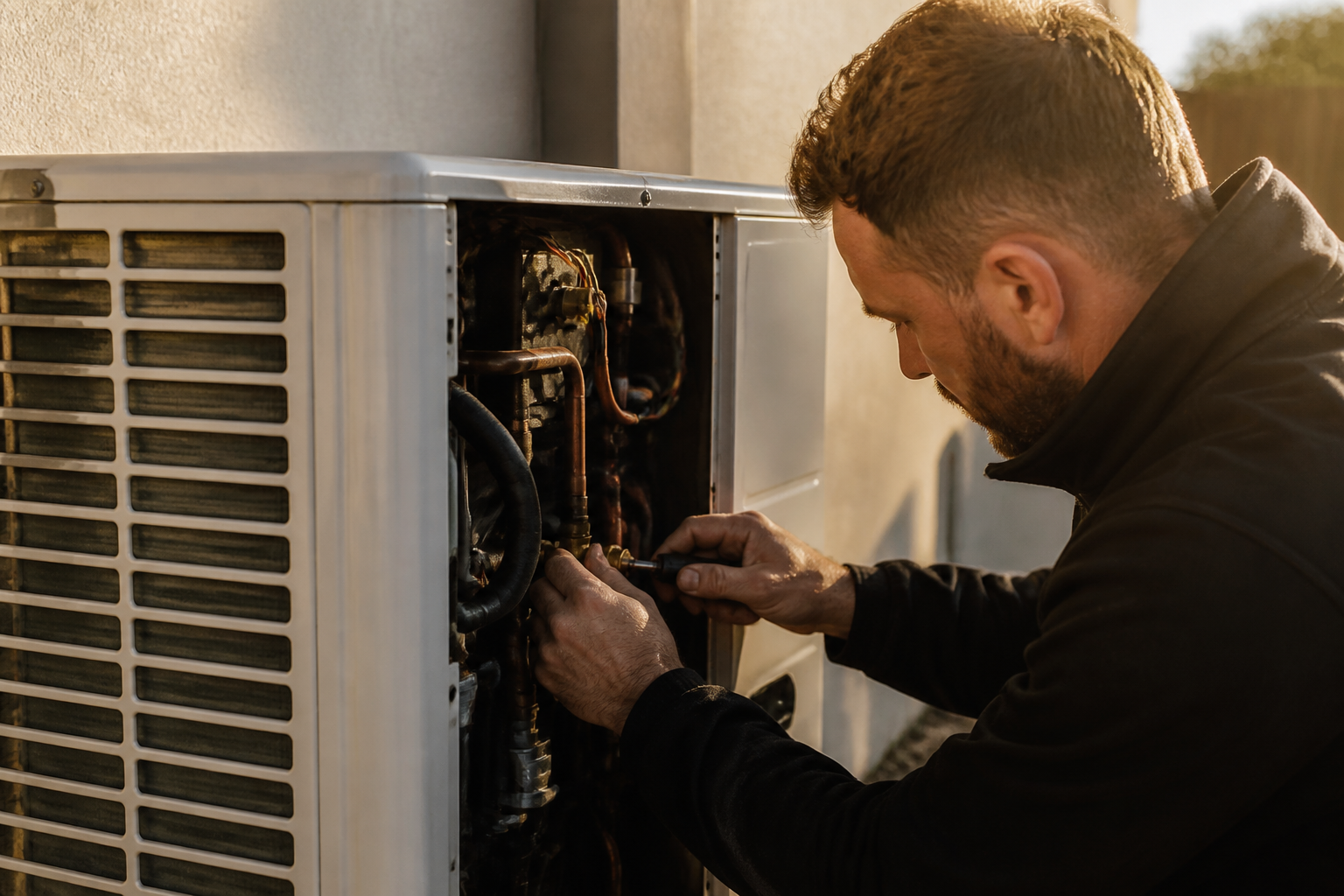
Heat pump installer workforce
UK heat pump installer training capacity
Explore how new training pathways are addressing the demand for skilled heat pump installers across the UK sector.
 Mas MortonChief of Staff
4 min readUpdated
What matters here
- Structured training pathways are now available to support rapid installer diversification.
- Installation work is shifting towards a model of dual electrical and refrigerant specialisation.
- The market is prioritising formalised certification to bridge the current skills gap.
The current state of installer capacity
The transition to low-carbon heating relies on a robust workforce capable of installing heat pumps at scale. For some time, the primary constraint has been the number of qualified engineers. Recent developments in the training sector are designed to remove these barriers, moving beyond ad hoc learning towards structured career progression. This professionalisation is a necessary response to the growing demand for electrified heating solutions in homes across the UK.
Installer training is now more accessible than it has been in previous years. New programmes offer a clear map for heating and plumbing professionals to transition into the heat pump sector. By providing flexible options that include both online modules and practical site-based learning, the industry is creating more entry points for experienced tradespeople. This shift addresses the need for a larger, more confident workforce that can meet the requirements for complex system installations. These initiatives are essential for maintaining domestic energy installation workforce capacity as we move toward wider adoption.
The mechanics of heat pump installation
Becoming a heat pump engineer involves understanding two distinct technical fields. As noted in the 2026 industry guides, the work is split between the mechanical refrigerant circuit and the electrical supply requirements. An installation requires precise work on the pump unit itself, alongside upgrades to consumer units, controls, and wiring. Because of this technical split, the market is increasingly defined by professionals who either master both disciplines or form partnerships between heating engineers and electricians.
This dual-trade requirement means that training is no longer a one-size-fits-all process. Electricians are increasingly viewing heat pumps as a natural extension of their trade, while heating engineers focus on the thermodynamics of heat transfer. The current trend is to integrate these fields through training courses that cover both the hydraulic and electrical aspects of a system. This ensures that installers are not just fitting hardware, but commissioning systems that perform efficiently for the homeowner. For deeper insight into these technical requirements, see our analysis on how home heat pumps operate and the current market outlook.
Standardised pathways for professionals
Training programmes launched in July 2026 illustrate a push towards a comprehensive certification framework. By offering a four-level pathway, these initiatives allow engineers to build their knowledge from basic heat pump theory to advanced system diagnostics. This approach helps reduce the risks associated with poor installation quality and ensures that engineers are properly qualified before they take on complex site work.
A critical component of these new pathways is the focus on achieving MCS registration. This is a central milestone for any engineer looking to operate professionally in the UK market. By providing clear guidance on the requirements for registration, training providers are helping to bridge the gap between being a competent engineer and being a certified installer. This formalisation provides greater assurance that the work completed in domestic properties meets the necessary standards for safety and efficiency. Those exploring the sector should also note how this fits within our schemes for sustainable residential upgrades.
Business diversification and industry growth
The growth of the sector is largely driven by businesses choosing to diversify their offerings. With traditional boiler installations facing a long-term decline in favour of electric alternatives, contractors are using these training opportunities to protect their business interests. By equipping their teams with the skills to fit air source heat pumps, companies can adapt to the changing market landscape. This professional evolution is essential for maintaining a competitive edge in a heating industry that is shifting towards decarbonised solutions.
Training providers are now offering incentives such as free initial courses to encourage this uptake. These initiatives are not just about individual career growth but about the collective ability of the UK to deliver on housing energy upgrades. When more engineers become comfortable with heat pump technology, the time taken for a typical installation decreases and the quality of customer outcomes improves. This creates a positive cycle of increased demand, improved supply chain capability, and higher professional standards.
Practical challenges and site-based competency
While modular training provides the theory, real-world competence relies on site-based application. A common challenge involves retrofitting heat pumps into older buildings where radiators, pipework diameters, and insulation levels require adjustment. Training programmes now place a greater emphasis on heat loss calculations, ensuring engineers do not simply specify oversized units but correctly size the system to the building heat load.
Engineers are also taught the importance of hydronic balancing. If flow rates are not correctly calculated, the heat pump may cycle too frequently, increasing energy consumption and causing premature mechanical wear. By embedding these site-based competencies into the curriculum, training providers are reducing the likelihood of common installation pitfalls such as inadequate flow rates or incorrect refrigerant charging. This hands-on training complements the formal certifications, creating a more rounded professional who can troubleshoot issues before they escalate into persistent operational faults.
Looking ahead to the next twelve months
The next year will likely see a significant rise in the number of qualified installers who have completed these modular training programmes. As engineers progress through levels of expertise, the industry will see more qualified personnel entering the market with F-Gas qualifications and system diagnostic capabilities. This increase in human capital is what will allow the UK to meet the demand for high-performance heating systems. Sustainability leads should keep an eye on how these training metrics evolve, as they are a strong indicator of the industry's health and its capacity to handle a higher volume of projects.
As training becomes more ingrained, the focus will likely shift from the availability of basic installation skills to the availability of specialised expertise. This includes managing complex system integration and optimising heat pump performance in older, less efficient housing stock. The progress made in 2026 suggests that the industry is well on its way to creating the required infrastructure. The collaborative approach between trade bodies, training academies, and practicing engineers is setting a steady foundation for the coming transition, further supported by the availability of The Heat Pump Scheme for eligible projects.
Questions people ask
- What qualifications do I need to start installing heat pumps?
- You generally need a background in plumbing or heating, plus F-Gas certification for refrigerant handling. Many engineers undertake specific heat pump training programmes that align with MCS standards. These courses cover technical design, heat loss calculation, and commissioning, ensuring you can manage the full installation lifecycle professionally and safely.
- Are there incentives for heating engineers to train in heat pump technology?
- Yes, many training providers offer subsidised or free initial training courses to encourage professional diversification. These programmes help existing heating and plumbing engineers transition into low-carbon technology, allowing them to remain competitive as traditional boiler installations decline. Checking with established academies will reveal current availability for these industry-supported upskilling opportunities.
- How long does it take to become a fully qualified heat pump engineer?
- The duration depends on your existing experience. Qualified heating engineers can often complete modular training in a matter of weeks, focusing on the specifics of heat pumps. For those new to the trade, it requires a more comprehensive commitment involving apprenticeship-style learning and certification in both electrical and mechanical competencies.
- Why is MCS registration important for a heat pump installer?
- MCS registration is the industry standard for microgeneration products and installers in the UK. It ensures that installations meet strict quality and safety criteria. Achieving this status is often required for homeowners to access government grants and funding, making it a critical asset for any business operating within the residential heating sector.
Keep reading

UK energy price regulation
Understanding the October 2026 energy price cap

Employee financial wellbeing metrics
Supporting employee financial stability with data

Home solar energy generation
Trends in domestic rooftop solar adoption for 2026

Home heating technology update
Deciding on domestic heat pump installation

employee reward strategy analysis
Optimising personal reward strategy with salary sacrifice

UK electricity grid infrastructure
UK electricity generation and the clean power shift

electric vehicle charging guidance
Practical steps for managing your electric vehicle charging

Business travel expense strategy
Deciding between business mileage claims and salary sacrifice

electric vehicle market trends