

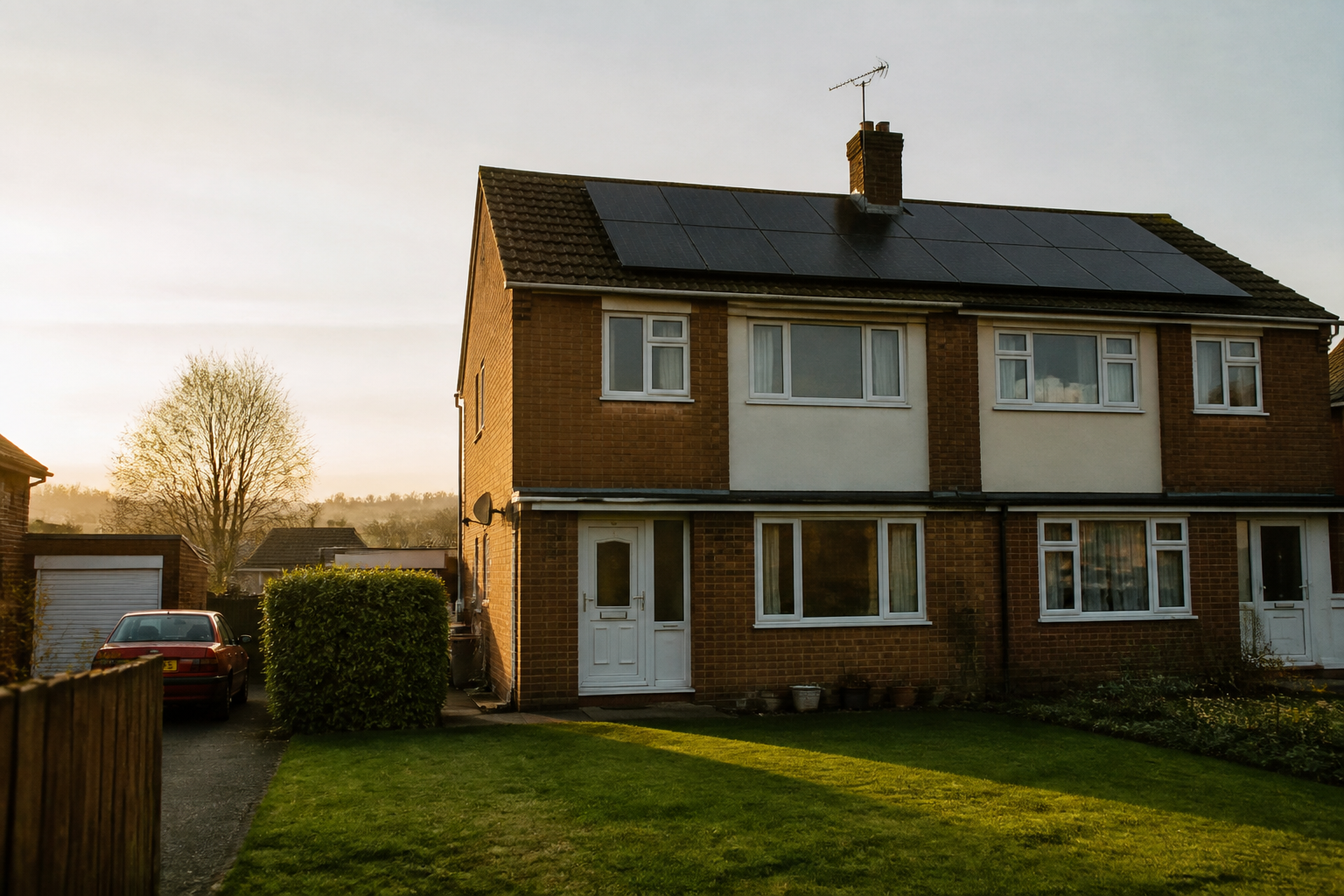
Home solar energy generation
Solar panel myths and facts for homeowners
We examine the latest data on household solar energy generation, from potential bill savings to the arrival of plug-in balcony systems in the UK.
 Natalie IzzardHead of Partnerships
3 min readUpdated
What matters here
- Rooftop solar reduces annual bills by at least £400 even in cloudy regions.
- New legislation allows UK households to use plug-in balcony solar systems.
- System costs are decreasing while electricity prices drive greater savings.
Understanding the savings potential of rooftop solar
A common concern for homeowners is whether the United Kingdom receives enough sunlight to make solar installations a sound financial choice. Recent analysis suggests that weather patterns are less of a barrier than widely believed. Data indicates that even in the cloudiest regions of Great Britain, households can expect to save at least £400 annually on their energy bills through the installation of rooftop panels.
The economics of solar energy have shifted as installation costs continue to decrease. When combined with the reality of rising wholesale electricity prices, the case for rooftop generation becomes more compelling. In regions with more consistent sunshine, these yearly savings can climb beyond £600. The direction of travel for the solar industry confirms that home generation offers a measurable way to mitigate energy costs across diverse geographical locations. For further information on how these systems integrate into modern households, refer to our schemes or explore our editorial standards regarding technology reporting.
Financial projections for solar adoption should also account for the long term lifespan of equipment. Most tier one panels now offer performance warranties extending beyond 25 years. This longevity transforms a one off capital expenditure into a multi-decade asset that offsets volatile energy market pricing. Homeowners are increasingly using tools like The Solar Scheme to model these returns against their specific household electricity consumption patterns.
Dispelling the cloud cover misconception
Some prospective installers believe that solar arrays only perform during bright, summer conditions. This perspective ignores the way modern photovoltaic technology operates. Solar panels generate electricity from daylight, not just direct sunshine. This is why households in northern areas, such as southern Scotland, see tangible financial benefits. To grasp the mechanics, one might consider How domestic solar panels function on the grid for a technical breakdown.
Analysis of solar generation in places like Glasgow confirms that homeowners see consistent annual savings regardless of the local climate. The primary driver for these financial gains remains the reduction of reliance on the national grid during peak hours. By generating electricity at the point of use, homeowners insulate themselves against future fluctuations in energy prices. This decentralised approach is essential for modern grid stability, as discussed in Myths and facts about the UK electricity grid.
The arrival of balcony solar technology
For those unable to install traditional roof-mounted systems, new technology is changing the landscape. Following a change in legislation that took effect on 27 August 2026, UK households now have the legal pathway to use plug-in balcony solar panels. This shift mirrors systems already well-established in European markets such as Germany and Spain, where they are known as balcony power plants.
This development allows flat owners and renters to access renewable energy generation without requiring the extensive infrastructure of a full roof array. These systems plug directly into standard household sockets, making the process of adopting home solar energy significantly more accessible for city dwellers and those living in apartments. As the sector grows, homeowners may find additional resources through The Net Zero Home Scheme to support their transition.
Evaluating the installation process
Rooftop solar requires professional design and installation to ensure efficiency and safety. Homeowners must consider roof orientation, pitch, and structural integrity. The industry has reached a level of maturity where these assessments are standardised, ensuring that systems are optimised for the specific needs of the property. For those concerned about availability, Trends in domestic energy installation workforce capacity provides an overview of the current labour landscape.
Conversely, plug-in balcony systems are designed for simplicity. Because they do not require complex structural mounting, they offer a more modular approach to energy generation. Both options require a pragmatic assessment of individual household needs, roof space, or balcony configuration before proceeding. Homeowners should consult contact us if they require further guidance on selecting verified installation professionals.
Future trends in home energy generation
The policy environment in the UK continues to evolve to support home energy independence. By facilitating simpler installation routes for balcony units and ensuring clear data on the financial benefits of rooftop systems, the path toward a more efficient energy model is becoming clearer for the average homeowner.
Current market trends show a consistent move toward decentralised energy. Homeowners are no longer passive consumers. They are becoming active participants in the energy market. As technology costs remain on a downward trajectory, the decision to invest in solar capacity aligns with both individual financial goals and the wider national objective of improving energy efficiency. For readers who wish to see how this fits into the broader corporate landscape, visit our newsroom for industry updates.
Questions people ask
- Can I install balcony solar panels if I rent my home?
- Yes, the legislation change from 27 August 2026 allows plug-in balcony systems to be installed by renters. However, you must first secure written permission from your landlord or the freeholder of the building. These systems offer a portable solution for energy generation that does not permanently alter the property structure or roof integrity.
- How much electricity does a typical balcony solar system produce?
- Plug-in balcony systems usually consist of one or two panels with a micro-inverter. While output varies by sunlight exposure, they are designed to offset your base-load power consumption. They typically contribute to running essential appliances such as refrigerators, routers, or chargers, reducing your dependency on grid electricity during daylight hours throughout the year.
- Do I need planning permission for rooftop solar panels?
- In most cases, rooftop solar panels are considered permitted development in England and Wales. You generally do not need planning permission, provided your home is not in a conservation area or a listed building. Always check with your local planning authority or a qualified installer to confirm specific compliance with local building regulations.
- Does solar panel efficiency decrease significantly in the winter?
- While output is lower in winter due to shorter daylight hours and lower sun angles, panels continue to function. They capture diffuse light even on cloudy days. Data confirms that homeowners still see significant annual bill savings of at least £400, reflecting the cumulative production of the system across all four seasons.
Keep reading

Home solar energy generation
Trends in domestic rooftop solar adoption for 2026
UK energy price regulation
Understanding the October 2026 energy price cap

employee reward strategy analysis
Optimising personal reward strategy with salary sacrifice

UK electricity grid infrastructure
UK electricity generation and the clean power shift

electric vehicle charging guidance
Practical steps for managing your electric vehicle charging

Business travel expense strategy
Deciding between business mileage claims and salary sacrifice
Employee financial wellbeing metrics
Supporting employee financial stability with data

Home heating technology update
Deciding on domestic heat pump installation

electric vehicle market trends