


Domestic energy bill management
Understanding the components of domestic energy bills
An analysis of the fixed and variable costs making up UK energy bills and what the recent regulatory shifts mean for household budgeting.
 Alex BlairChief Technology Officer
6 min readUpdated
What matters here
- Standing charges are fixed daily costs for grid access regardless of usage.
- The energy price cap structure directly influences household financial vulnerability.
- Targeted policy changes like temporary VAT removal alter net bill calculations.
In short
Domestic energy bills in the UK consist of two main parts: a fixed daily standing charge for network access and a unit rate based on consumption. Fluctuations in the price cap, driven by global market volatility, directly impact affordability. Understanding these components helps households and employers assess the financial benefit of energy efficiency measures, such as the solar scheme.
By breaking down the bill into fixed and variable components, residents gain clarity on their baseline costs versus their discretionary usage. This analysis is critical when evaluating the return on investment for home energy upgrades and can assist in our schemes communication strategy regarding household budgeting.
The anatomy of a household energy bill
Modern UK energy billing is primarily divided into two categories. First, the unit rate charge, which is calculated per kilowatt hour of gas or electricity consumed. Second, the standing charge, a fixed daily fee applied to every account regardless of energy usage. This structure exists to recover the costs associated with infrastructure maintenance, network connectivity, and the operational overheads of energy providers.
The regulator, Ofgem, defines these standing charges as essential for funding the wires, pipes, and cables required to deliver energy to homes. While these costs remain constant whether a household uses one unit or one hundred units, they are subject to change based on regulatory adjustments. Understanding this binary structure is essential for anyone evaluating the real-world cost effectiveness of home energy upgrades.
As part of a wider effort to improve financial transparency, employers looking into our schemes should note that fixed infrastructure costs are a significant, non-negotiable part of the monthly expense for their staff. Monitoring these base-level costs is as important as managing variable usage when advising on long-term home energy stability.
Operational complexities often arise when homeowners switch providers or move house. The standing charge persists as a daily debit, even if the meter reading shows zero consumption. This is a common point of confusion for households aiming to minimise bills, as they may focus entirely on usage reduction without accounting for the unavoidable daily infrastructure fees.
Tracking standing charge trends
Recent data from the House of Commons Library highlights that the average standing charge for dual fuel customers reached 84.5 pence per day for the final quarter of 2026. This figure comprises 54.8 pence for electricity and 29.7 pence for gas. These are fixed overheads that persist through both high and low usage periods, creating a base cost that every household must budget for.
There are periodic shifts in these figures driven by fiscal policy. For instance, the government introduced a temporary removal of VAT from electricity bills for six months starting in October 2026. This decision resulted in an electricity standing charge reduction of 2.4 pence per day. While seemingly small, such adjustments reflect how active policy decisions interact with the underlying cost of energy delivery.
This level of detail is useful for teams assessing the net zero home scheme. By separating the fixed network connection costs from usage-based consumption, households can better isolate where their expenditure is going and whether efficiency improvements are effectively lowering their total monthly output.
When infrastructure upgrades take place, such as local grid reinforcement, these costs are socialised across all consumers via these daily fees. It is therefore essential for households to monitor these regulatory updates, as they represent a floor below which monthly energy costs cannot fall, regardless of conservation efforts.
Standing charges are a daily charge that energy customers have to pay even if they use no energy.
| Category | Daily Cost (p) |
|---|---|
| Electricity | 54.8 |
| Gas | 29.7 |
| Dual Fuel Total | 84.5 |
Figures represent average daily standing charges for the period October to December 2026 as reported by the House of Commons Library.
The impact of energy price caps
The energy price cap is designed to provide a layer of protection against extreme price volatility in global gas markets. However, the cap is not a fixed ceiling on the total bill but rather a limit on the rates that energy suppliers can charge per unit of energy. When the cap increases, as seen in mid-2026, the potential for households to fall into fuel poverty grows.
Research indicates that a rise in the price cap to the equivalent of £1,862 annually can push millions of households into a position where they must spend more than 10% of their income on fuel. This threshold is the standard measure for fuel poverty. In the summer of 2026, this affected over 13.5 million households across Great Britain, up from 11.3 million earlier that year.
For an organisation providing benefits like the heat pump scheme, understanding these macro trends is vital. Providing technology that shifts consumption away from peak price periods or improves base-level thermal efficiency directly combats the financial stress identified by fuel poverty campaigners.
When the cap rises, the unit rate typically adjusts upwards, increasing the financial penalties for inefficient home heating or poor thermal retention. Households relying on older gas boilers often find themselves in a precarious position as they must choose between rising unit costs and thermal comfort.
Managing financial volatility
Volatility in the global gas market remains a primary driver for domestic bill uncertainty. While the price cap mitigates the most extreme spikes, it does not remove the need for household-level financial planning. Households that spend up to 20% of their income on energy face significant challenges when bills rise, often requiring immediate adjustments to non-essential spending.
This reality makes the shift towards energy independence through domestic generation more relevant. Implementing solutions like the charge scheme for electric vehicle users can allow for more controlled energy management. By aligning charging times with off-peak rates or self-generated solar electricity, users can offset the impact of the standard grid unit rates.
Employers can support their staff by providing clear information about these dynamics. Referencing managing your personal budget against rising costs can help individuals make informed decisions about their home energy investments and payroll planning.
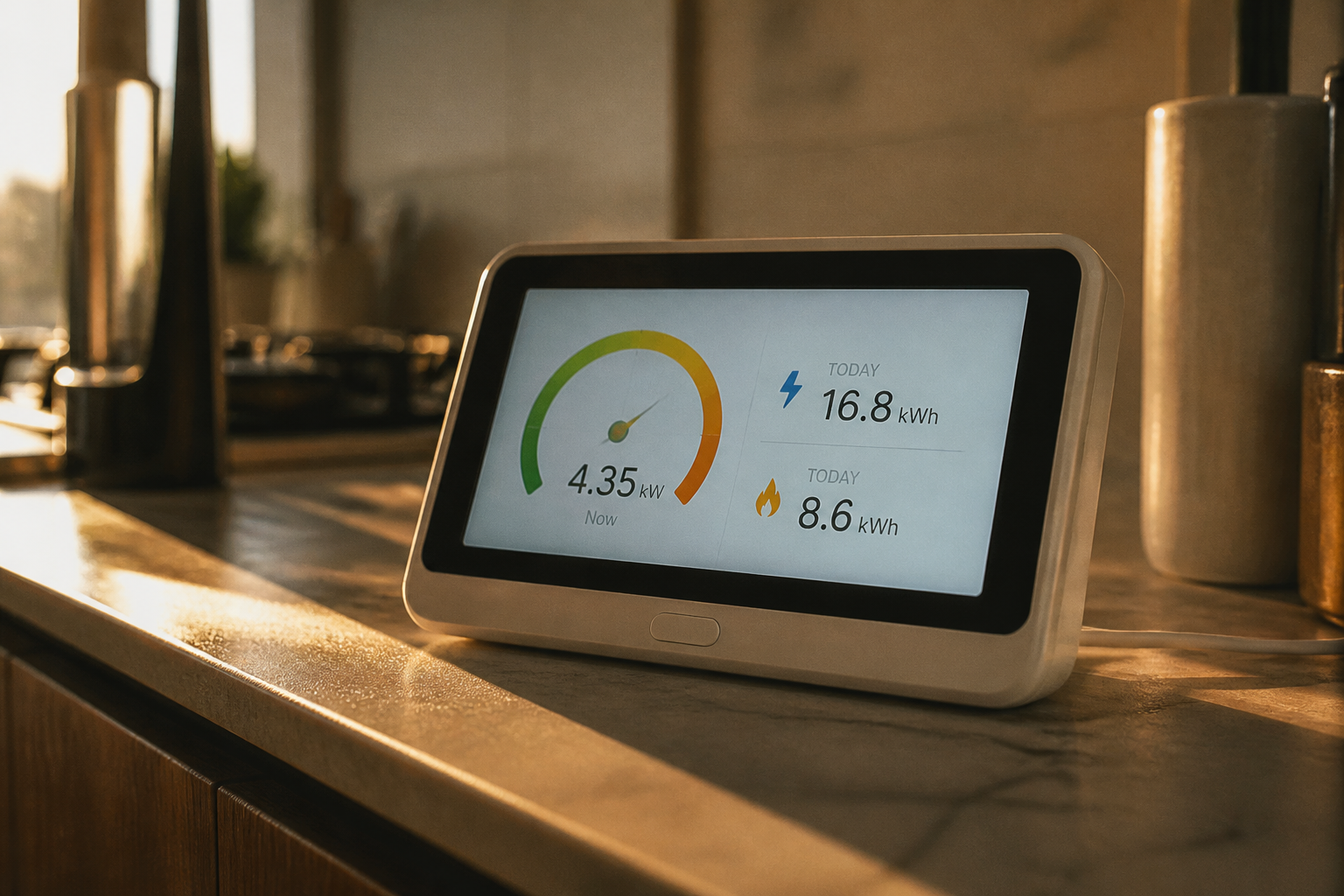
Managing volatility is as much about data as it is about technology. Many smart meters now allow for half-hourly usage tracking, providing the granularity required to identify 'vampire' energy loads, such as standby electronics or inefficient older appliances, which inflate usage even when the household is unoccupied.
Evaluating long term energy solutions
When planning for the next twelve months, households should distinguish between costs they can control and those they cannot. Fixed standing charges are set by infrastructure requirements, meaning they will persist regardless of individual actions. In contrast, consumption-based costs offer a clear path for reduction through better equipment and energy management.
Installing solar panels or more efficient heating systems changes the underlying equation of a household bill. For instance, generating electricity on-site reduces the volume of units purchased from the grid, thereby lessening the impact of unit rate increases. While this does not remove the standing charge, it significantly lowers the total energy expenditure.
Those investigating navigating domestic green technology installation timelines will find that the payback period for energy-saving technology is highly sensitive to the prevailing unit rates. As these rates have been subject to upward pressure due to market volatility, the comparative financial advantage of efficiency investments has generally improved.
A critical edge case involves grid connection limitations. Some households find that their local network capacity prevents them from installing larger solar arrays or heat pumps without costly infrastructure upgrades. Before investing in technology, a capacity assessment is necessary to ensure the projected savings are not offset by significant connection-related fees.

| Factor | Nature | Control Level |
|---|---|---|
| Standing Charge | Fixed | Low |
| Unit Rate | Variable | Moderate |
| On-site Generation | Variable | High |
Control levels reflect the ability of the homeowner to influence or mitigate the cost through technology or behavioral changes.
Looking ahead to next year
The direction of travel for the next year suggests that energy infrastructure funding will continue to be reflected in standing charges. As the national grid upgrades to handle higher electrical demand from heating and transport, these maintenance and connection costs will remain a fixed fixture of utility bills. Understanding this is key to long-term financial planning.
Government policy is expected to maintain a focus on protecting the most vulnerable while encouraging the adoption of cleaner, more efficient technology. Employers should keep abreast of these trends through the newsroom to ensure their benefit offerings remain aligned with the realities their staff face. Practical steps to reduce total energy demand will remain the most robust defence against price volatility.
Finally, when considering the total cost of ownership for home energy technologies, always account for the baseline costs of the energy market. By focusing on total energy reduction and effective load shifting, households can manage their budgets more predictably, regardless of how global market prices fluctuate at the cap level.
Strategic planning for the future requires an understanding that energy costs are becoming increasingly dynamic. As we transition, integrating supporting employee financial resilience amid rising costs into internal corporate benefits programmes is a proactive measure for businesses aiming to support their workforce during this energy transition.
Questions people ask
- Can I opt out of the energy standing charge?
- No. The standing charge is a fixed, non-negotiable daily fee required by energy suppliers to maintain the national grid, pipes, and cables. Even if you consume zero energy for a period, the standing charge remains on your account. It is essentially the cost of staying connected to the national energy infrastructure.
- How does the price cap affect my actual monthly bill?
- The price cap limits the rate suppliers can charge per unit of energy, not your total bill amount. If you use more energy, your bill will still rise. The cap is updated periodically by Ofgem to reflect the wholesale cost of energy, acting as a buffer against extreme market price spikes.
- Why does my bill change if the price cap has been introduced?
- Your bill remains sensitive to your personal usage levels. While the price cap prevents providers from overcharging per unit, it does not guarantee a specific low total cost. Fluctuations in your monthly bill are typically due to seasonal usage patterns, changes in the standing charge, or underlying price cap adjustments.
- Do green energy upgrades eliminate all energy costs?
- Upgrades like solar panels significantly reduce your reliance on grid electricity, lowering your usage-based charges. However, they do not eliminate the standing charge, which is a mandatory fixed fee. You will still have a base cost for your grid connection, even if your variable consumption costs reach near zero.
Keep reading
UK energy price regulation
Understanding the October 2026 energy price cap

Home solar energy generation
Trends in domestic rooftop solar adoption for 2026

UK electricity grid infrastructure
UK electricity generation and the clean power shift

Employee financial wellbeing metrics
Supporting employee financial stability with data

Home heating technology update
Deciding on domestic heat pump installation

employee reward strategy analysis
Optimising personal reward strategy with salary sacrifice

electric vehicle charging guidance
Practical steps for managing your electric vehicle charging

Business travel expense strategy
Deciding between business mileage claims and salary sacrifice

electric vehicle market trends