


UK household financial health
Managing your personal budget against rising costs
Recent data highlights growing financial pressure on UK households; here is how to assess your spending and make informed decisions on your essential costs.
 Thom GrootCEO and Co-Founder
5 min readUpdated
What matters here
- Average essential annual spending has risen by £8,400 since 2021.
- Financial vulnerability now affects 42% of the UK workforce.
- Prioritising fixed costs and essential bills remains the primary strategy.
In short
To manage your finances amidst rising costs, start by auditing your baseline expenses against 2021 levels. With essential spending for households increasing by approximately £700 per month, focus on fixed categories like rent, transport, and energy. Reviewing your tax-efficient salary sacrifice tax and national insurance mechanics can help you optimise your take-home pay while addressing necessary long-term household infrastructure investments. This process requires a shift from reactive spending to proactive financial planning, where tax-advantageous salary arrangements effectively act as a buffer against inflation by reducing the gross cost of essential services.
When assessing your budget, differentiate between variable discretionary spending and non-negotiable fixed costs. By categorising these, you can identify where salary sacrifice might provide the most immediate relief. For example, replacing a traditional vehicle lease with a scheme integrated into your payroll allows you to utilise pre-tax income, potentially saving thousands over the duration of a contract compared to post-tax personal finance agreements.
The changing landscape of essential spending
The recent shift in the UK financial landscape is defined by a significant rise in the cost of necessities. Since 2021, the average household has seen annual essential spending climb from £24,100 to £32,500. This increase of £8,400 represents a substantial portion of the average income, effectively changing how individuals must approach their monthly planning.
This is not a temporary fluctuation but a structural change in the baseline costs for keeping a home running. Rent, energy, and groceries now demand a larger share of the monthly payslip. Recognising these figures is the first step in creating a sustainable approach to personal finance that avoids reliance on high-interest credit. To navigate this, households should conduct a thorough reconciliation of their 2021 expenditure versus current outgoings, noting that utility and housing costs have led this upward trend.
Many households are now finding that standard budgeting tools, such as the 50/30/20 rule, are under pressure due to the sheer scale of inflation in essentials. Where necessities previously accounted for roughly 50% of income, in some demographics, this has risen to 70% or higher. Understanding this shift is vital for realistic goal-setting and long-term security.
| Category | 2021 Annual | 2026 Annual |
|---|---|---|
| Rent/Mortgage | £9,200 | £12,000 |
| Food & Groceries | £3,900 | £5,500 |
| Transport | £2,900 | £3,800 |
| Energy/Bills | £8,100 | £11,200 |
Figures are illustrative based on research findings published by SaveFirst in July 2026.
Identifying financial vulnerability
Recent research suggests that 42% of UK employees now describe themselves as financially vulnerable. This assessment considers factors such as the ability to meet monthly bills and the capacity to absorb unexpected financial shocks. When such a high proportion of the workforce is under pressure, it often leads to reduced flexibility in long-term decision making.
For the individual, the challenge is to separate discretionary spending from the non-negotiables. While small savings can be found in lifestyle choices, the biggest impacts often come from managing fixed costs like transport or home heating. Understanding how to use our schemes to gain tax advantages on these essentials is a pragmatic way to improve your monthly position. This involves mapping your current benefit provision against your actual needs, often identifying gaps where employer-provided infrastructure could replace commercial debt-based models.
A common pitfall is the failure to account for inflation when calculating emergency funds. If your savings goals are based on pre-2021 figures, your buffer may be insufficient to cover three months of actual living expenses. Re-evaluating these targets annually is now essential practice.
The impact of rising rent and energy bills
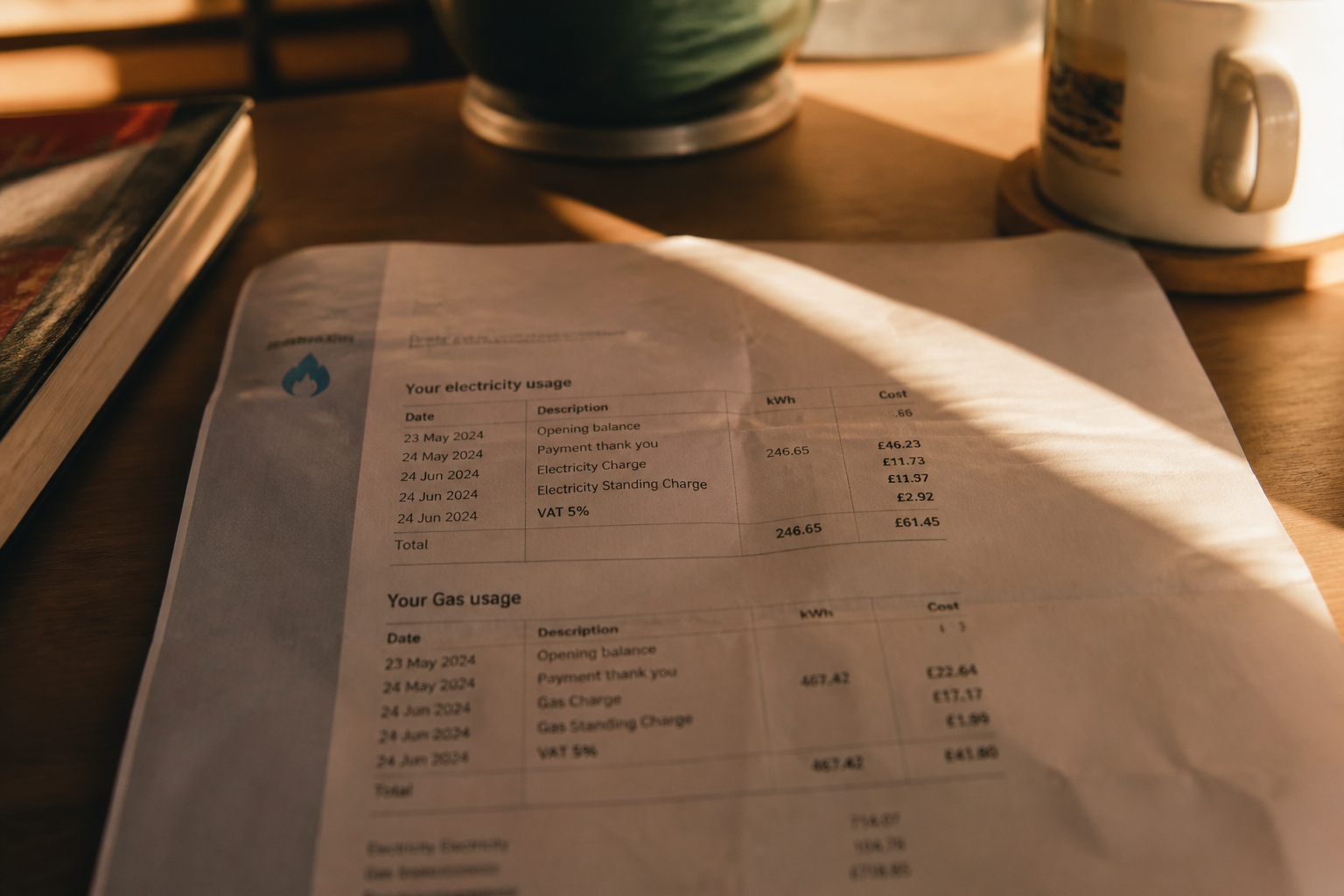
Rent remains the most significant component of the household budget, often consuming the largest share of net income. Alongside this, utility bills including electricity, gas, and broadband add a further £150 to £200 a month for many households. These are costs that offer very little room for short-term negotiation.
Managing these bills effectively requires a long-term view. For homeowners, investing in energy efficiency—such as looking into the heat pump scheme or solar installations—can potentially mitigate future volatility in energy costs. While the upfront investment requires careful planning, the reduction in long-term consumption is a proven strategy for stabilising finances. Understanding the interplay between insulation, heat generation, and current energy prices is essential for those looking to protect their household from future supply shocks.
Edge cases, such as historic properties with unique planning constraints, can complicate these investments. However, the cumulative effect of small efficiency improvements, even in energy-inefficient buildings, can still result in measurable savings on monthly utility invoices over a five-year horizon.

Transport costs and household flexibility
Transport costs have risen by approximately 31% over the last five years. For employees who commute, this is a major line item. Deciding whether to maintain a personal vehicle or shift to other methods requires a detailed look at the total cost of ownership rather than just the immediate monthly payment.
Many employees are now using the electric car scheme to access more efficient travel options. By using gross salary to cover the lease, you can often secure a modern vehicle while managing the impact on your net take-home pay. This allows for better financial control while still meeting your transport needs. When opting for such a scheme, it is important to factor in the total cost of installation for home charging, which can be further optimised through the charge scheme.
Consider the distinction between leasing and purchasing. In a high-cost environment, leasing through a tax-efficient scheme allows for predictable monthly expenditure, shielding the individual from the volatility of second-hand market prices and unexpected maintenance costs.
Between 2021 and 2026, the average UK household annual essential spending has risen by approximately £8,400.
Strategies for medium-term saving
Saving money requires a mix of short-term quick wins and medium-term structural changes. Quick wins might include reviewing recurring subscriptions or switching to generic food brands. However, medium-term savings involve addressing the assets you own, such as your car or home energy system.
By looking at closing the gap in your reward programme, you can better understand which benefits are available through your employer that can reduce your tax burden. Every pound saved through tax efficiency is essentially a pound that doesn't need to be earned, providing a double benefit to your budget. It is prudent to audit your total reward statement every six months to ensure you are utilising all tax-saving mechanisms provided by your organisation.
This approach often uncovers hidden value. Many employees overlook secondary benefits that lower the cost of living, such as subsidised transport or energy-efficient home improvement assistance, which, when combined, can represent a meaningful uplift in monthly disposable income.

Evaluating long-term strategies
Long-term financial health is built on consistency. For many, this means setting a target to reduce reliance on grid electricity or fossil fuel heating. These projects can be supported by the solar scheme, which helps in assessing the feasibility of home energy generation.
Ultimately, the goal is to decouple your essential household spending from market volatility. While the current climate requires attention and caution, there are tools available that allow for a systematic approach to reducing your long-term costs. Always check your eligibility and consult with your payroll department to ensure you fully understand how your decisions affect your tax position.
Building a resilient household budget is an iterative process. As energy markets fluctuate, your strategy should remain flexible, allowing you to transition between different efficiency technologies as they become more accessible or more cost-effective relative to traditional grid consumption.
Questions people ask
- How does a salary sacrifice scheme actually lower my monthly costs?
- A salary sacrifice scheme allows you to pay for specific goods or services from your gross salary before tax and national insurance are deducted. This reduces your total taxable income, meaning you pay less in income tax and national insurance contributions, effectively lowering the overall cost of the item or service being purchased.
- Can I use salary sacrifice for home energy improvements?
- Yes, many employers offer schemes that facilitate the installation of energy-efficient technologies like heat pumps or solar panels. By using the net zero home scheme, you can spread the cost of these investments, benefitting from tax efficiencies that make the upfront capital expenditure more manageable compared to standard personal loans.
- What is the primary risk when changing my transport arrangements?
- The primary risk is failing to account for the total cost of ownership. Beyond the lease cost, you must consider insurance, maintenance, and charging infrastructure. Using schemes that bundle these services into a single gross salary deduction helps mitigate this risk by providing predictable, fixed monthly costs regardless of market fluctuations.
- How often should I review my household budget in the current climate?
- Given the volatility in energy and essential costs, reviewing your budget every three to six months is recommended. This frequency allows you to identify if your spending has deviated from your plan and ensures you are fully utilising any new tax-efficient benefits introduced by your employer to offset rising costs.
Keep reading

electric vehicle charging guidance
Practical steps for managing your electric vehicle charging

Business travel expense strategy
Deciding between business mileage claims and salary sacrifice

Employee financial wellbeing metrics
Supporting employee financial stability with data

Home solar energy generation
Trends in domestic rooftop solar adoption for 2026
UK energy price regulation
Understanding the October 2026 energy price cap

Home heating technology update
Deciding on domestic heat pump installation

employee reward strategy analysis
Optimising personal reward strategy with salary sacrifice

electric vehicle market trends
Electric vehicle adoption and the ZEV mandate

UK electricity grid infrastructure