

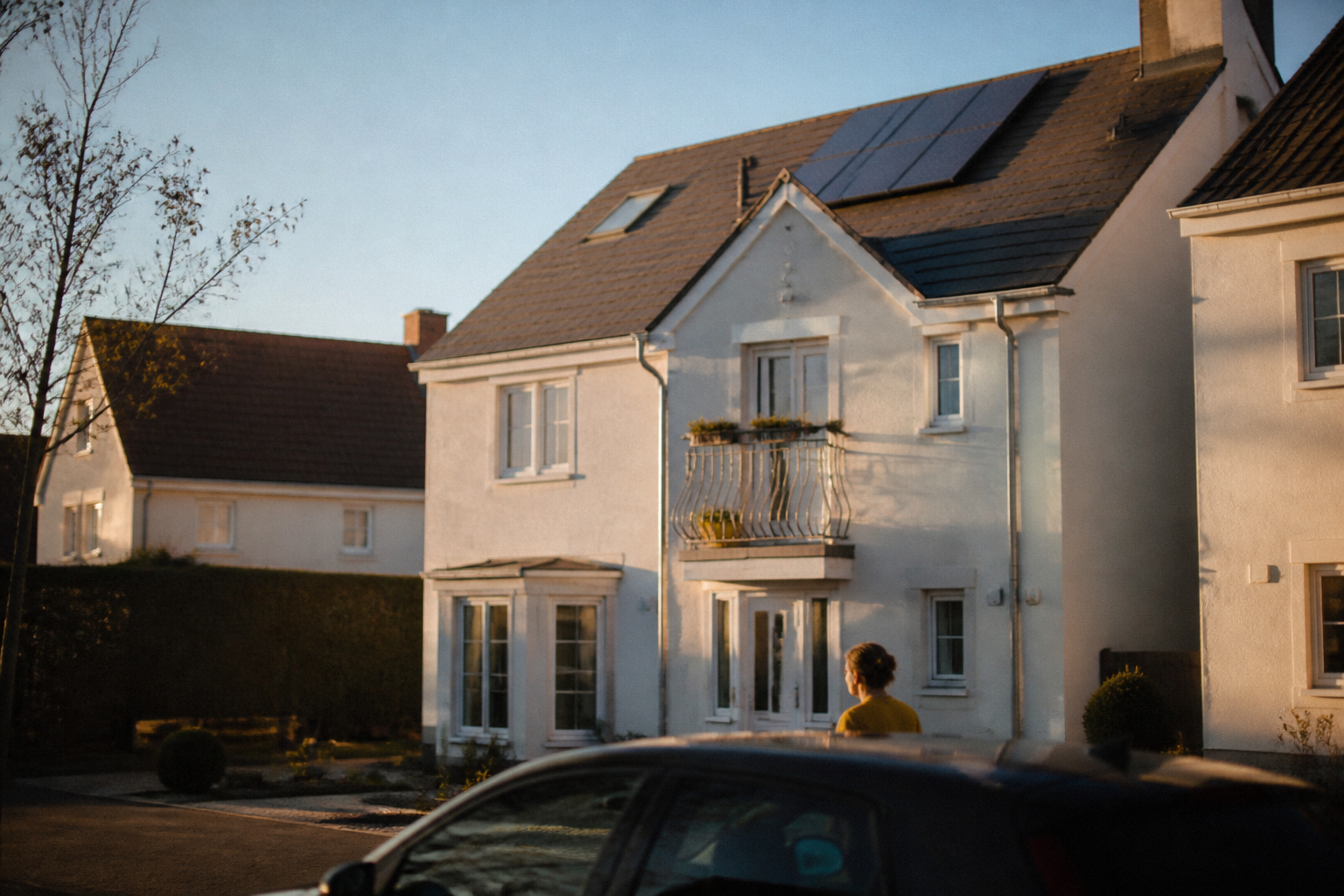
Home solar energy generation
Myths and facts about home solar energy
We examine the reality of home solar generation as new plug-in technologies become legal, separating common misconceptions from current UK policy developments.
 Mas MortonChief of Staff
5 min readUpdated
What matters here
- Plug-in solar panels are now a legal, simpler alternative for non-roof spaces.
- Rooftop solar remains the dominant method for high-capacity home generation.
- Installation records show steady growth across all UK regions throughout 2026.
In short
Home solar generation is evolving with the introduction of plug-in panels alongside traditional rooftop systems. While rooftop installations remain the primary method for significant energy yields, new plug-in panels offer an accessible, low-maintenance option for those with balconies or smaller outdoor spaces. Both systems help households reduce reliance on external energy sources by generating renewable power directly on-site.
The market for domestic energy is shifting rapidly. As households seek to mitigate rising costs, the range of available technologies has widened to include plug-in balcony solar, which supplements the established rooftop sector. Understanding the technical requirements and regulatory pathways for these systems is essential for informed decision-making.
The emergence of plug-in solar technology
August 2026 introduced a major shift in the UK solar market. The government updated rules to permit the legal sale of plug-in solar panels. These systems allow households to generate electricity using balconies, sheds, or smaller outdoor spaces. Unlike traditional rooftop installations, these kits are designed for simple deployment, often bypassing the need for a certified electrician to complete the connection.
Retailers including Argos, Currys, B&Q, and Screwfix have begun stocking these units. This accessibility represents a shift toward more granular energy production. By allowing residents to plug panels into standard wall sockets, the government aims to lower the barrier to entry for domestic renewable generation, helping households manage bills and reduce dependence on imported fuel sources.
These systems typically consist of one or two panels connected to a micro-inverter that plugs directly into a standard 13-amp household socket. Unlike larger systems that require complex G98 or G99 grid connection applications to the Distribution Network Operator, plug-in kits operate on a smaller scale. Users should ensure their indoor wiring can handle the specific power output and verify that the product adheres to current British safety standards for electrical equipment.
Comparing installation methods
It is a common misconception that all home solar must occupy a large roof area. While rooftop arrays remain the most efficient way to generate high volumes of electricity, they are not the only path. The new plug-in units bridge the gap for flat dwellers or those with constrained property footprints. Choosing between them depends on available space, budget, and long-term energy goals.
Rooftop solar requires structural surveys to ensure the roof can support the mounting system, especially in areas prone to high wind speeds. Conversely, plug-in balcony systems are generally lighter and portable, though they are subject to strict weight limits defined by building management for rented apartments. For those considering a full-scale rooftop array, engaging with the-solar-scheme provides a structured pathway for professional installation.
Efficiency also varies. Rooftop panels benefit from optimal tilt and orientation, typically facing south to maximise sunlight absorption throughout the day. Plug-in units are often constrained by the position of a balcony or the available garden space, which may lead to shaded intervals. Prospective buyers must weigh these geographical variables against the lower upfront cost of modular plug-in solutions.

| Method | Space requirement | Installation | Primary use |
|---|---|---|---|
| Rooftop panels | Large roof area | Certified professional | Whole-home power |
| Plug-in panels | Balcony/Patio | DIY / Plug-in | Appliance offset |
Based on market descriptions provided by government-backed retail guidance.
The current state of solar adoption
Data from the Department for Energy Security and Net Zero shows that rooftop solar remains a primary driver of the UK's green transition. Nearly 172,000 installations have been completed since the start of 2026. Importantly, this growth is not concentrated in one area, as every UK nation and region has seen an increase in solar capacity over the last 12 months.
Rooftop solar currently accounts for more than 7 in 10 installations as of July 2026. This reflects a sustained commitment to traditional, high-capacity home generation. While plug-in panels offer a new way to enter the market, the bulk of grid-supporting energy continues to come from established roof-mounted configurations. Employers looking to support staff through the-net-zero-home-scheme should note that both large and small systems contribute to the overall direction of domestic energy strategy.
Regional data indicates that adoption is rising in both dense urban centres and rural locations. This decentralisation is critical for the national grid, as it reduces transmission losses associated with transporting electricity over long distances from large-scale power plants. Employees interested in deeper energy transitions often integrate solar with other technologies, such as those found through the-heat-pump-scheme.
Rooftop solar is helping to drive the surge, accounting for more than 7 in 10 installations during July.
Addressing common misconceptions
One persistent myth is that solar energy is only viable during summer months. In reality, solar technology continues to generate electricity even on overcast days, though output fluctuates with light intensity. Another misconception involves the complexity of grid connections. While large systems do require professional oversight to ensure safe integration with the national grid, the new plug-in panels are engineered to be safer and simpler for the end user, provided they meet the new compliance standards.
Some also believe that solar power is an all-or-nothing investment. Many households now combine different our-schemes to optimise their energy usage, such as pairing solar generation with home efficiency measures. Deciding on the right path often requires looking at current household expenditure patterns as detailed in our guide on mapping modern household expenditure patterns to determine if a full system or a modular solution provides better value.
Technical safety is another point of confusion. Plug-in units must not be daisy-chained or connected via underspecified extension leads. Failure to adhere to manufacturer instructions regarding electrical load can risk overheating sockets. Users must ensure that their wall outlets are in good condition and professionally tested before committing to a permanent plug-in solar installation.
Financial and regulatory context
The recent rule changes reflect a constructive government approach to energy policy. By allowing plug-in solar, the state is facilitating a decentralised energy model. This helps mitigate the impact of fluctuating energy prices caused by international fuel dependency. Households are effectively encouraged to take agency over their own electricity needs through accessible retail products.
For those managing benefits, it is worth remembering that green technology is not just for homeowners. Renters and those in flats may find the new plug-in options particularly relevant. We cover the broader context of household budgeting in our post on understanding the October 2026 household energy price cap, which highlights how domestic generation serves as a hedge against market volatility.
The cost-benefit analysis of plug-in solar requires accounting for the payback period. While these systems are cheaper than rooftop arrays, they generate less energy. Residents should model their daily usage patterns to ensure the generated solar power is consumed when it is produced, as most entry-level plug-in kits do not include battery storage options to shift power usage to the evening.

Planning for the future
As the UK continues to upgrade its grid, the role of domestic generation will only increase. Workforce capacity is also expanding to meet this demand, as noted in our analysis of regional green energy workforce growth trends. Employers who stay informed about these technical and regulatory updates can better guide their teams.
Whether through large-scale rooftop solar or the new generation of plug-in panels, the goal remains the same. Households are finding more ways to participate in the net zero transition. By examining the facts and separating them from speculation, organisations can support employees in making well-informed decisions for their own homes.
The expansion of renewable options is ongoing. Future developments are likely to focus on integrated smart storage and vehicle-to-home charging. For employees considering the next steps in personal energy autonomy, reviewing current developments via our insight section remains a vital step in navigating the changing energy landscape.
Questions people ask
- Do plug-in solar panels require planning permission?
- Generally, plug-in solar panels for balconies or small outdoor spaces are classified as minor installations. However, you must check your local council's specific regulations and your property lease agreements. If you live in a listed building or a conservation area, you may need additional approvals before installing even modular or temporary equipment.
- Can I power my whole house with a plug-in solar kit?
- No. Plug-in solar panels are designed as supplementary sources to reduce your base-load electricity consumption, not to power an entire home. They typically provide enough energy to offset the demand of appliances like a fridge or standby electronics. For whole-home generation, you would require a full rooftop installation managed through the-solar-scheme.
- Is solar energy generation affected by the UK winter?
- Solar panels generate energy based on light intensity, not heat. While generation is lower in winter due to shorter days and increased cloud cover, systems remain functional. Efficiency drops during the winter months, so households should use mapping modern household expenditure patterns to adjust expectations regarding energy bill offsets during that period.
- Are plug-in panels safe to use in a rented flat?
- They can be, provided you have explicit permission from your landlord or building manager. The safety of these units depends on your electrical system's capacity. You must ensure the setup does not pose a fire risk and complies with safety standards. Always verify electrical safety and legal ownership rights before installing any permanent fixtures.
- How do I choose the right solar system for my property?
- Evaluate your available space and your primary goals. If you have roof access and high energy demand, a rooftop system is optimal. If you are a renter or have limited space, modular plug-in panels may be a viable starting point. For further guidance on home upgrades, consult the-net-zero-home-scheme to understand your options.
Keep reading

Household energy price trends
Understanding the October 2026 household energy price cap

Green technology sector skills
Skills and capacity in the green installation sector

electricity grid connection reform
Managing grid connection risks for commercial energy projects

Home heating technology update
Domestic heat pump installation process

employee reward strategy analysis
Balancing reward budget and employee choice

employee reward strategy analysis
Choosing between salary sacrifice and personal car finance

Fleet tax and reporting
Business fleet vehicle classification and tax updates

UK household financial health
Mapping modern household expenditure patterns

electric vehicle charging logistics