

Electric vehicle charging logistics
A guide to domestic and public electric vehicle charging
Learn how home and public EV charging works, from hardware selection and costs to understanding network accessibility and financial support options.
 Alison DavidsonHead of Finance
5 min readUpdated
What matters here
- Home charging remains the most cost effective solution for daily vehicle use.
- Public charging networks provide necessary support for long distance travel.
- Financial assistance for home charging is available for specific groups.
In short
Electric vehicle charging happens at home, the workplace, or via public networks. Home charging offers the lowest cost per kWh and convenience for daily replenishment. Public networks fill the gap for longer journeys, though costs vary based on speed and provider. Strategic planning around these three pillars ensures reliable access for any fleet transition or personal vehicle use.
The basics of domestic EV charging
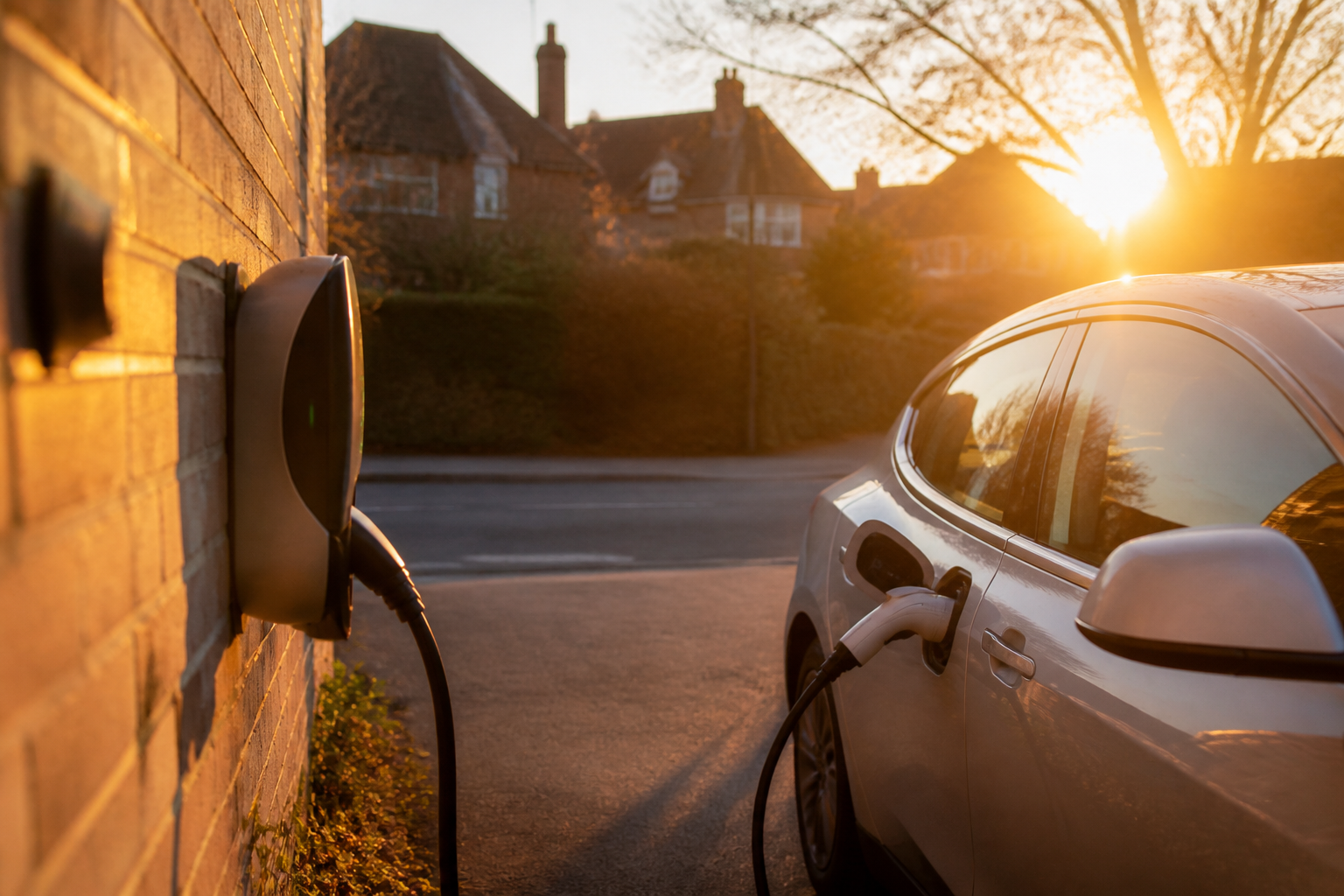
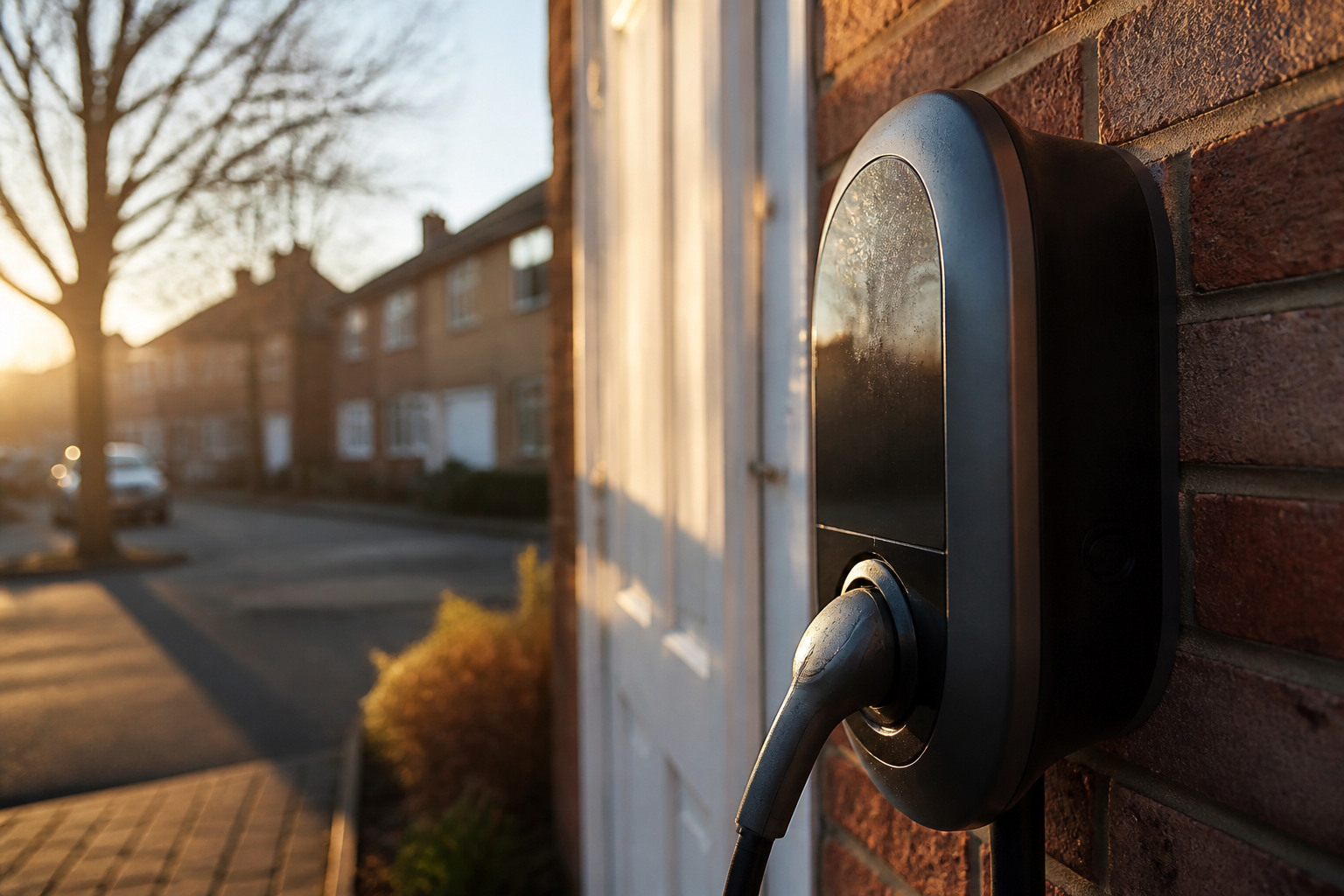
Most electric vehicle owners rely on home charging as their primary method of replenishing battery levels. This process involves installing a dedicated wallbox unit that connects directly to the home electrical circuit. Charging at home allows users to benefit from overnight off peak electricity tariffs which can significantly reduce the cost per mile compared to public alternatives. When planning for a workforce transition, providing The Charge Scheme options can help bridge the gap between vehicle provision and home installation requirements.
The installation process requires a survey of the household electrical system to ensure it can handle the load. Modern chargers typically offer between 7 kW and 22 kW of power. Most homes are limited to single phase electricity which caps charging speeds at 7 kW. This is usually sufficient for a full charge during an eight hour period, meaning the vehicle is ready for use every morning. During the survey, an installer checks the main fuse rating, usually 60A, 80A or 100A, to determine if a connection to the smart grid is viable or if a fuse upgrade is necessary.
Beyond the wallbox, integrated home energy solutions can further reduce operational costs. Homeowners often explore The Solar Scheme to generate self-consumed power, which can be diverted to vehicle batteries during daylight hours when excess solar energy is available. This requires smart management software to balance home domestic demand with vehicle charging needs.
Accessing funding for home installations
Financial support for domestic charging infrastructure is targeted toward specific demographics. According to Energy Saving Trust research published in August 2026, residents in rural or remote areas of Scotland may be eligible for a domestic charge point grant. This funding provides up to £400 to support installation costs for those meeting criteria related to household income and location. Ensuring staff are aware of these regional support mechanisms is part of successful The Net Zero Home Scheme management.
To apply for such grants, homeowners must confirm they possess or will soon possess an electric vehicle. They must also reside in qualifying areas as defined by the Scottish Government Urban Rural Classification. The process involves selecting an approved installer who is certified to work within the specific grant framework. Following the installation, the grant provider verifies the claim before releasing the funds directly to the installer or the applicant depending on the scheme terms. Failure to use a certified contractor usually results in the immediate forfeiture of eligibility for these specific support packages.
| Requirement | Threshold |
|---|---|
| Location | URC 5, 6, 7, 8 |
| Income | Below £50,000 |
| Vehicle | Owned or upcoming |
| Benefit | Up to £400 |
Based on data from Energy Saving Trust, August 2026.
Understanding the public charging landscape
Public charging networks function as a secondary layer of the charging ecosystem. These are essential for long journeys where the home range is insufficient. Recent analysis of the UK market, such as that by Supercar Blondie in September 2026, highlights that the market is highly competitive with significant price variations between networks. Understanding these costs is critical for any team managing The Electric Car Scheme for their employees.
Public charging is generally divided into slow, fast, and rapid categories. Slow chargers, often found in residential streets, provide 3 kW to 7 kW. Fast chargers offer 22 kW to 50 kW, while rapid and ultra rapid units range from 100 kW to 480 kW. Choosing the right charger depends on the time available and the cost the user is willing to pay. Rapid charging is always priced at a premium compared to home energy costs due to the infrastructure investment required.
Users frequently encounter different methods of payment, ranging from app-based platforms to contactless card readers. The variation in cost per kWh across different charging networks can reach 40% between the cheapest and most expensive providers. Therefore, drivers should maintain a selection of access cards or apps to avoid paying significantly higher rates at motorway service stations when slower alternatives are nearby.
Technological advancements in charging speed
The hardware used at public hubs is evolving to handle higher power demands. A notable development occurred in September 2026, when XCharge deployed 480 kW fast chargers within the EnBW network in Germany. These high power solutions are designed for the next generation of electric vehicles, reducing charge times to levels comparable to traditional fuel stops. This represents a significant shift in infrastructure capability.
While 480 kW chargers are currently less common in the UK than their lower power counterparts, they signal the direction of the market. Rapid hardware reduces the duration of a charging stop, improving vehicle turnover at high traffic hubs. Employers should consider this when evaluating travel patterns for staff who are frequent road users. High power infrastructure helps manage time away from base effectively for those on the move.
When planning for long-term fleet transition, organisations should review our schemes to understand the compatibility of current and upcoming vehicle models with high-output rapid chargers. Older electric vehicle models may be limited to lower intake speeds, meaning the extra power provided by ultra-rapid chargers offers no practical advantage for those specific units.
The C7 chargers are now in operation at EnBW's flagship charging site at its headquarters in Karlsruhe, Germany.

Operational considerations for employers
Payroll and operations managers must balance the convenience of home charging with the variability of public networks. Creating a reliable policy for EV users involves understanding that most charging happens when the vehicle is parked for long periods. If an employee cannot charge at home, the cost of operating an EV rises, which might influence their decision to participate in a scheme. Assessing our schemes can provide a baseline for how organisations can support staff through these transitions.
Communication with staff regarding these charging options is vital. Many employees may assume that charging is difficult, whereas a well planned approach often reveals that charging needs are manageable. Providing access to clear resources helps alleviate concerns and promotes higher uptake of sustainable travel. Managing these expectations requires data on typical driving distances and access to off street parking among the workforce. For remote employees, clear guidance on electrical safety and installation standards for home chargers remains a prerequisite for successful implementation.
Financial strategy and cost containment
Controlling costs in a fleet transition involves optimising how and where vehicles are charged. Home charging should always be the priority for cost containment because it leverages domestic energy rates. Public charging, while necessary, should be used for ad hoc requirements rather than routine replenishment. Tracking charging data can help organisations understand the financial impact of their fleet choices.
When reviewing about our impact or operational reports, consider that the total cost of ownership includes energy, maintenance, and capital. By encouraging employees to use home charging, the overall burden on the travel budget is minimised. This is particularly relevant for businesses that pay for fuel or electricity, as it aligns the interests of the organisation and the driver toward cheaper, more efficient charging methods. Employers who implement structured reporting on charging behaviour often find that cost savings exceed initial projections through better use of off-peak electricity tariffs.
Questions people ask
- Can every home be fitted with a domestic EV charger?
- Not every home supports a standard wallbox installation. The property requires off-street parking, such as a garage or driveway, and an electrical system capable of supporting a dedicated circuit. A site survey is required to verify the supply capacity, as older homes may need a fuse upgrade from the Distribution Network Operator before charging can safely commence.
- How much can employees expect to save by using home charging versus public networks?
- Home charging is generally the most cost-effective option as users can access domestic off-peak energy rates. In contrast, public rapid and ultra-rapid chargers command a premium price to cover the high infrastructure and maintenance costs. By utilising home charging as the primary method, employees can significantly lower their average cost per mile for daily commuting.
- Are there specific requirements for accessing the Scottish domestic charge point grant?
- The grant is aimed at residents in rural or remote areas. Applicants must confirm they own or have ordered an electric vehicle and must reside in a qualifying location as defined by the Scottish Government Urban Rural Classification. The work must be performed by an approved installer to ensure the claim remains valid for potential financial reimbursement.
- What is the difference between fast and rapid charging speeds?
- Charging speeds vary by hardware capability. Fast chargers typically range from 22 kW to 50 kW, suitable for top-ups while shopping or working. Rapid and ultra-rapid units range from 100 kW to 480 kW, significantly reducing charge times for longer trips. These high-speed options are ideal for long-distance travel but carry higher usage costs than slower options.
- Why should employers care about their staff home charging capability?
- If employees rely heavily on public charging due to inadequate home facilities, operating costs for the company fleet will increase significantly. Understanding the domestic infrastructure of your workforce helps in planning effective fleet strategies. Organisations using our schemes can better support staff by identifying these needs early, ensuring that the transition to electric remains financially sustainable for all parties.
Keep reading
electric vehicle charging guidance
Practical steps for managing your electric vehicle charging

employee reward strategy analysis
Optimising personal reward strategy with salary sacrifice

electric vehicle market trends
Electric vehicle adoption and the ZEV mandate

Business travel expense strategy
Deciding between business mileage claims and salary sacrifice

Employee financial wellbeing metrics
Supporting employee financial stability with data
UK electricity grid infrastructure
UK electricity generation and the clean power shift

Home solar energy generation
Trends in domestic rooftop solar adoption for 2026

UK energy price regulation
Understanding the October 2026 energy price cap

Home heating technology update