


domestic energy generation innovation
Understanding the new plug-in solar panel market
Small scale solar technology is now available for balconies and garden walls, offering a new route to household energy generation for renters and flat owners.
 Alison DavidsonHead of Finance
6 min readUpdated
What matters here
- Plug-in systems are compact and designed for DIY installation.
- These units are now available for flats and rented properties.
- The systems connect directly to a standard domestic power socket.
In short
Plug-in solar panels are small, portable systems that fix to balconies or walls and plug into a standard household electrical socket. They are designed for residents who cannot install traditional roof-mounted panels, such as those in flats or rented housing. These units provide a lower-cost, scalable method to generate small amounts of electricity to offset domestic power consumption.
While traditional arrays demand a long-term commitment to a property, these units offer a modular solution for those seeking to participate in the energy transition. By operating as a 'plug and play' device, they allow users to generate power during peak sunlight hours, directly feeding into the home's ring main to supply appliances currently in operation.
The emergence of compact solar technology
Traditional rooftop solar installations have long been the standard for household energy generation. These systems require a suitable roof orientation, significant capital outlay, and professional installation. While effective for homeowners with detached or semi-detached properties, this model has historically excluded a large proportion of the UK population. Renters and those living in flats often found themselves unable to participate due to building restrictions or limited roof access.
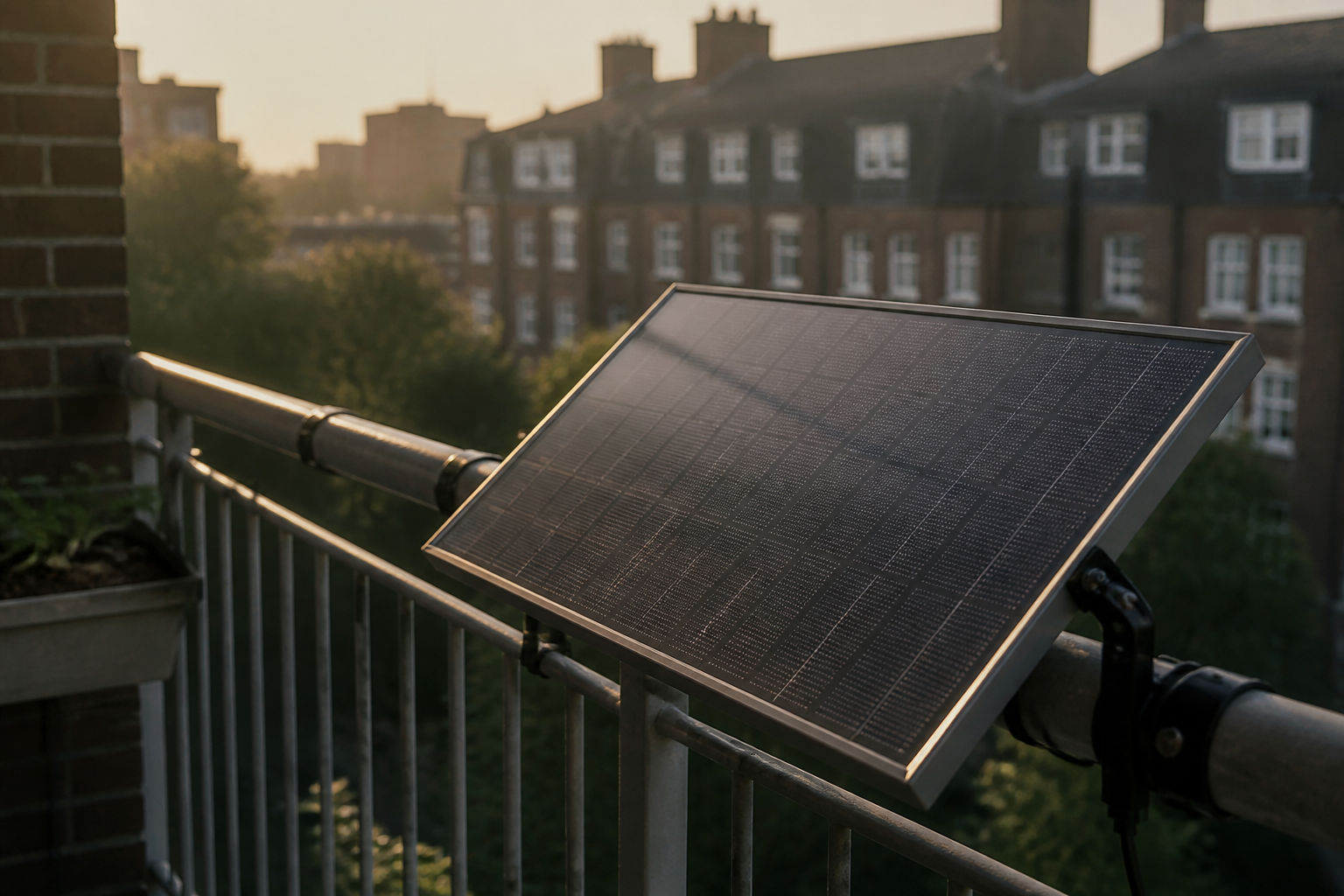
The situation changed on 27 August 2026, when plug-in solar systems became available for purchase in Great Britain. Often referred to as balcony solar or plug-and-play systems, these units represent a departure from large-scale residential projects. They are engineered to be smaller, more portable, and significantly easier to set up. By allowing users to fix panels to balcony railings or external walls, this technology expands the reach of solar energy to households that were previously underserved by existing solutions.
When considering the options available through our schemes, it is important to understand that these plug-in systems serve a different purpose than full rooftop arrays. They are typically about one-fifth the size of a standard residential installation. Their primary function is to provide a supplemental source of power that plugs directly into an existing internal socket, rather than acting as a total replacement for grid dependency. These units are currently marketed as a means to capture passive solar gain rather than a primary power generation method.
Technical operation and installation
The operation of a plug-in solar system is relatively straightforward. The panel captures solar energy, which is then converted into alternating current (AC) by a small micro-inverter integrated into the unit. This power is fed back into the home's existing electrical circuit via a standard plug. The electricity is consumed by the appliances currently drawing power in the home, effectively reducing the amount of energy drawn from the national grid.
Installation does not require the extensive roof work or electrical rewiring associated with traditional setups. A user can mount the panel using brackets to a balcony or a stable vertical surface and plug the lead into a socket. This level of simplicity is the core feature that distinguishes these systems. However, users should still ensure their mounting hardware is secure and compliant with any property management or leasehold guidelines.
Before choosing this route, it is wise to review your current household energy setup. Assessing your peak usage times against sunlight exposure can help determine the potential effectiveness of a single panel unit. While these systems do not match the output of a full rooftop array, they offer a low-barrier entry point for those interested in active home energy management. Users should consult technical specifications to ensure the micro-inverter is compatible with UK grid standards and that the circuit into which it is plugged is not overloaded by high-draw appliances.
Plug-in systems are about a fifth of the size of a typical residential rooftop solar system.
Comparing solar technology pathways
To decide if a plug-in system is appropriate, one must compare it against traditional installations. Traditional solar remains the best option for owners with sufficient roof space and the budget for a comprehensive system. Plug-in solar is an alternative for those whose circumstances prevent the larger investment. When evaluating your options, you may wish to look at the solar scheme to understand the landscape of current residential technology standards.
The table below outlines the general differences between these approaches to help in your decision-making process. Note that while costs for plug-in units are significantly lower upfront, the per-watt generation capacity remains lower than that of a professional rooftop installation. Furthermore, the absence of grid export potential in many entry-level plug-in units means they are designed purely for 'self-consumption' within the residence.
| Feature | Traditional Solar | Plug-in Solar |
|---|---|---|
| Installation | Professional Required | Self-Installation |
| Placement | Rooftops | Balcony/Wall |
| System Size | Large Array | Single/Dual Panel |
| Connection | Dedicated Inverter | Standard Socket |
Figures are illustrative based on current market availability as of August 2026.
Financial and practical considerations
The cost of energy is a primary factor for many households. Government energy roadmaps suggest that strategic adoption of solar technologies can provide long-term bill savings. While a single plug-in panel will generate less total power than an entire roof of panels, it still contributes to reducing the baseline consumption of a home, especially during daylight hours when devices are charging or appliances are running. You can find more detail on these cost-saving myths in our insight section.
When planning, consider the long-term intent for your property. If you plan to move frequently, the portability of plug-in panels is a significant advantage over a fixed rooftop system. You can easily unmount, pack, and transport the unit to your next address. This adds a level of flexibility that has been absent in the solar market until now.
Financial planning should also include an assessment of your household energy bills. While solar can reduce grid demand, it is rarely the only solution for energy management. Integrating solar with other efficient technologies can provide a more robust approach to reducing costs over the medium to long term. It is often useful to compare these smaller investments against the potential return of larger home efficiency upgrades.

Regulatory and property constraints
Despite the ease of installation, regulatory oversight remains relevant. Always check your building's rules, especially if you live in a leasehold property or a block of flats. Some freeholders or local councils have specific requirements for what can be fixed to a building exterior. Engaging with property management early is an essential step to ensure compliance with local regulations. Never assume that 'plug-in' status exempts you from structural building management rules or external aesthetic covenants.
For those who own their home, the considerations are primarily practical. Ensure the structure where you intend to mount the unit is stable and can withstand external weather conditions. Safety is paramount, and although these devices are designed for standard household use, they should be treated with the same caution as any other electrical appliance. Always ensure that mounting brackets are rated for the wind loads of your specific location.
As the solar industry continues to develop, more information will likely become available regarding best practices for these plug-in systems. Keeping an eye on our insight pages will help you stay informed about evolving regulations and technological advancements in this field.
Future trends in home energy generation
The trend toward smaller-scale, modular energy solutions is consistent with the broader shift toward decentralised power. As the national grid evolves, the contribution of individual households to overall energy demand management becomes increasingly relevant. Plug-in solar is one manifestation of this shift, demonstrating that energy generation is becoming accessible at a consumer appliance level.
We are also seeing advancements in how different technologies, such as heat pumps, interact with home energy generation. While a small plug-in panel will not power a heating system, the trend indicates that consumers are looking for more modular ways to manage their environmental impact. This is a positive trajectory for those seeking pragmatic, step-by-step improvements to their homes.
If you are looking for further information on broader net zero policy, our recent updates provide a comprehensive overview. The focus remains on providing accessible paths for individuals to participate in the transition to more sustainable living without requiring massive upfront capital. By focusing on low-barrier technologies, households can start the transition process today while awaiting broader infrastructure improvements.
Questions people ask
- Can I install a plug-in solar panel in a rented flat?
- Yes, plug-in solar panels are designed for renters, but you must obtain written permission from your landlord or property management company before mounting equipment to balconies or external walls. Ensure your installation adheres to building safety guidelines and does not violate your tenancy agreement regarding external structural alterations or visual appearance.
- Do I need an electrician to set up a plug-in solar panel?
- Generally, no. These systems are designed to be 'plug-and-play,' connecting to a standard 13-amp domestic socket. However, you should check your home wiring to ensure the circuit is in good condition. If you have concerns about existing electrical capacity, it is advisable to consult a qualified professional before usage.
- How much electricity will a single plug-in panel generate?
- Output varies by panel wattage, geographical location, and weather conditions. While not sufficient to power a whole house, these systems are designed to provide a supplemental baseline of power, helping to offset the 'vampire' energy usage of appliances like refrigerators or standby electronics during the day when sunlight is available.
- Will these panels lower my energy bills significantly?
- A single plug-in panel will reduce grid energy consumption for the specific appliances it powers. While the savings are typically modest compared to large rooftop arrays, they represent a small, recurring reduction in your reliance on the national grid during peak daylight hours. The financial benefit is cumulative over the operational life of the unit.
Keep reading
Home solar energy generation
Myths and facts about home solar energy

Household energy price trends
Understanding the October 2026 household energy price cap

Green technology sector skills
Skills and capacity in the green installation sector

electricity grid connection reform
Managing grid connection risks for commercial energy projects

Home heating technology update
Domestic heat pump installation process

employee reward strategy analysis
Balancing reward budget and employee choice

employee reward strategy analysis
Choosing between salary sacrifice and personal car finance

Fleet tax and reporting
Business fleet vehicle classification and tax updates

UK household financial health