


green workforce development trends
Green job resilience in the AI economy
Technical green roles show lower potential for AI substitution, offering a stable career path compared to broader UK economic sectors.
 Alison DavidsonHead of Finance
7 min readUpdated
What matters here
- Green trade roles are less susceptible to AI replacement than general economy jobs.
- Technical installation skills rely on physical judgement and situational problem-solving.
- Apprenticeship routes focus on hands-on expertise which complements emerging technology.
In short
Green sector roles in installation, such as heating or solar maintenance, are largely shielded from AI substitution. These jobs require complex physical decision-making and manual judgement that current AI systems cannot replicate. As the UK energy transition progresses, apprenticeships in these technical trades offer long-term career stability, as they focus on skills where human expertise remains essential and irreplaceable.
The necessity for human presence on site to manage variability in residential infrastructure means that these roles will remain the bedrock of the transition. While digital tools might assist in scheduling or diagnostics, the actual implementation of hardware requires the nuanced motor skills and physical problem solving of a human engineer.
Understanding the green trade profile
The shift toward a net zero economy is changing the composition of the UK workforce. Recent analysis from the Energy & Climate Intelligence Unit indicates that green jobs, particularly in technical installation and maintenance, demonstrate a remarkably low potential for AI substitution compared to the wider economy. This is not because these sectors avoid technology, but because the nature of the work requires physical interaction, site-specific judgement, and complex decision-making that artificial intelligence cannot perform.
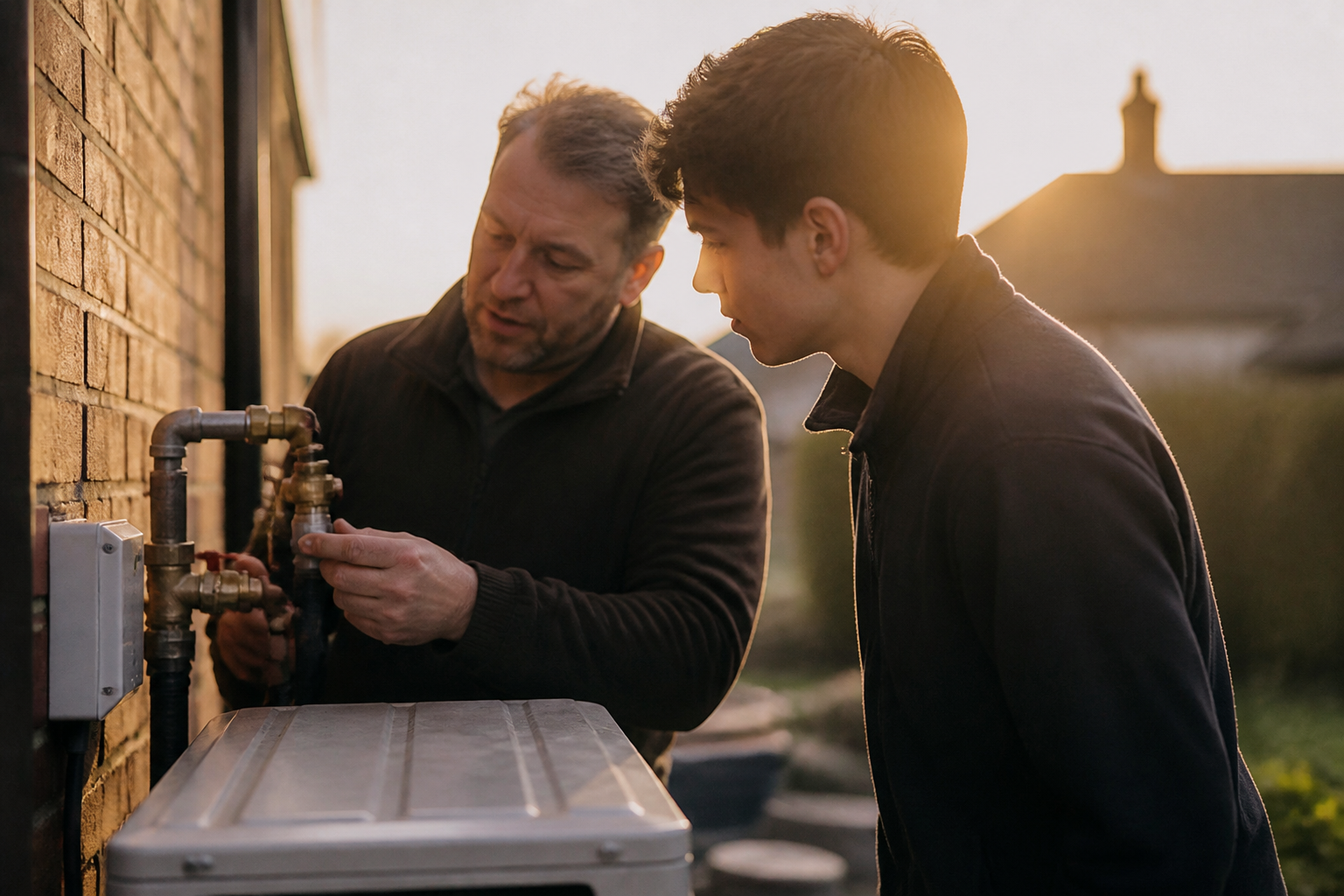
As businesses consider our schemes, understanding the nature of these roles is vital. Jobs in heat pump installation or solar energy deployment often require navigating unique building structures, historical constraints, and immediate safety requirements. These are environments where human responsibility and professional experience are the primary components of success, rather than rote data processing or predictable tasks that AI often automates.
When an installer enters a period property, for instance, they must assess the structural integrity for mounting solar panels or the thermal efficiency of existing radiators for a heat pump. An AI system cannot physically check for asbestos in a loft or evaluate the load-bearing capacity of a specific roof joist. These on-site evaluations dictate the success of the installation, ensuring that high-efficiency equipment functions as designed rather than simply existing on paper.
This resilience makes green trades an attractive pathway for those looking to build lasting careers. The ability to solve unforeseen issues while working in residential or commercial properties ensures that professionals remain central to the installation process. Employers who focus on developing these skills see a workforce that is not only equipped for the energy transition but also structurally protected from the volatility of automation in other sectors.
The stability of apprenticeship routes
The data shows a clear divide in how young people are training for the future. Around 96 percent of apprenticeships in green trades currently sit in roles where AI has limited scope for substitution. This is significantly higher than the average across all apprenticeship sectors, where AI impacts are increasingly felt. For a sustainability lead, this provides a compelling case for prioritising trade-based recruitment and training programmes.
When an apprentice learns to install complex systems, they acquire a form of tacit knowledge that is difficult to codify. This includes identifying how a specific property's heating system operates, diagnosing faults in real time, and communicating these findings to homeowners. This interpersonal and technical mix creates a career foundation that stays relevant regardless of how quickly AI develops in other professional areas. You can learn more about these developments via insight.
Furthermore, this concentration in technical roles represents a strategic advantage for the UK economy. By filling gaps in the green installation workforce with people who are unlikely to be displaced by software, businesses can ensure a more stable delivery of The Heat Pump Scheme and other infrastructure improvements. It is a long-term investment in human capital that pays dividends in reliability and output.
The apprenticeship model serves as a safeguard against the skills shortage. By integrating practical, hands-on learning with formal qualifications, businesses create a pipeline of talent that is inherently resilient. This is critical for meeting national targets, as the deployment of sustainable energy relies entirely on the capacity of qualified professionals to handle the daily, often unpredictable, challenges found in real-world environments.
Around 96% of young people on green apprenticeships in England are training for occupations with lower potential for AI substitution.
| Role Category | AI Substitution Potential | Primary Skill Driver |
|---|---|---|
| Green Trades | Low | Physical Judgement |
| Technical Engineering | Low | Situational Analysis |
| General Admin | Medium-High | Data Processing |
| Retail Support | Medium-High | Automated Routine |
Figures based on findings from the Energy & Climate Intelligence Unit's 2026 report on green advantages.
Training existing professionals for new demands
The transition does not rely solely on new recruits. There is an urgent need to upskill existing heating and plumbing engineers. As of September 2026, specific courses are available for those already in the trade to gain certification in air source heat pump installation, as noted by recent industry training updates from South Staffordshire College. This pathway is a pragmatic way to scale capacity without starting from scratch.
Moving from traditional gas boilers to heat pumps requires a change in mindset, from high-temperature combustion to lower-temperature hydronic systems. This is not just a technical change but a shift in the philosophy of home comfort. Existing professionals who undergo this transition become highly valuable, as they bring years of customer-facing experience to a new, cleaner technology.
For businesses managing The Solar Scheme, this existing pool of talent is essential. Whether it is an electrician learning to integrate battery storage or a plumber learning heat pump heat exchangers, the ability to adapt existing expertise is a major enabler of our national net zero progress. It demonstrates that the green workforce is not merely being replaced but is being actively upgraded.
Upskilling provides a faster route to meeting demand than training from scratch. Professionals already familiar with building codes, health and safety protocols, and customer service are better positioned to adopt the new standards required by heat pump systems. This professional evolution is necessary for the successful rollout of the technologies championed in The Net Zero Home Scheme.
Trade-offs in workforce strategy
Building a workforce for net zero involves specific trade-offs. Choosing to focus on apprenticeships offers long-term sustainability but requires a significant upfront investment in time and mentorship. Conversely, upskilling experienced engineers provides immediate capacity, but often costs more in the short term due to the wages commanded by seasoned professionals. A balanced approach is usually the most effective.
There is also the challenge of regional variations. Green jobs are not evenly distributed. A sustainability lead must look at where their installation teams are based. It is often necessary to incentivise movement or build local partnerships to ensure projects can proceed without long delays. These operational choices are often influenced by current Legislative shifts in UK carbon budget and planning policy.
Finally, managing the expectation of speed versus quality is critical. In a rush to hit targets, it is tempting to accelerate training. However, the technical nature of green infrastructure means that quality is paramount. A poorly installed heat pump or solar array creates a negative customer experience and long-term maintenance costs that far outweigh the initial savings of a rushed installation process. Detailed planning, as discussed in Deciding on domestic heat pump installation, is essential for preventing these common failure points.
The cost of inaction
Ignoring the need for workforce development carries its own financial and operational risks. When demand for green technology outstrips the capacity of qualified installers, costs rise, and projects stall. This mismatch can create bottlenecks that undermine a company's wider sustainability strategy. Employers who address these gaps early find that they have a competitive advantage in securing the best talent.
It is also a matter of public and private alignment. As the government continues to set targets for home energy efficiency, the private sector is expected to provide the implementation power. Businesses that invest in their own installer base, or partner with those who do, align themselves with the direction of the market. You can review how this impacts your organisation by checking our impact.
Failure to act results in reliance on outsourced, possibly less accountable contractors, which can compromise quality control. Given the complexity of modern energy systems, consistency in installation is a primary driver of long-term efficiency and client satisfaction. Without a robust strategy for scaling installer capacity, businesses risk losing their market position as clients demand more reliable, verified energy solutions.
Ultimately, the goal is to make the transition to net zero as frictionless as possible for employees and customers. Whether it is facilitating electric vehicle adoption through The Electric Car Scheme or improving home energy, the success of these benefits depends on a reliable, skilled, and stable supply chain. The human element is the primary variable in delivering that stability.
Ensuring quality in project delivery
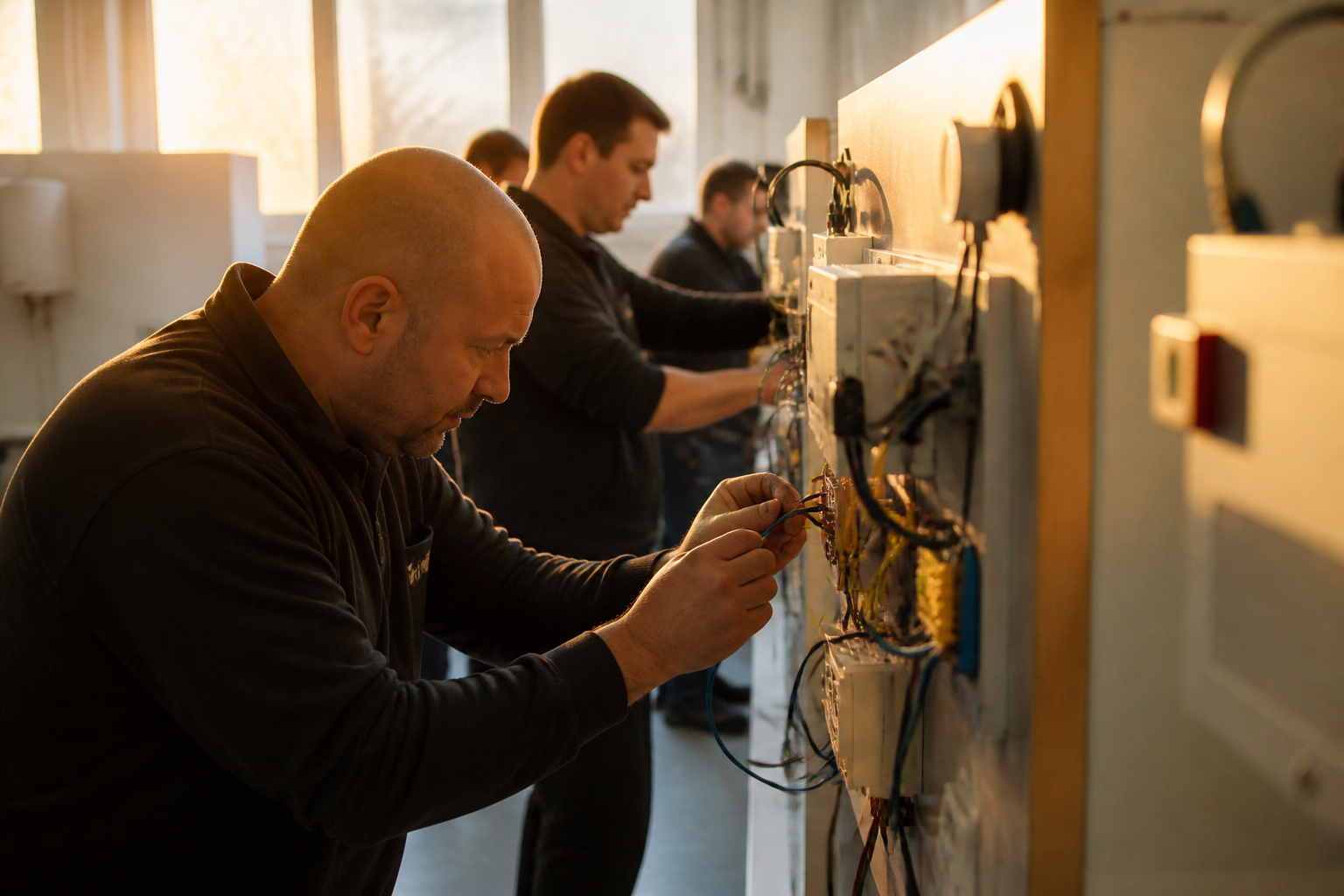
Technical quality is the backbone of public trust. When an employee or customer decides to adopt a new energy technology, they are making a commitment to a service that will last for decades. Ensuring that the installation teams are highly trained, accountable, and experienced is the only way to safeguard that trust. This requires a rigorous selection process for installers and partners.
Sustainability leads should look for partners who demonstrate a commitment to both high standards and continuous learning. Ask about their training protocols, their apprenticeship retention rates, and their approach to solving technical hurdles on site. These questions often reveal the difference between a volume-led operation and a quality-led one. For further advice on planning your fleet transition, see Commercial fleet electrification and infrastructure challenges.
In the final analysis, the green economy is a service economy. It is built on the interactions between skilled people and the technology they install. By understanding the resilient nature of these roles and investing accordingly, we can build a foundation that is robust against both economic shifts and technological disruption. This is the most pragmatic approach to achieving lasting net zero change.
Questions people ask
- Why are green installation roles considered resistant to AI?
- These roles rely on physical site-specific judgement, manual dexterity, and complex decision-making in variable environments. AI excels at processing data, but it cannot navigate the physical, structural, and safety-critical challenges encountered in residential or commercial retrofitting, ensuring that skilled human intervention remains a non-negotiable requirement for installation success.
- Should businesses prioritise new apprentices or upskilling existing staff?
- A balanced strategy is most effective. Apprenticeships provide long-term talent pipelines and structural stability, while upskilling existing engineers offers immediate capacity by leveraging current trade experience. Choosing the right mix depends on your specific timeline and budget, but both pathways ensure you maintain control over service quality and project delivery timelines.
- What are the common risks of rushing green installation projects?
- Rushing can lead to poor-quality installations, which results in higher long-term maintenance costs and negative customer experiences. Technical infrastructure like heat pumps requires precision; when speed is prioritised over correct, site-specific planning, the system may fail to deliver the expected energy efficiency, potentially damaging the reputation of the service provider and the trust in new technology.
- How do regional variations affect green workforce strategy?
- Green jobs are not distributed evenly across the UK. Sustainability leads must analyse their target regions to understand where installer capacity is located. Often, business success depends on incentivising movement or forming local partnerships to avoid project delays, ensuring that your installation programme aligns with regional infrastructure needs and legislative planning policy constraints.
Keep reading

electricity grid capacity management
How DNOs manage residential grid capacity

green installer workforce standards
Finding a reliable green technology installer

domestic heat pump technology
Debunking common myths about domestic heat pump heating

electric vehicle fleet policy
Managing financial risks of electric car fleet transition

electric vehicle market analysis
Analysing UK electric vehicle adoption numbers

electric vehicle adoption guide
Steps to choosing an electric car for personal use

electric vehicle fleet policy
Impact of updated ZEV mandate targets on fleet planning

Employee financial wellbeing
Supporting employee financial resilience

Employee reward strategy design