


Home heating technology update
Deciding on domestic heat pump installation
Assessing the practical and financial trade-offs of transitioning to a heat pump for UK residential heating systems.

What matters here
- Heat pumps offer higher efficiency than gas boilers by extracting ambient heat from air or ground sources.
- Property insulation levels directly impact system performance and ongoing electricity consumption for the household.
- Installation requires careful planning regarding space, noise levels and existing radiator sizing.
In short
Deciding to install a heat pump involves evaluating your property’s heat loss characteristics, available space for external units and the compatibility of your current heat distribution system. While they offer significant efficiency gains, successful adoption relies on proper sizing and installation quality. Financial support and long-term running costs should be weighed against your specific property type and insulation standards to determine long-term feasibility.
Evaluating residential property suitability
Transitioning from a traditional gas boiler to an air-source heat pump represents a fundamental shift in how a household generates heat. The primary consideration is the heat loss profile of the home. Heat pumps operate most effectively when they can deliver steady, lower-temperature heat over longer periods, unlike the high-intensity bursts of heat associated with gas central heating systems.
Properties with high levels of thermal insulation, such as modern builds or those with updated loft and cavity wall insulation, are natural candidates for this technology. In older, less efficient homes, an assessment of the current heat loss is necessary. If the demand is too high due to poor insulation, the pump must work excessively hard to maintain temperature, which increases electricity usage and reduces the benefit to the homeowner.
A formal heat loss calculation, typically conducted by a certified installer, provides the exact kilowatt requirement for the space. If the calculated heat loss exceeds the capacity of a standard residential unit, structural improvements to the building fabric must take precedence. Homeowners can find guidance on navigating these initial property assessments through our schemes to ensure the building is ready for low-temperature heating delivery.
Assessing radiator and pipework requirements
A critical but often overlooked trade-off in the installation process is the compatibility of the existing heat distribution system. Traditional gas systems often run at high water temperatures, allowing for smaller radiators. Heat pumps are designed to circulate water at lower temperatures to maintain efficiency.
To achieve the same level of comfort with lower water temperatures, larger radiators or underfloor heating systems are often required. This can mean a significant internal upheaval, including replacing standard radiators with larger models that have a greater surface area. Homeowners must balance the cost of these upgrades against the overall energy savings they anticipate.
Furthermore, the diameter of existing copper pipework may require inspection. Older homes with micro-bore piping often lack the necessary flow rate to support efficient heat distribution at lower temperatures. Upgrading to wider pipework ensures the system does not face unnecessary resistance. Detailed technical advice regarding these infrastructure modifications is available via The Heat Pump Scheme, which helps homeowners identify whether their existing circuit architecture requires extensive replacement or minor adjustments.
Comparing installation variables and costs
Understanding the installation timeline is helpful for setting expectations. A straightforward replacement might take three to five days, depending on the complexity of the internal plumbing modifications required. Complex systems, such as those involving a hybrid setup or significant modifications to the heating circuit, will naturally increase the labor cost and duration.
Installation costs are influenced by the requirement for a new hot water cylinder. Heat pumps typically require a larger, well-insulated cylinder designed specifically for heat pump integration, as these systems cannot instantaneously heat water to the same high temperatures as a gas combi boiler. This necessitates adequate space in an airing cupboard or utility area.
Electrical upgrades are another variable. If the property's consumer unit requires an upgrade to support the electrical load of the heat pump, this must be performed by a qualified electrician. Assessing these hidden costs is vital for accurate budgeting. For those concerned about managing the capital expenditure of such projects, managing household cash flow unexpected costs 202611 provides context on how to plan for these capital requirements effectively.
| Component | Key Consideration | Impact on Project |
|---|---|---|
| Radiators | Sizing for low flow | Requires potential replacement |
| Pipework | Diameter compatibility | May need upgrading |
| External Space | Clearance requirements | Limits placement options |
| Water Cylinder | Insulation standard | Often requires specific unit |
Figures and requirements represent common industry standards for domestic heat pump retrofits.
Operational realities and space management
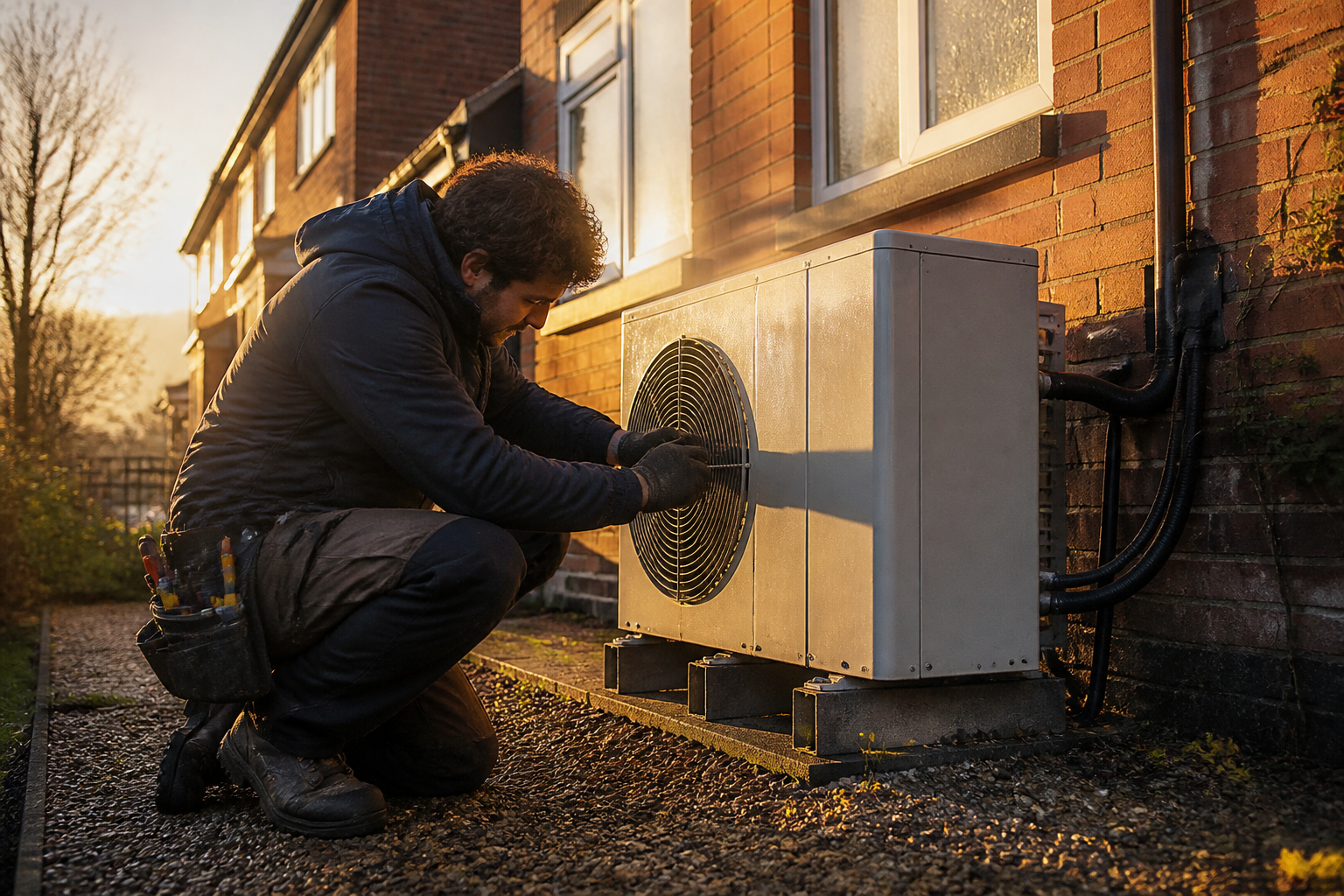
The physical placement of the unit is a major constraint. Air-source heat pumps require a clear path for air intake and exhaust. They should be positioned in a location that allows for optimal airflow, away from obstacles that could impede the fan. Noise is another factor to consider, as the unit generates consistent background sound during operation.
Strategic positioning can mitigate noise concerns, such as ensuring the unit is not directly beneath bedroom windows. Modern systems are increasingly quiet, but thoughtful placement remains a best practice. Balancing these requirements requires collaboration with the installer, who will conduct a site survey to identify the optimal location that balances performance with minimal disruption to the household.
Planning permission regulations also play a role. While many installations fall under permitted development rights, specific conditions regarding distance from boundaries and noise levels must be met. Checking local planning portal guidelines before installation prevents project delays. Professional installers will verify that the site survey complies with current noise emission standards and placement restrictions before equipment procurement begins.
Balancing long term benefits and maintenance
Maintenance is relatively straightforward but essential for long-term reliability. Unlike gas boilers that require annual safety checks for carbon monoxide, heat pumps require periodic inspections of the refrigerant levels, electrical connections and the air coil. Keeping the outdoor unit free from debris, such as leaves or snow, ensures the system maintains peak performance throughout the winter months.
The financial case is often supported by reduced reliance on fossil fuels. When paired with The Solar Scheme, homeowners may further improve the financial efficiency of their heating by using generated electricity to offset the energy demand of the heat pump. This integration is increasingly common for those looking to manage energy costs more effectively.
Beyond solar integration, regular monitoring of the Seasonal Coefficient of Performance (SCOP) helps homeowners track how efficiently the system is running relative to the outside temperature. Consistent monitoring allows the homeowner to identify if filters need cleaning or if the system settings require fine-tuning for seasonal changes, thereby protecting the longevity of the compressor and associated mechanical components.
The physical placement of the unit is a major constraint. Air-source heat pumps require a clear path for air intake and exhaust.

Considering the transition process
The shift from a familiar heating system to a heat pump requires an adjustment in how one manages a home's climate. The system is designed to run consistently, rather than being toggled on and off frequently. Understanding how to programme the heating for steady output can yield better comfort and higher efficiency.
Employers who wish to support this transition often look for clear routes to engagement. Through The Net Zero Home Scheme, businesses can provide their teams with access to information and financing that simplifies the installation path. Clear communication on the benefits and the realities of the installation helps to demystify the process for the employee.
It is also worth noting that as energy markets fluctuate, understanding the broader financial context of home heating remains crucial. For those interested in the wider economic implications of energy efficiency measures, october 2026 household energy price cap 202610 offers a detailed look at how current price caps might influence the decision-making process for domestic heating upgrades over the next fiscal period.
Questions people ask
- Can a heat pump be installed in an older property?
- Yes, but efficiency depends on the building's thermal envelope. Older properties often require extensive upgrades to loft and wall insulation to ensure the heat pump operates effectively. Without sufficient insulation, the system may struggle to maintain comfortable temperatures, leading to higher electricity consumption. A thorough heat loss survey is the essential first step.
- Why do heat pump installations often require new radiators?
- Heat pumps operate at lower flow temperatures than gas boilers. Larger radiators provide a greater surface area, which allows the system to transfer sufficient heat into the room at these lower temperatures. If existing radiators are too small, they will fail to reach the desired room temperature, resulting in a cold indoor environment.
- Is an air-source heat pump noisy for neighbours?
- Modern air-source heat pumps are designed for quiet operation, typically generating between 40 and 60 decibels. Proper site placement, away from windows and boundary walls, significantly reduces noise impact. Professional installers ensure compliance with standard noise regulations, and when units are installed at the correct distance from neighbouring properties, they generally comply with planning standards.
- How long does a heat pump installation typically take?
- A standard air-source heat pump installation usually takes between three and five days. This timeframe covers the removal of the existing boiler, the installation of the outdoor unit, piping modifications, and the integration of a new hot water cylinder. Complex systems with significant plumbing or electrical circuit upgrades may extend this timeline slightly.
- How can I reduce the running costs of my heat pump?
- Running costs are minimised by maintaining a consistent temperature rather than frequent cycling. Integrating the system with The Solar Scheme allows homeowners to power the unit using self-generated electricity. Additionally, ensuring the unit is regularly cleared of debris and keeping the home well-insulated are primary ways to ensure the system achieves its peak seasonal efficiency rating.
Keep reading

electricity grid capacity management
How DNOs manage residential grid capacity

domestic heat pump technology
Debunking common myths about domestic heat pump heating

green installer workforce standards
Finding a reliable green technology installer

electric vehicle fleet policy
Managing financial risks of electric car fleet transition

electric vehicle market analysis
Analysing UK electric vehicle adoption numbers

electric vehicle adoption guide
Steps to choosing an electric car for personal use

electric vehicle fleet policy
Impact of updated ZEV mandate targets on fleet planning

Employee financial wellbeing
Supporting employee financial resilience

Employee reward strategy design