


Household energy pricing policy
How household gas standing charges will change
Understand the upcoming removal of gas standing charges and how it changes your utility bill calculations from 2027.
 Matthew WallerVP B2B Sales and General Manager of The Charge Scheme
6 min readUpdated
What matters here
- Gas standing charges are scheduled to be abolished in 2027.
- Costs previously covered by standing charges will shift to unit rates.
- The move aims to change how households pay for baseline gas connectivity.
In short
The government has confirmed that gas standing charges will be scrapped in 2027. This change removes the fixed daily fee currently applied to gas accounts, regardless of usage. These costs will instead be redistributed into the unit rate of gas consumption, which is expected to result in a unit rate increase of less than 1p per kilowatt hour.
This shift represents a fundamental realignment of how gas networks are funded. By removing the mandatory daily entry fee, the policy aims to create a more direct correlation between individual energy consumption and financial liability, though it requires households to model their specific usage profiles to understand the net impact on their annual bills.
Understanding the fixed cost structure
Most UK households currently pay for gas through a dual structure. This consists of a variable unit rate for the actual gas consumed, measured in kilowatt hours, and a standing charge. The standing charge is a fixed daily amount. You pay this even if you use no gas at all during a given period.
This charge covers the fixed costs of maintaining the gas network, including the pipes that connect your home to the main supply and the administrative costs of your energy provider. While these costs are essential for grid stability, the flat-rate nature of the fee has been subject to review regarding its impact on lower-consumption households.
The current energy landscape is still recovering from the volatility experienced between 2021 and 2023. According to the House of Commons Library, while prices have moved away from their historical peaks, they remain significantly higher than pre-crisis levels. Understanding how your bill is constructed is the first step toward better managing these costs.
For those looking to mitigate the impact of rising energy prices, exploring Analysing home solar installation and financial savings can provide a way to offset reliance on the grid. Reducing consumption remains a primary lever for many homeowners to control their monthly expenditure. It is essential to note that while the standing charge is a distinct line item on your statement, its removal from 2027 does not equate to a cost reduction for the energy system itself, merely a redistribution of how that cost is recovered.
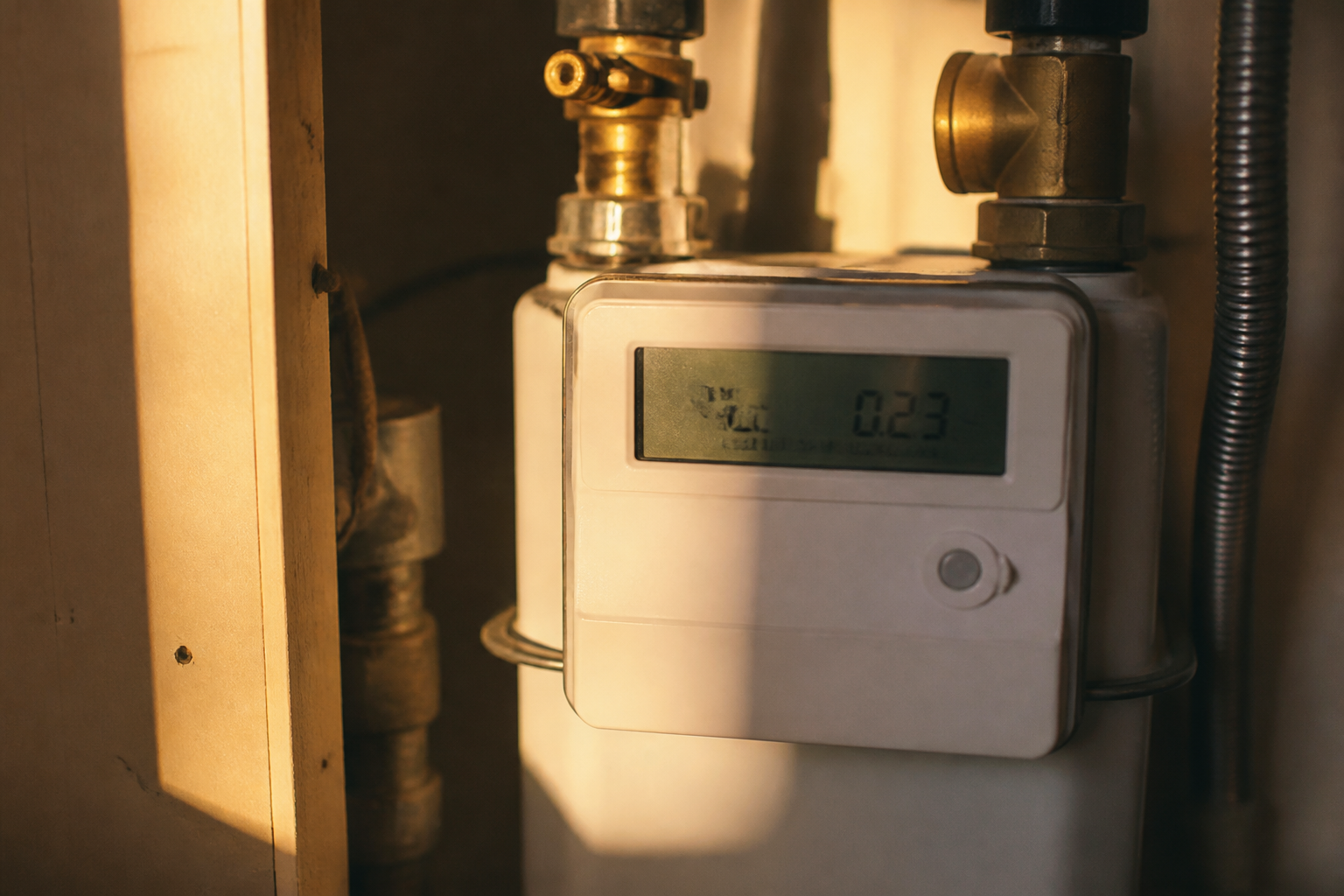
The transition to a usage-based model
The government has confirmed that the gas standing charge will be scrapped in 2027. This is a significant change in the way energy billing is regulated. Instead of a guaranteed daily income for suppliers through fixed fees, these costs will be reallocated.
The mechanism for this change involves shifting the costs currently recovered by the standing charge into the unit rates. Current projections indicate that this shift will result in a price adjustment of less than 1p per kilowatt hour. This means that your total bill will be more directly linked to the amount of energy you actually consume.
This model rewards energy efficiency in a more direct way. If you use less gas, your total bill will reduce more significantly than it does under the current system. This is intended to provide a fairer distribution of costs, particularly for households with low or seasonal gas requirements.
When planning for long-term home improvements, it is helpful to consider how Deciding on domestic heat pump installation could further remove your dependency on the gas network entirely. Moving away from gas is a key part of modernising home energy systems. To assess whether this transition is viable for your specific household configuration, you can look into our schemes for detailed guidance on infrastructure requirements.
The gas standing charge will be scrapped in 2027, shifting fixed costs into unit rates at an increase of under 1p per kilowatt hour.
| Billing element | Current status | 2027 change |
|---|---|---|
| Fixed daily fee | Included | Scrapped |
| Unit rate | Standard rate | Increased (under 1p/kWh) |
| Bill sensitivity | Fixed baseline costs | Consumption dependent |
Figures based on announced regulatory shifts regarding gas standing charges.
Context of recent energy price volatility
Energy bills have undergone dramatic shifts over the past few years. The House of Commons Library report notes that typical dual fuel consumption bills rose sharply during 2022 due to global market conditions. The Understanding the October 2026 household energy price cap increase serves as a reminder of the ongoing adjustments needed to stabilise the market.
Even with the removal of the standing charge in 2027, it is clear that prices remain elevated compared to the 2021 baseline. Typical bills are approximately 58% higher than they were in the winter of 2021/22. This makes it crucial for households to monitor their usage habits and invest in efficient technology where possible.
Employers can play a role by providing information on Commercial fleet electrification and infrastructure challenges or other green initiatives that help reduce energy footprints. Employees often appreciate guidance on how to navigate these shifts in the broader energy market.
For those navigating complex financial decisions, Choosing between salary sacrifice and core benefit budgets analysis can help determine the most effective way to allocate personal funds toward energy-efficient upgrades. By planning now, households can better absorb the eventual shift in billing methodologies.
Impact on household budgeting
Removing the standing charge changes the arithmetic of your gas bill. For a high-usage household, the reduction in the standing charge may be offset by the higher unit rate. For a low-usage household, the impact may be more favourable.
Calculating the potential impact requires an understanding of your annual consumption levels. Check your recent energy statements for your kilowatt hour usage. If you consume 12,000 kilowatt hours annually, an increase of less than 1p per kilowatt hour will cost less than £120 per year in additional unit costs, which is roughly offset by the elimination of the current £108 annual standing charge.
This reform essentially makes energy billing more consumption-based. It encourages households to view energy as a commodity that is priced based on use, rather than as a subscription service that carries a mandatory entry fee.
Understanding these shifts is vital for anyone planning their finances for the next several years. If you are considering Scaling installation capacity for green benefits for home improvements, factor in these energy market changes to ensure your projections remain accurate. Use this data to assist in Managing household cash flow and unexpected costs as utility billing shifts.

Preparing for 2027
The industry has time to prepare for this shift. Suppliers will need to adjust their billing systems to accommodate the removal of the standing charge and the corresponding adjustment to unit rates. As a consumer, you do not need to take manual action to initiate this change.
Your energy supplier will update your tariff structure automatically in 2027. Keep an eye on communication from your provider during late 2026. They will be required to explain how these changes apply to your specific account and tariff.
In the meantime, focusing on energy efficiency remains the most pragmatic strategy. Whether that involves better insulation, upgrading appliances, or switching to more efficient heating sources, reducing demand is the most effective way to lower bills.
For further reading on how government policy intersects with personal home management, refer to our Legislative shifts in UK carbon budget and planning policy analysis to stay informed about the broader regulatory environment.
Focusing on long term stability
Energy price caps are designed to provide a level of protection, but they are subject to change based on global market conditions. The events of 2021 to 2023 demonstrated the need for flexibility in household financial planning. By understanding these market structures, you can better prepare for future shifts.
Our focus remains on helping you navigate these transitions with clarity and reliable information. Staying updated through trusted sources is the best way to ensure your financial decisions are sound. As the energy market continues to evolve, our goal is to provide the context you need.
If you have questions about specific About Net Zero Benefits or how our schemes assist in this broader transition, contact us directly for more information. We are committed to supporting clarity in a complex market, adhering strictly to our editorial standards.
Questions people ask
- Will my gas bill definitely be cheaper after 2027?
- Not necessarily. While removing the standing charge removes a fixed daily fee, the costs are reallocated to the gas unit rate. Low-usage households may see a reduction in overall costs, while high-usage households might see their bills increase. You should calculate your annual consumption to determine if your specific usage profile will benefit from this transition.
- Do I need to inform my energy provider to remove the charge?
- No. The transition is a regulatory requirement for all energy suppliers. Your provider will automatically adjust your tariff structure and billing system to reflect the removal of the standing charge in 2027. You should, however, monitor your account statements in late 2026 for formal communications detailing how your specific tariff will be updated.
- How does this change impact my eligibility for green home grants?
- This regulatory change to billing structures does not alter your eligibility for government grants related to home energy improvements. Grants remain focused on the installation of energy-efficient technology, such as those discussed in our insight articles. The removal of the standing charge is a billing adjustment rather than a change to support schemes for home decarbonisation.
- How can I reduce my gas consumption before the 2027 changes?
- Prioritising home energy efficiency is the most effective way to mitigate future price risks. Measures include improving wall and loft insulation, upgrading to more efficient boiler systems, or transitioning to low-carbon alternatives. Reducing your demand for gas provides the greatest protection against future unit rate adjustments regardless of how the billing structure is calculated by your provider.
Keep reading

domestic heat pump technology
Debunking common myths about domestic heat pump heating

green installer workforce standards
Finding a reliable green technology installer

electricity grid capacity management
How DNOs manage residential grid capacity

electric vehicle fleet policy
Managing financial risks of electric car fleet transition

electric vehicle market analysis
Analysing UK electric vehicle adoption numbers

electric vehicle adoption guide
Steps to choosing an electric car for personal use

electric vehicle fleet policy
Impact of updated ZEV mandate targets on fleet planning

Employee financial wellbeing
Supporting employee financial resilience

Employee reward strategy design