

Household energy finance analysis
Analysing home energy efficiency and household running costs
A breakdown of the numbers behind domestic energy consumption and the financial impact of home efficiency upgrades for UK homeowners.
 Alex BlairChief Technology Officer
6 min readUpdated
What matters here
- Energy efficiency lowers baseline demand regardless of tariff changes.
- Capital investment cycles for home tech require long-term planning.
- Monitoring individual household energy use identifies key waste points.
In short
Household energy costs are determined by unit rates, standing charges, and total energy demand. Reducing costs requires lowering demand through insulation or efficient heating, and shifting consumption to off-peak periods. For many, integrating The Net Zero Home Scheme helps manage the capital expenditure required to transition away from fossil-fuel-reliant systems toward more predictable, efficient alternatives.
The financial strategy for domestic decarbonisation involves a systematic approach to auditing, upgrading, and managing energy assets. It is not merely about installation but about the long-term operational performance of the household. Homeowners must balance initial investment against sustained monthly savings and the increasing influence of variable grid tariffs on their total expenditure.
Understanding the energy bill components
A standard UK household energy bill consists of two primary parts. The standing charge is a daily fixed cost, regardless of the amount of energy used. The unit rate applies to every kilowatt-hour consumed. For a sustainability lead assessing these costs, the distinction is vital. Standing charges have become a larger portion of the total bill. This places a floor on the minimum amount a household pays, even if they consume minimal energy.
To manage these bills, one must understand the interaction between usage patterns and pricing. Most providers offer tariffs that allow for time-of-use pricing. This is where The Charge Scheme becomes relevant. By aligning heavy energy use, such as vehicle charging or heating, with off-peak hours, households can significantly reduce their average unit rate. This requires an automated system that manages load without manual intervention.
When analysing bill composition, homeowners should scrutinise their specific tariff structure. Many modern smart tariffs offer significant discounts during periods of low grid demand, typically overnight. Leveraging this requires a shift in domestic habits, moving energy-intensive processes like water heating or heavy appliance use into these windows. Automated hardware, often controlled via mobile application or home energy management systems, is necessary to ensure consistent adherence to these off-peak periods without relying on manual monitoring.
The impact of thermal efficiency on demand
Efficiency is the most reliable way to reduce total demand. Heat loss through walls, roofs, and windows forces heating systems to run for longer periods. Upgrading insulation is often the first step in a broader strategy to lower running costs. While the initial capital expenditure can be high, the reduction in energy units required over time provides a compounding financial benefit.
When planning a home upgrade, consider the heating system's coefficient of performance. A traditional gas boiler typically operates at a lower efficiency than modern electrical alternatives. By moving to The Heat Pump Scheme, a homeowner can extract heat from the air, delivering significantly more energy as heat than is consumed as electricity. This shift effectively decouples a portion of the household's heating demand from fluctuating gas prices.
Technical proficiency is vital when retrofitting older properties. Heat pump efficacy relies heavily on the heat emitter size, such as radiators or underfloor piping. In instances where heat emitters are undersized, the system must work at higher flow temperatures, which reduces its coefficient of performance. Therefore, a comprehensive thermal survey is essential before installation to identify the necessity of secondary insulation or larger radiator surfaces, as detailed in heat pump funding installation guide 202611.
| System Type | Efficiency Range | Fuel Source |
|---|---|---|
| Gas Boiler | 80-90% | Gas |
| Heat Pump | 300-400% | Electricity |
| Electric Heater | 100% | Electricity |
Figures are illustrative based on typical industry performance metrics for residential systems.
Capital expenditure versus operational savings
Calculating the return on investment for energy upgrades requires a clear view of the household's annual energy expenditure. For many, the cost of borrowing to fund these upgrades can erode the projected savings. This is where employer-supported structures play a role. By integrating The Solar Scheme or other upgrades into a broader reward package, employees can access more efficient systems through pre-tax income.
The financial case is built on the projected longevity of the installed technology. Solar arrays often have a productive life exceeding twenty years. Heat pumps also offer extended service lives compared to traditional combustion boilers. Over these time horizons, the cumulative reduction in energy bills often outweighs the initial investment cost, provided the hardware is maintained to high standards.
One must also consider the hidden costs of inaction. As carbon taxes are gradually reflected in energy prices, the relative cost of fossil fuel heating compared to renewable alternatives is likely to increase. This trend suggests that current investments in efficiency will provide a hedge against future energy market volatility. Strategic financial planning, such as using salary sacrifice where available, allows employees to spread the burden of capital costs effectively.
The role of local energy generation
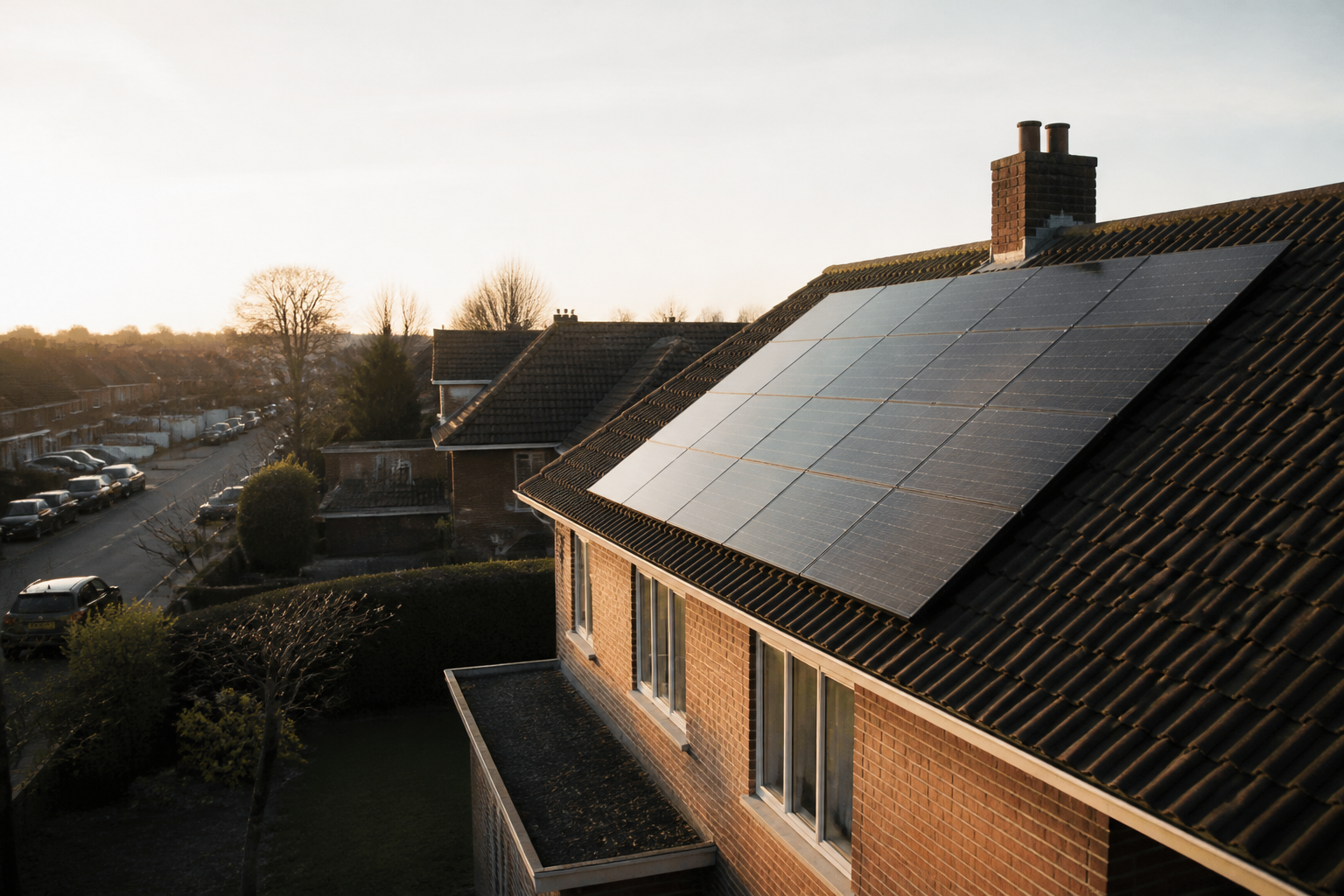
Generating electricity on-site via solar panels changes the fundamental economics of a household. By consuming self-generated energy, the household avoids the unit rate entirely for those kilowatt-hours. This is particularly effective during daylight hours when energy prices can be at their peak. For homes with storage batteries, this benefit extends into the evening, further reducing the reliance on the grid.
The effectiveness of local generation depends heavily on orientation, roof condition, and regional irradiance. However, even in less ideal scenarios, the technology provides a buffer against rising unit rates. For those managing The Net Zero Home Scheme, mapping the expected generation profile against the household's peak consumption hours is the standard process for determining the size of the required installation.
Battery integration is increasingly the deciding factor for ROI in solar installations. Without storage, excess generation is exported back to the grid at rates often significantly lower than the import tariff. By utilising battery storage, homeowners capture the excess solar production to offset expensive peak-time electricity, effectively maximising the utilisation of their own energy assets and reducing the payback period for the entire hardware setup.
Generating electricity on-site via solar panels changes the fundamental economics of a household by allowing for direct self-consumption and reducing total grid demand.
Planning for long term maintenance
All energy systems require periodic servicing to remain efficient. A heat pump, for example, needs its filters and exterior unit cleared of debris to maintain optimal airflow. Neglecting this maintenance leads to a drop in efficiency, causing the system to draw more power to achieve the same heat output. This is a common failure point in domestic energy management.
Documentation of the installation process is essential for future repairs. Keeping track of the installer's settings ensures that subsequent maintenance work is calibrated correctly. If a system is not configured for the specific thermal characteristics of the home, it will cycle on and off more frequently than necessary. This shortens the lifespan of compressors and pumps while increasing energy consumption.
Maintenance is not merely a repair activity but a calibration task. Following the initial commissioning, homeowners should ensure they possess the full set of technical documentation, including heat loss calculations and system design settings. Periodic inspections ensure that sensors remain accurate and software updates for smart controllers are applied, keeping the heating or generation system aligned with evolving grid requirements and usage patterns.

Questions people ask
- How can I reduce my standing charges?
- Standing charges are fixed daily costs set by energy suppliers and cannot be reduced by changing consumption habits. However, you can mitigate the overall impact of these charges by choosing a tariff with a lower standing charge, even if the unit rate is slightly higher, provided your total monthly energy usage remains consistently low.
- Is solar power worth it for my home?
- The value of solar depends on your roof's orientation, local irradiance levels, and current electricity consumption patterns. By using The Solar Scheme, you can offset high-cost daytime energy usage. When combined with battery storage, solar becomes more effective by allowing you to store excess energy for use during the evening when grid electricity is often more expensive.
- What is the primary benefit of a heat pump over a gas boiler?
- The primary benefit is superior efficiency, as heat pumps extract heat from the environment rather than burning fuel. This reduces total energy consumption for space heating. For more on the requirements, see heat pump funding installation guide 202611. It also enables you to decouple your heating costs from volatile fossil fuel prices through The Heat Pump Scheme.
- How does salary sacrifice help with energy upgrades?
- Salary sacrifice allows employees to fund energy efficiency upgrades, such as those offered through The Net Zero Home Scheme, using pre-tax income. This reduces the total capital expenditure burden by lowering the gross cost of the investment. It makes high-efficiency technology more accessible by spreading payments across monthly salary cycles, often resulting in a more manageable financial transition for the household.
Keep reading

green installer workforce standards
Finding a reliable green technology installer

electricity grid capacity management
How DNOs manage residential grid capacity

domestic heat pump technology
Debunking common myths about domestic heat pump heating

electric vehicle fleet policy
Managing financial risks of electric car fleet transition

electric vehicle market analysis
Analysing UK electric vehicle adoption numbers

electric vehicle adoption guide
Steps to choosing an electric car for personal use

electric vehicle fleet policy
Impact of updated ZEV mandate targets on fleet planning

Employee financial wellbeing
Supporting employee financial resilience

Employee reward strategy design