

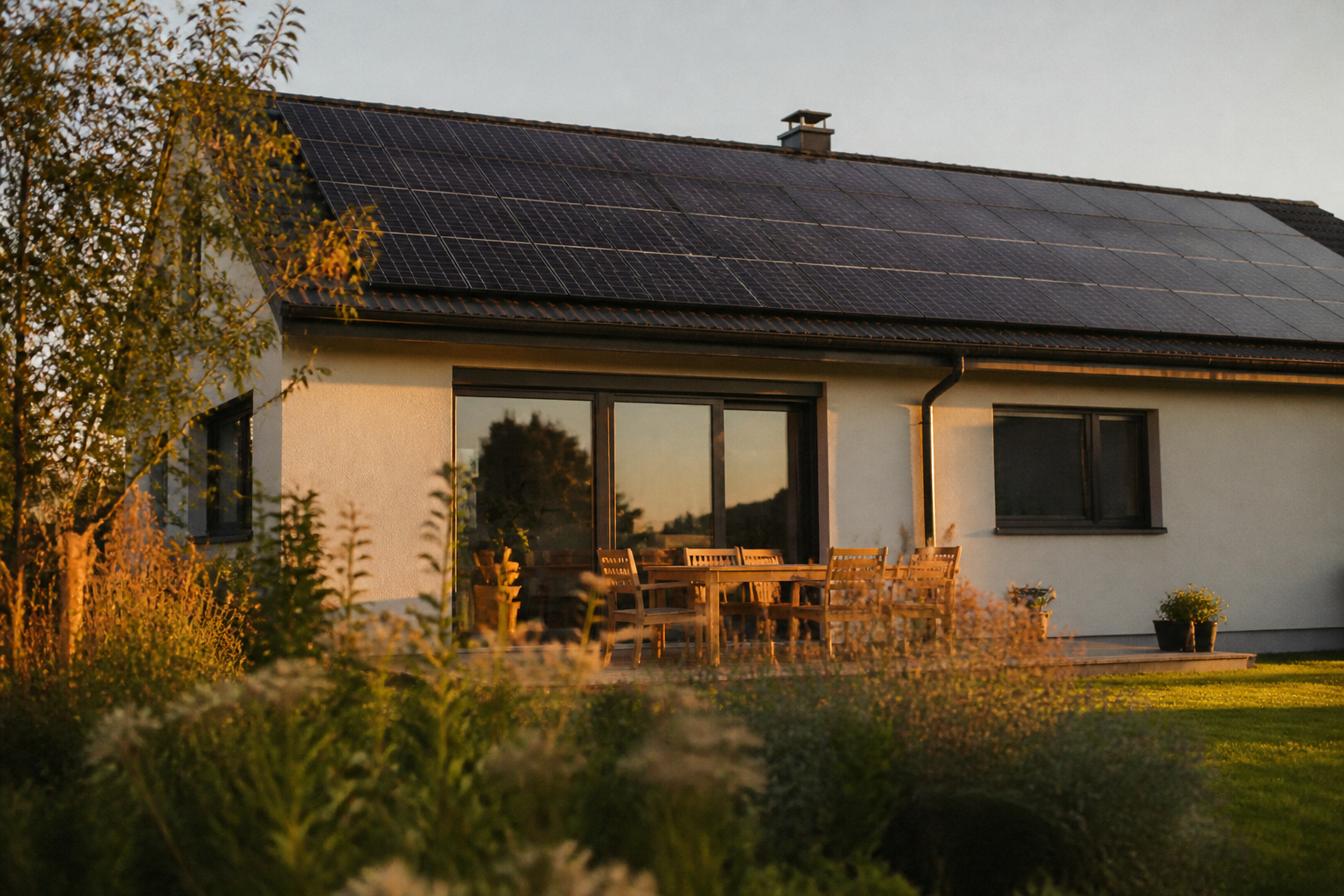
Residential solar energy generation
Evaluating domestic solar panel return on investment
A balanced examination of the financial trade-offs, installation risks and long-term energy savings associated with domestic solar panel systems.
 Thom GrootCEO and Co-Founder
6 min readUpdated
What matters here
- Initial capital expenditure is balanced against reduced grid reliance and export revenue.
- System efficiency depends heavily on roof orientation, local shading, and battery capacity.
- Installation requires assessing long-term roof condition and planning regulation compliance.
In short
Domestic solar panels offer financial returns through lower energy bills and selling excess electricity back to the grid. The primary trade-off is the significant upfront capital cost, which necessitates a long-term view on payback periods. Success relies on balancing installation capacity with household usage patterns and, where possible, integrating battery storage to capture energy for peak demand times.
Evaluating the viability of the solar scheme involves more than calculating simple yield. It requires a detailed assessment of how solar assets interact with other home energy systems. For most households, the transition is not just about power generation but about creating an intelligent energy ecosystem that minimises reliance on the national grid during peak pricing hours.
The capital expenditure decision
A finance director must weigh the high upfront cost of a solar photovoltaic system against the predictability of future energy savings. Unlike variable market rates, solar generation provides a hedge against potential energy price volatility. The core financial question involves the time value of money, where the immediate cash outflow must be justified by the expected reduction in household electricity expenditure over the lifespan of the panels.
System costs are not static. They vary based on panel technology, roof geometry, and the inclusion of inverters or battery storage components. While basic configurations offer lower entry costs, they often struggle to maximise efficiency without storage capacity. This forces a choice between a lower initial outlay and a higher potential for long-term self-sufficiency. Each installation requires an audit of the roof structure to ensure it can support the weight and wind load of the equipment.
When assessing the financial return, one must account for the degradation rate of solar cells. Most manufacturers warrant performance at 80% of original capacity after 25 years. Financial modelling should apply this curve to projected output. Furthermore, the decision to install should be viewed through the lens of our schemes that may facilitate capital efficiency or salary sacrifice arrangements, potentially reducing the net cost of the hardware for employees.
Variables affecting installation efficiency
The physical environment dictates the efficiency of any solar array. Orientation is the most critical factor, with south-facing roofs generally yielding the highest output in the UK. East and west-facing arrays produce lower peak power but can sometimes provide a more consistent energy profile throughout the day. Shading from chimneys, trees, or neighbouring properties can disproportionately impact performance. Even minor partial shading can reduce the yield of an entire string of panels if not managed with power optimisers or micro-inverters.
System design must also account for roof age and material. If a roof requires replacement within the next decade, installing solar panels beforehand creates a significant liability. Removing and reinstalling a system is a substantial cost that can negate years of electricity savings. Professional installers conduct structural surveys to ensure the roof integrity is sufficient to hold the hardware for its expected 25-year lifespan.
Roof pitch also plays a role in output. In the UK, an angle between 30 and 40 degrees is generally considered optimal for capturing sunlight throughout the changing seasons. Installations that deviate significantly from these angles may require more panels to achieve the same energy output, thereby increasing the total project cost. Homeowners should request a detailed solar pathfinder report from their installer to map potential shading throughout the year.

| Variable | Impact | Risk Level |
|---|---|---|
| South-facing roof | High yield | Low |
| East-west split | Consistent output | Low |
| Heavy shading | Low yield | High |
| Old roof structure | Maintenance cost | High |
Figures based on typical UK residential solar performance assumptions and structural survey data.
Managing energy consumption and exports
The financial viability of solar depends on how much generated electricity the household uses. Exporting energy to the grid typically yields a lower price than purchasing it. Therefore, the goal is to shift household load to coincide with generation peaks. This is often achieved through smart appliances or, more effectively, by charging electric vehicles via systems like the charge scheme during daylight hours.
Export tariffs have evolved to become more flexible. Engaging with an energy provider that supports real-time, half-hourly export pricing can improve financial returns. However, this adds a layer of operational complexity for the homeowner. Monitoring generation data regularly is necessary to ensure the system is functioning as expected and to identify any performance degradation caused by panel fouling or inverter errors.
Homeowners are increasingly opting for smart home management systems that automate the flow of energy. By prioritising self-consumption over export, users can offset the highest electricity tariff rates. It is worth consulting insight on whether to prioritise battery storage over direct export, as choosing between grid energy and local storage can fundamentally alter the return on investment for a solar array.
Maintenance and lifecycle risks
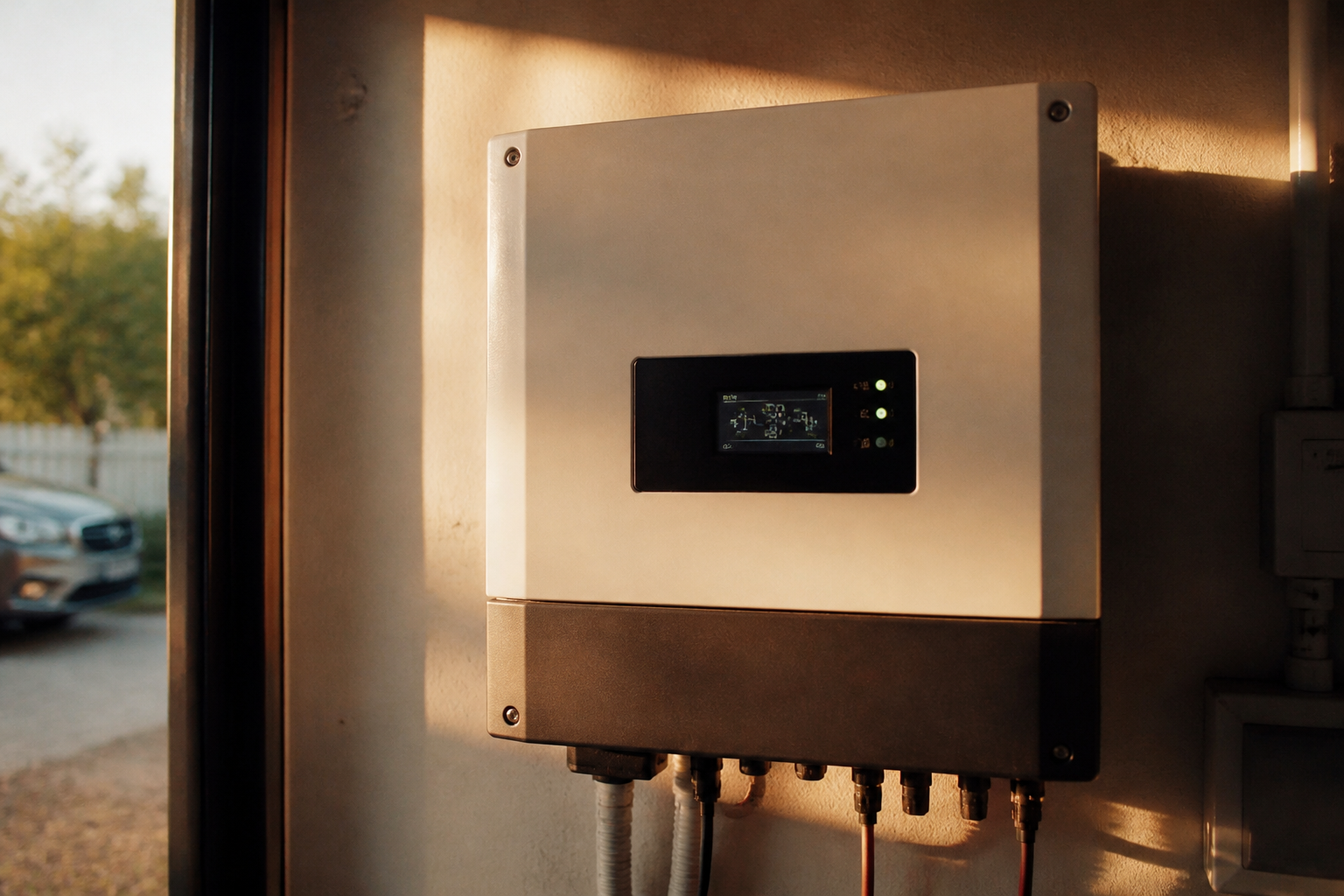
Solar systems are relatively low-maintenance, but they are not maintenance-free. Inverters are the most frequent point of failure, typically needing replacement once during the 25-year life of the panels. Inverters convert direct current from the panels into alternating current for home use, operating under constant electrical load and heat. Budgeting for this eventual replacement is a standard part of responsible long-term financial planning for any energy investment.
Panel cleaning is another factor that is often overlooked. In areas with high levels of dust, pollen, or bird fouling, efficiency can drop by a measurable percentage. While rainwater often cleans panels, professional cleaning may be required in specific environmental conditions to maintain optimal output. Employers offering the net zero home scheme often find that employees benefit from clear guidance on these maintenance cycles.
Regular monitoring of the system telemetry is the best defence against hidden failures. Many modern systems provide app-based alerts when output deviates from expected baselines. If a homeowner notices a sudden drop in generation without a corresponding change in weather patterns, it is crucial to perform a visual inspection for debris or contact an MCS-certified technician to diagnose potential electrical faults.
Inverters are the most frequent point of failure, typically needing replacement once during the 25-year life of the panels.
Regulatory and planning considerations
In the UK, most domestic solar installations fall under permitted development rights, meaning planning permission is rarely required. However, there are exceptions. Properties in conservation areas, listed buildings, or sites where panels would be installed on a roof facing a public highway may face local planning constraints. Failing to verify these requirements early in the process can lead to significant delays and potential enforcement costs.
DNO (Distribution Network Operator) approval is also a necessary step for grid-connected systems. This is usually managed by the installer, but the homeowner remains responsible for ensuring the system complies with the Energy Networks Association regulations. This process ensures the local electricity network can handle the additional feed-in capacity without destabilising supply to the surrounding area.
Beyond technical compliance, homeowners should ensure their home insurance policy is updated to include the solar installation. Some providers may require confirmation that the installation meets building regulations, specifically regarding fire safety and roof weight capacity. Documentation, including the MCS certificate and the electrical installation certificate, must be kept in a safe place for future home conveyancing.
The evolving energy landscape
The transition to domestic energy generation is accelerating as smart technology makes self-consumption easier to manage. Integrating solar with other technologies like home batteries or heat pumps, as seen in the heat pump scheme, creates a synergy that increases the overall system efficiency. A heat pump can use excess solar energy to provide space heating, effectively storing energy as thermal mass within the home fabric.
As the national grid continues to modernise, the role of local generation will become more central to household energy security. Finance directors watching these trends should understand that solar is not merely a cost-saving tool, but a foundational asset in managing total household energy risk. Balancing the initial investment with the potential for long-term reduction in grid dependency remains the most pragmatic approach to evaluating this technology.
Looking forward, the integration of solar, battery storage, and smart thermal systems represents a shift toward the 'prosumer' model. While individual financial benefits are clear, the collective impact on the grid will be profound, reducing the burden on national infrastructure during peak demand hours. Further information regarding the strategic importance of these technologies can be found in our newsroom.
Questions people ask
- Does solar panel installation always increase home value?
- While solar panels can increase home value, it is not guaranteed. Buyers often assess the age of the system, the remaining warranty, and the type of installation. If a system is leased or requires a roof replacement, it may be viewed as a liability rather than an asset, affecting the overall saleability of the property.
- What happens if my inverter fails after the warranty expires?
- If an inverter fails outside of its warranty, the cost of replacement falls to the homeowner. You will need to procure a new unit that is compatible with your existing panel strings. It is advisable to budget for this replacement during the initial financial planning phase, as it is a common requirement for systems nearing ten years of operation.
- Can I install solar panels if my roof is shaded by mature trees?
- Shade significantly reduces solar output. While power optimisers can mitigate the effect of partial shading by ensuring individual panels operate independently, heavy shading from large trees may render a system inefficient. A professional solar survey is required to determine if the projected yield justifies the capital expenditure given the specific shading profile of your roof.
- Is battery storage essential for new solar installations?
- Battery storage is not strictly mandatory, but it is highly recommended for maximising self-consumption. Without storage, electricity generated during the day that is not immediately used must be exported at lower tariffs. A battery allows you to store daytime energy for evening use, significantly increasing the financial return and reducing reliance on the grid.
Keep reading

green installer workforce standards
Finding a reliable green technology installer

electricity grid capacity management
How DNOs manage residential grid capacity

domestic heat pump technology
Debunking common myths about domestic heat pump heating

electric vehicle fleet policy
Managing financial risks of electric car fleet transition

electric vehicle market analysis
Analysing UK electric vehicle adoption numbers

electric vehicle adoption guide
Steps to choosing an electric car for personal use

electric vehicle fleet policy
Impact of updated ZEV mandate targets on fleet planning

Employee financial wellbeing
Supporting employee financial resilience

Employee reward strategy design