


Household energy bill management
Impact of potential energy standing charge reform
Exploring the implications of proposed changes to energy standing charges for household budgets and financial planning.
 Ryan AmosEV Sales Director
6 min readUpdated
What matters here
- Proposed removal of standing charges aims to lower fixed costs.
- Energy bills face a forecast increase in early 2027.
- Policy shifts require long term financial awareness for households.
In short
Removing standing charges from gas bills would eliminate the fixed daily fees households pay for connection, regardless of usage. While this could lower bills for some, the final impact depends on how regulators reallocate these costs. Households currently face rising energy prices, making such structural changes a significant factor in future budgeting and long term financial resilience strategies.
As Prime Minister Andy Burnham has ordered a formal review into scrapping standing charges worth £108 a year, homeowners are evaluating how this might alter their monthly outgoings. The proposed reform aims to address the regressive nature of these fees, where lower usage households pay the same connection premium as high volume users. For the average family, the potential removal of this £108 annual cost represents a modest but necessary adjustment to household cash flow management.
The mechanics of standing charges
Energy bills in the UK typically consist of two main components: the unit rate for the energy consumed and the daily standing charge. The standing charge is a fixed fee designed to cover the costs of maintaining the network, connection services, and the administrative overheads of the supplier. This cost remains constant even if a household consumes zero energy during a billing period, making it a regressive element of the payment structure.
Recent discussions, including proposals by Prime Minister Andy Burnham to reform these charges, have placed this structural component under public scrutiny. The argument for reform rests on the premise that fixed charges disproportionately impact lower income households. By potentially removing or restructuring these fees, there is a path toward making energy bills more proportional to actual usage. For households looking to manage their the-net-zero-home-scheme costs, this change represents a shift in how they might approach fixed monthly outgoings.
In practice, the standing charge covers the operational costs of the local distribution network operator. When a household reduces its grid reliance, the fixed charge remains a permanent obligation. If these costs were to be recovered purely through unit rates, the financial threshold for entry into home energy generation would change significantly. This reallocation would effectively incentivise users to lower their demand, as every kilowatt saved would remove both the unit cost and potentially a portion of the network recovery cost previously embedded in the fixed daily rate.
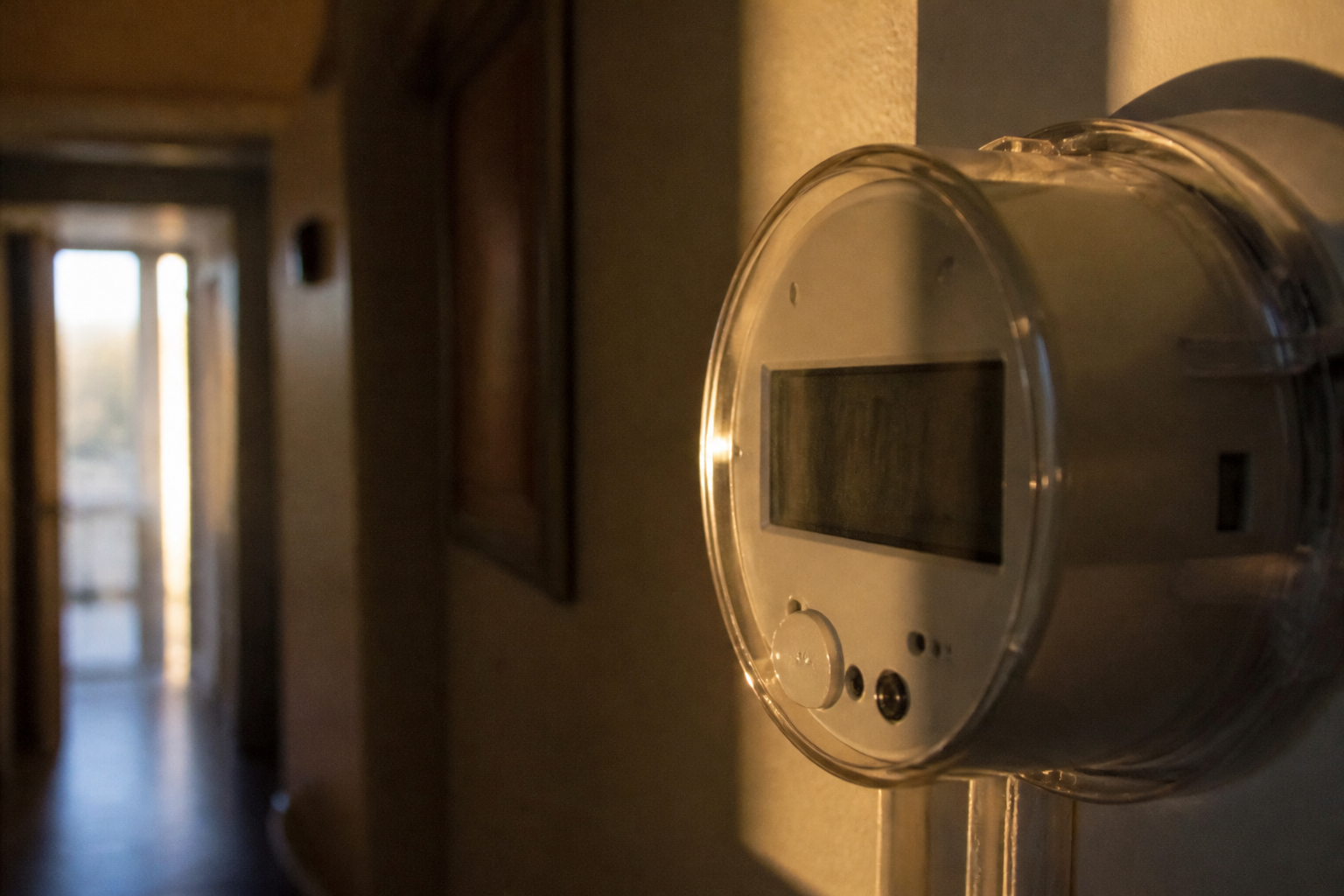
Forecast trends for household energy
The regulatory environment for energy pricing is dynamic, with external forecasts often indicating periods of volatility. As reported in late 2026, household energy bills are facing potential increases, with some forecasts suggesting a jump of 16% as we enter the coldest months of the year. This predicted rise, estimated at around £276 for a typical annual bill, highlights the vulnerability of domestic budgets to shifts in wholesale prices and regulatory caps.
These figures are based on projections from industry consultants and represent a significant development for any household budget. When coupled with the ongoing debate regarding standing charges, it is clear that families need to account for both unit price increases and the baseline fixed costs of supply. Those interested in reducing their dependency on the grid often look toward the-solar-scheme to generate their own power, which mitigates exposure to these market fluctuations.
The forecasted £276 increase, should it materialise, effectively offsets the savings potentially gained from the £108 standing charge removal. For a typical household, this means that even if structural reforms are implemented, the upward pressure on unit prices driven by wholesale volatility remains the primary concern. Effective budgeting now requires a dual focus: monitoring national policy shifts regarding fixed charges while aggressively pursuing energy efficiency to lower total kilowatt-hour consumption.
Household energy prices are set to soar in January, with a typical annual bill forecast to jump by £276.
| Factor | Current Status | Future Outlook |
|---|---|---|
| Standing Charge | Fixed daily fee | Proposed review |
| Annual Bill Rise | Regulated caps | Forecasted 16% jump |
| Market Pressure | High volatility | Supply investment needed |
Figures derived from reported industry forecasts and policy discussions as of October 2026.
Strategic impact of fixed cost removal
If standing charges are removed, the resulting financial impact on a household would depend heavily on how energy suppliers choose to recoup those costs. If the charges are simply folded into the unit rate, the benefit is only realised by those with lower than average consumption. This creates a trade off: high energy users might see their total bill increase, while low energy users would benefit from a reduced fixed liability.
For finance directors and HR teams, this change highlights the importance of mapping modern household expenditure patterns when designing support schemes. Employees who have invested in efficiency measures, such as the-heat-pump-scheme, may find that their usage patterns make them particularly sensitive to these shifts. Understanding how these policy changes influence the cost of running a home is vital for maintaining long term financial stability.
Consider an edge case where a household installs high-efficiency heating but maintains a high baseline standing charge. Under current rules, they pay for the connection even when not using energy. If the charge is moved to a unit rate, their low consumption makes them net beneficiaries. However, for a household with older, less efficient systems, the shift could lead to higher total costs. Employers must note that these policy shifts will create divergent outcomes for staff depending on their level of home investment.
Context of national energy policy
The direction of travel for energy policy in the UK is increasingly focused on balancing immediate bill support with long term investment in renewables. Prime Minister Andy Burnham has indicated that pragmatic decisions, such as increasing investment in the North Sea and renewables, are part of a wider strategy to support household finances. This suggests that while individual bills are subject to immediate market pressures, the government is actively seeking structural reforms to the sector.
The challenge for any household is to navigate these changes without losing sight of broader financial objectives. With understanding the October 2026 household energy price cap being a foundational step, individuals should prioritise energy efficiency to shield themselves from future price increases. By reducing the reliance on the national grid, homeowners gain more control over their monthly expenses, insulating themselves from the uncertainty of standing charge reforms and unit price shifts.
Infrastructure development, such as improved grid connectivity and local battery storage, remains a secondary goal for national policy. The government review ordered into the £108 charge is one of several levers currently being tested. Homeowners should anticipate that these consultations will continue throughout the fiscal year as the Department for Energy Security and Net Zero attempts to align consumer costs with the transition to a low-carbon grid.

Managing energy costs through technology
The adoption of smart technologies allows for better management of domestic energy consumption, regardless of how billing is structured. By utilising smart heating controls and monitoring systems, householders can ensure they are not paying for energy they do not need. This is particularly relevant when standing charges are high, as the fixed cost is paid irrespective of how effectively a home is being managed.
For those seeking a comprehensive approach to energy management, looking into our schemes can provide options that align with modern energy demands. By integrating renewable generation and efficient heating, individuals can better anticipate their long term costs. Staying informed on industry news, as seen in the newsroom, is a prudent step for any professional concerned with the intersection of personal finance and national energy policy.
Technology also bridges the gap between fluctuating market prices and consumer stability. For example, using energy management systems to charge residential battery storage during off-peak times provides a buffer against the 16% predicted price rise. As the industry debates the removal of standing charges, the integration of smart hardware ensures that the consumer is not just a passive payer of invoices but an active manager of their home energy profile.
Professional perspective on bill volatility
The current period of energy price uncertainty underscores the need for clear, actionable data. Finance professionals must recognise that household energy costs are not static and are influenced by a complex interplay of market forces, infrastructure investment, and government regulation. This creates an environment where reactive budgeting is insufficient for the long term.
Instead, focusing on the variables that can be controlled—such as home energy performance and usage management—provides a more stable financial outlook. As the UK continues its transition, the focus will remain on how these technologies can assist in moderating the impact of high energy bills. Employees who are supported in their understanding of these dynamics are better equipped to manage their personal finances effectively.
Ultimately, the goal is to move towards a state where the household is insulated from grid-level shocks. By leveraging the-electric-car-scheme or upgrading to high-efficiency systems, families can lower their consumption baseline. When coupled with a potential removal of the £108 standing charge, these proactive steps form a robust strategy against the unpredictable nature of global energy markets.
Questions people ask
- What is the expected annual saving if standing charges are scrapped?
- The current review ordered by Prime Minister Andy Burnham targets the removal of standing charges which are valued at approximately £108 per year. While this represents a direct saving for some, the net effect on individual household bills will depend on how energy suppliers reallocate these costs within the unit consumption rate.
- Will my energy bill decrease if standing charges are eliminated?
- Not necessarily. If standing charges are removed, regulators may permit suppliers to recover those costs via an increase in the unit price of energy. This would benefit households with low consumption, but could potentially lead to higher total annual bills for high-usage households who rely heavily on the grid for daily energy needs.
- Why are energy bills forecast to rise by 16%?
- Forecasts for late 2026 suggest a potential 16% rise in energy bills due to a combination of wholesale market volatility and regulatory adjustments. This represents an estimated £276 annual increase for a typical household, which often exceeds the value of the potential £108 saving from proposed standing charge reforms.
- How can I protect my household budget from energy price volatility?
- Households can mitigate price exposure by reducing grid dependency through investments in energy efficiency and self-generation technologies. By exploring our schemes, families can adopt smart heating and renewable generation, allowing them to manage consumption patterns effectively regardless of how suppliers structure fixed charges or unit rates in the future.
Keep reading
Clean heating policy trends
Addressing the UK heat pump spark gap

electricity grid capacity analysis
Understanding the UK power grid and supply reliability

Green technology sector skills
Skills and capacity in the green installation sector
Home solar energy generation
Myths and facts about home solar energy

Home heating technology update
Domestic heat pump installation process

business fleet electrification strategy
Business fleet transition data and driver requirements

electric vehicle market trends
UK electric vehicle market growth and policy status

employee reward strategy analysis
Balancing reward budget and employee choice

employee reward strategy analysis